Understanding the Challenge of Glass Detection
For standard inductive proximity sensors, glass presents a significant challenge. These sensors operate on the principle of electromagnetic induction, generating an oscillating electromagnetic field. When a conductive metal object enters this field, it induces eddy currents within the object, which in turn dampens the sensor's oscillation, triggering a switching signal. However, glass is an excellent electrical insulator and is non-conductive and non-metallic. Therefore, it remains virtually invisible to a standard inductive sensor's electromagnetic field. Detecting the presence, absence, or position of glass requires specialized sensing technologies capable of responding to the unique physical properties of glass.
Capacitive Proximity Sensors: The Primary Solution
The most common and effective solution for detecting glass is the capacitive proximity sensor. Unlike inductive sensors, capacitive sensors can detect both conductive and non-conductive materials. They function by generating an electrostatic field between two electrodes (often the sensor face and a ground). Any object that enters this field alters the dielectric constant and the capacitance of the system. Glass, while non-conductive, has a dielectric constant significantly higher than air. This change in capacitance is measured by the sensor's internal circuitry. When the change exceeds a set threshold, the sensor switches its output state. The sensing distance for glass is typically less than that for metals or water but is perfectly adequate for many industrial applications like bottle filling, glass panel positioning, or window presence verification. Sensitivity adjustment is a crucial feature, allowing engineers to tune the sensor to ignore background materials and focus on the glass target.
Ultrasonic Sensors for Distance and Level
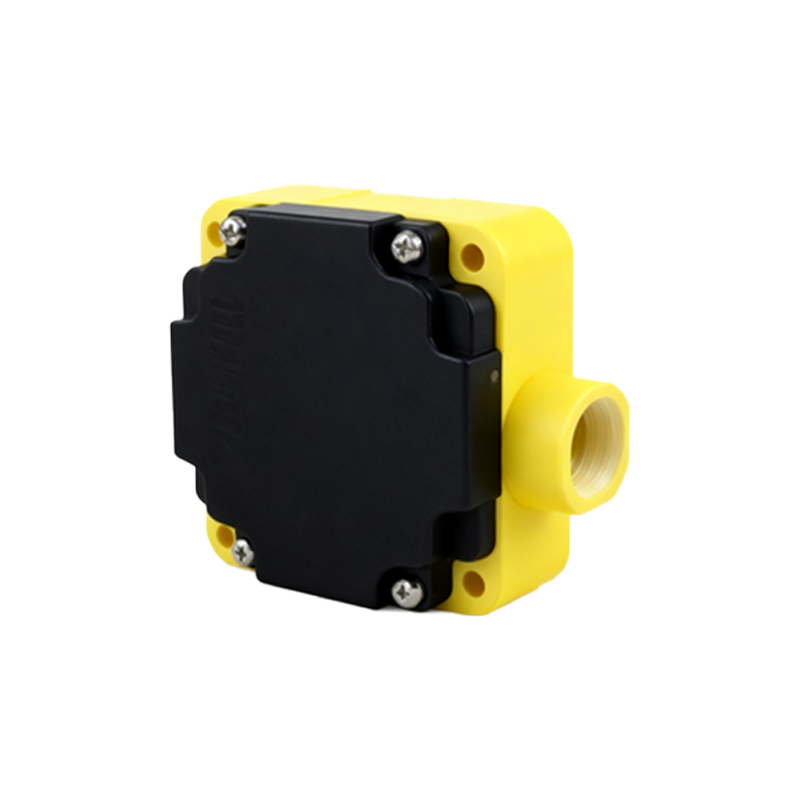
For applications requiring detection through glass or measuring the distance to a glass surface, ultrasonic sensors offer a robust solution. These sensors emit high-frequency sound pulses and measure the time taken for the echo to return. Glass provides an excellent reflective surface for ultrasonic waves. This makes ultrasonic sensors ideal for tasks such as detecting the fill level in glass bottles or containers, checking for the presence of a glass pane on a conveyor, or even measuring the thickness of glass if accessed from both sides. They are less affected by the color or transparency of the glass and can operate effectively even if the glass is dusty or dirty, a scenario where optical sensors might struggle.
Optical Sensors and Their Considerations
Optical sensors, including through-beam, retro-reflective, and diffuse models, are frequently used with glass. However, their application requires careful consideration of the glass's properties. For clear glass, a through-beam sensor can work reliably, as the glass allows the light beam to pass through with minimal distortion. Retro-reflective sensors can also be used if a reflector is placed behind the glass. The most common challenge arises with diffuse (proximity-mode) optical sensors. These sensors detect light reflected from the target itself. Clear glass is highly transmissive, reflecting very little light back to the receiver, which can lead to unreliable detection. For diffuse sensing of glass, sensors with a background suppression feature or those specifically designed for transparent object detection are necessary. These models use triangulation or other methods to evaluate the angle of the reflected light, reliably distinguishing the glass surface from a more distant background.
Key Application Areas in Industry
The detection of glass is critical across numerous sectors. In packaging and bottling lines, sensors verify the presence of glass bottles before filling, capping, or labeling. In the automotive industry, they ensure glass sunroofs or windows are correctly positioned before assembly. Electronics manufacturing uses them to detect glass substrates or screens. Pharmaceutical lines rely on them to inspect vials and ampoules. Furthermore, in building automation, sensors can detect the opening or closing of glass doors or windows for security and climate control. The choice of sensor technology directly impacts the reliability, speed, and maintenance requirements of these automated processes.
Selection Criteria and Installation Tips
Selecting the right sensor for glass detection involves several factors. First, define the primary goal: presence detection, distance measurement, or level control. Next, consider the environment: is it clean, wet, or dusty? Capacitive sensors can be affected by ambient humidity, while ultrasonic sensors are robust in harsh conditions. The required sensing range and the exact composition of the glass (e.g., tinted, frosted, laminated) also influence the choice. During installation, ensure the sensor face is parallel to the glass surface for optimal performance. For capacitive sensors, avoid mounting near large metal objects without proper adjustment. For optical sensors, minimize ambient light interference and clean the lens and glass surface regularly to prevent false triggers from dust or droplets.