Introduction to Photoelectric Sensing
Photoelectric sensors are indispensable components in modern industrial automation, serving as the eyes of countless machines and systems. These devices operate by emitting a beam of light, typically from an LED or laser diode, and detecting changes in the received light signal caused by the presence, absence, or characteristics of a target object. The fundamental principle hinges on the photoelectric effect, where light energy is converted into an electrical signal. This conversion enables non-contact detection, a critical advantage over mechanical switches, as it eliminates physical wear and allows for high-speed operation and detection of fragile or sensitive materials. The core components include an emitter, a receiver, and associated control circuitry. The emitter generates the light beam, which can be modulated at a specific frequency to enhance immunity to ambient light interference. The receiver, often a phototransistor or photodiode, captures the returning or interrupted light and translates it into a measurable electrical current. This simple yet robust mechanism forms the basis for a wide array of sensor configurations, each tailored to specific application challenges, from detecting transparent bottles on a high-speed conveyor to ensuring precise positioning in robotic assembly cells.
Core Operating Modes and Configurations
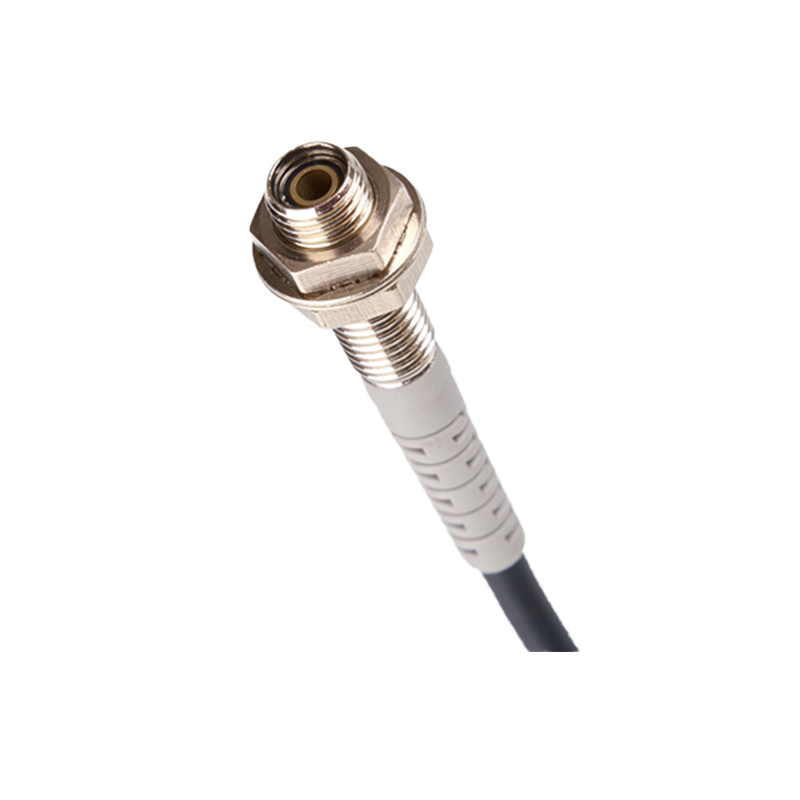
The versatility of photoelectric sensors is largely defined by their three primary operating modes: through-beam, retro-reflective, and diffuse reflective. Through-beam sensors, also known as opposed mode sensors, consist of separate emitter and receiver units placed opposite each other. Detection occurs when the target object interrupts the light beam traveling from the emitter to the receiver. This mode offers the longest sensing ranges and highest reliability, as it is largely unaffected by the target's color, reflectivity, or surface finish. It is ideal for precise detection in demanding environments. Retro-reflective sensors house both the emitter and receiver in a single housing. They utilize a reflector, typically a corner-cube prism, to bounce the emitted light back to the receiver. Detection is triggered when the target breaks this reflected beam. This configuration simplifies installation compared to through-beam sensors while still offering respectable sensing distances. Diffuse reflective sensors, or proximity mode sensors, also integrate the emitter and receiver. They detect the target by measuring the light reflected directly off the target's surface. The sensing distance is influenced by the target's size, color, and texture, making them suitable for applications where the target characteristics are consistent. Advanced versions, such as background suppression and convergent beam sensors, use triangulation or focused beams to ignore distant backgrounds or detect specific positions with high accuracy.
Key Performance Parameters and Selection Criteria
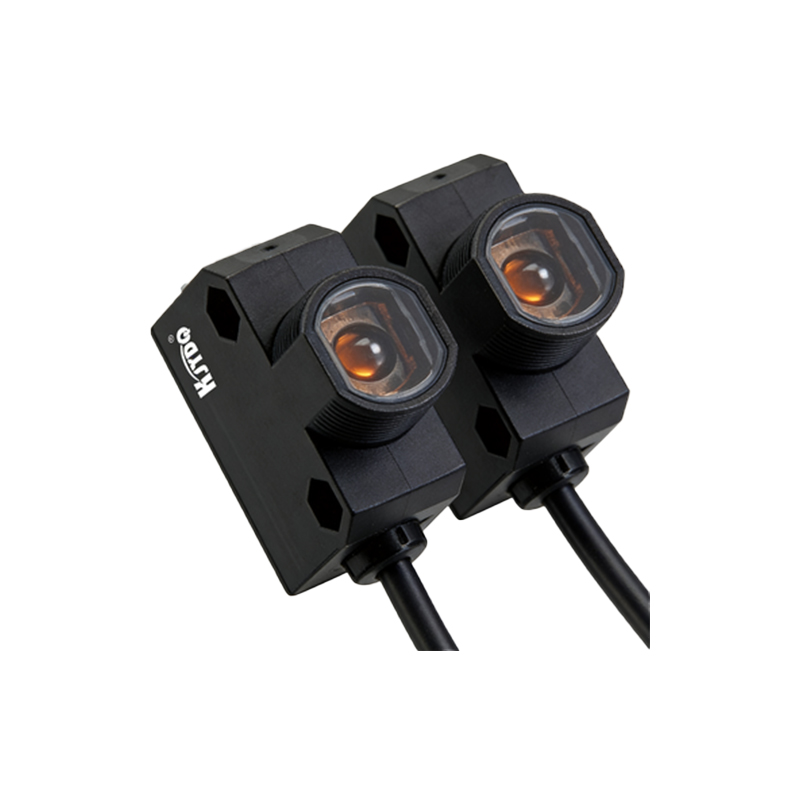
Selecting the appropriate photoelectric sensor requires careful consideration of several technical parameters. Sensing range, the maximum distance at which a sensor can reliably detect a standard target, is a primary factor. It varies significantly between operating modes. Response time, the speed at which the sensor's output switches state upon detection, is crucial for high-speed production lines. Environmental robustness is another critical aspect; sensors are rated with Ingress Protection (IP) codes to indicate their resistance to dust and water. For harsh environments involving washdowns or exposure to chemicals, sensors with IP67 or IP69K ratings are essential. Light source selection is also vital. Red LED light is common and cost-effective for general purposes. Laser diodes provide a highly focused beam for precise detection of small objects or long ranges. Infrared LEDs are used for discreet operation or where visible light is undesirable. Furthermore, output type must match the control system—common options include NPN/PNP transistor outputs, analog outputs for distance measurement, and IO-Link for digital communication and parameterization. Understanding the application's specific requirements for detection object, environment, speed, and connectivity is paramount for optimal sensor selection and system performance.
Industrial Applications and Use Cases
The application spectrum of photoelectric sensors in industrial automation is vast and continually expanding. In packaging and material handling, they are ubiquitous for object detection on conveyors, counting products, and controlling filling levels. They reliably detect transparent films, glass containers, and labels where other sensor types fail. In the automotive industry, these sensors ensure precise part positioning for robotic welding, verify the presence of components in assembly jigs, and monitor automated guided vehicle (AGV) pathways for collision avoidance. Semiconductor and electronics manufacturing rely on them for wafer handling, component placement, and PCB board positioning, where micron-level accuracy and cleanroom compatibility are mandatory. Furthermore, they play a safety-critical role in area guarding, creating invisible light curtains around hazardous machinery to immediately halt operation when breached. In food and beverage processing, hygienic designs with stainless steel housings and smooth surfaces prevent bacterial growth and withstand frequent cleaning. From simple presence/absence checks to complex dimensional gauging and color recognition, photoelectric sensors provide the foundational sensing layer that enables intelligent, efficient, and safe automated processes.
Emerging Trends and Future Developments
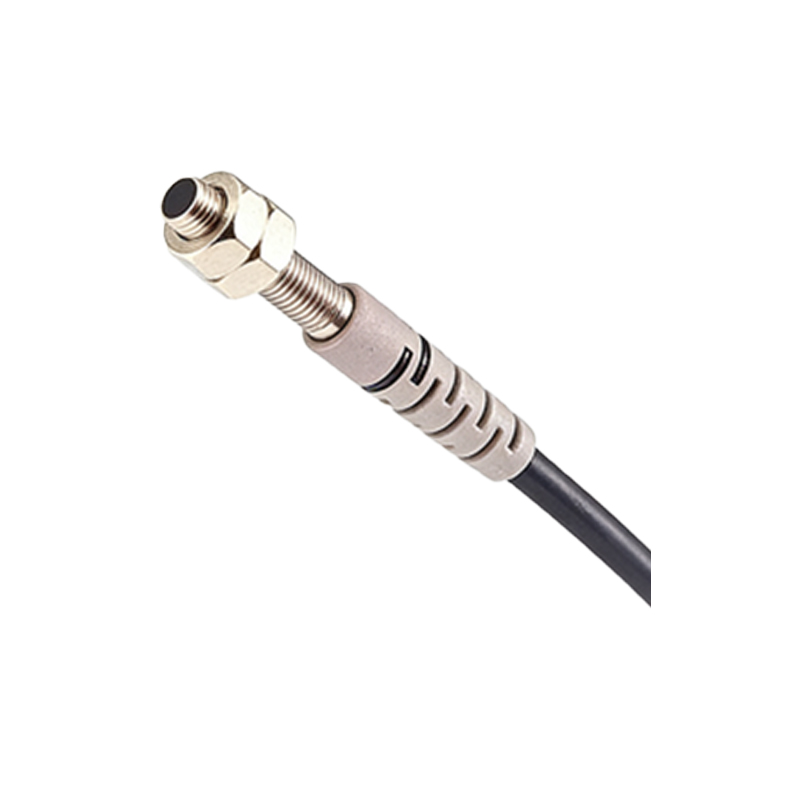
The evolution of photoelectric sensor technology is closely tied to the advancement of Industry 4.0 and the Industrial Internet of Things (IIoT). A significant trend is the increasing integration of intelligence and connectivity directly into the sensor housing. Smart sensors with IO-Link communication not only provide a digital switch signal but also transmit rich diagnostic data, such as internal temperature, operating hours, and signal strength, enabling predictive maintenance and reducing unplanned downtime. Another development is the miniaturization of sensor designs, allowing installation in space-constrained locations without sacrificing performance. Enhanced algorithms for background suppression and advanced filtering are improving reliability in challenging conditions with heavy ambient light or highly reflective backgrounds. Furthermore, the convergence of sensing technologies is leading to multi-functional devices. For instance, sensors that combine photoelectric sensing with distance measurement (using time-of-flight or triangulation principles) or even basic vision capabilities are becoming more accessible. Looking ahead, research into new light sources, more sensitive receivers, and advanced embedded signal processing will continue to push the boundaries of detection accuracy, speed, and robustness, solidifying the photoelectric sensor's role as a cornerstone of future smart factories.