Introduction to Photoelectric Sensing Technology
Photoelectric sensors represent a cornerstone of modern industrial automation, operating on the principle of converting light signals into electrical signals. These devices typically consist of an emitter, which projects a light beam, and a receiver, which detects the presence, absence, or intensity of that beam. The interaction between the emitted light and the target object—whether through reflection, interruption, or retro-reflection—triggers a precise electrical output. This fundamental mechanism enables non-contact detection, a critical advantage over mechanical limit switches. The core technology hinges on various light sources, including LEDs and laser diodes, and sophisticated receiver components like photodiodes or phototransistors. The ability to detect objects without physical contact eliminates wear and tear, ensuring remarkable longevity and reliability in demanding environments. This foundational technology forms the basis for countless applications, from simple object counting on a conveyor to complex positioning in robotic assembly cells.
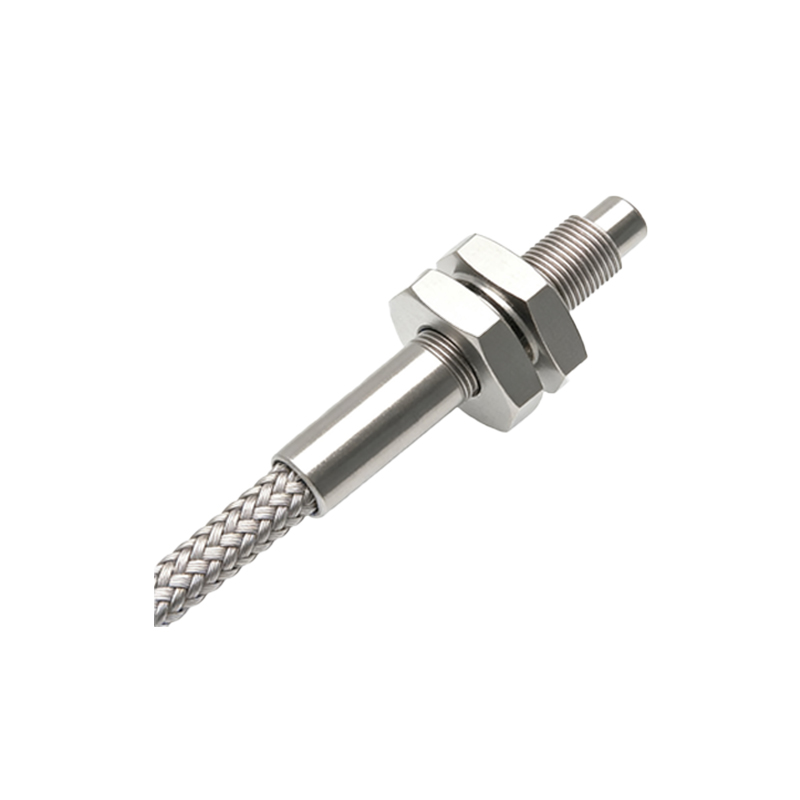
Enhancing Precision and Reliability in Automation
The primary significance of photoelectric sensor research lies in its direct contribution to precision and reliability. In automated manufacturing, the margin for error is infinitesimally small. Advanced photoelectric sensors offer sub-millimeter resolution, allowing for the exact positioning of components. Research into time-of-flight (ToF) and triangulation methods has led to sensors capable of precise distance measurement, not just presence detection. Furthermore, the reliability of these systems is paramount. Studies focus on overcoming environmental challenges such as ambient light interference, dust, fog, and varying surface properties of target objects. The development of sensors with modulated light signals, specialized lenses, and intelligent filtering algorithms ensures stable operation. This relentless pursuit of reliability minimizes production downtime, reduces waste from false triggers, and maintains consistent product quality, which is essential for industries like pharmaceuticals, food and beverage, and semiconductor manufacturing.
Driving Efficiency and Productivity Gains
Industrial efficiency is intrinsically linked to speed and throughput. Photoelectric sensors are pivotal enablers of high-speed automation. Their fast response times, often in the microsecond range, allow production lines to operate at maximum velocity without sacrificing accuracy. Research into faster processing circuits and high-frequency light modulation pushes these limits continually. Beyond speed, these sensors facilitate complex logistical and process control. They enable precise counting, sorting by size or color using contrast and color sensors, and monitoring fill levels in containers. This granular data collection and real-time feedback are integral to Just-In-Time (JIT) manufacturing and overall equipment effectiveness (OEE) metrics. By automating inspection and control tasks that were once manual, photoelectric sensors free human workers for higher-value functions, directly boosting overall plant productivity and operational agility.
Enabling Safety and Human-Machine Collaboration
Safety is a non-negotiable aspect of modern industry, and photoelectric sensors play a critical role in safeguarding personnel. Safety light curtains and laser scanners are specialized photoelectric devices that create invisible protective fields around hazardous machinery. Research in this domain focuses on achieving the highest Safety Integrity Levels (SIL) and Performance Levels (PL) as per international standards like ISO 13849. These systems must provide failsafe operation, with redundant circuits and continuous self-checking to prevent failure on demand. Furthermore, as collaborative robots (cobots) become commonplace, advanced sensor research is crucial for safe human-robot interaction. Sensors that can precisely detect the presence and proximity of a human worker allow cobots to slow down or stop autonomously, preventing accidents and fostering a secure shared workspace. This application underscores the sensor's role not just as a tool for automation, but as a guardian of workplace safety.
Fostering Innovation in Emerging Applications
The ongoing research into photoelectric sensing technology is a key driver for innovation across new and emerging fields. In the Internet of Things (IoT) and Industry 4.0 paradigms, sensors are the primary data acquisition nodes. Smart photoelectric sensors with integrated IO-Link or Ethernet connectivity can transmit rich diagnostic data—such as signal strength, temperature, and contamination levels—enabling predictive maintenance and deeper process insights. Research is also expanding into challenging new environments. For instance, development of robust sensors for outdoor use in agricultural automation, or miniaturized versions for delicate medical device assembly. The exploration of new wavelengths beyond the traditional visible and near-infrared ranges opens possibilities for detecting specific materials or seeing through certain obstructions. This forward-looking research ensures that photoelectric sensing remains a versatile and evolving technology, ready to meet the unknown challenges of future industrial landscapes.