Introduction to Slot-Type Photoelectric Sensors
Slot-type photoelectric sensors, also known as through-beam sensors, are a common sight in industrial automation. They consist of two separate units: an emitter and a receiver, housed in a U-shaped bracket that creates a "slot." The emitter projects a beam of light—often infrared, visible red, or laser—across this gap to the receiver. An object is detected when it passes through the slot, interrupting this light beam. This simple, non-contact principle makes them popular for tasks like counting, edge detection, and limit switching. Their fundamental design, however, inherently carries several disadvantages that engineers must carefully evaluate during system design and sensor selection.
Critical Alignment and Installation Challenges
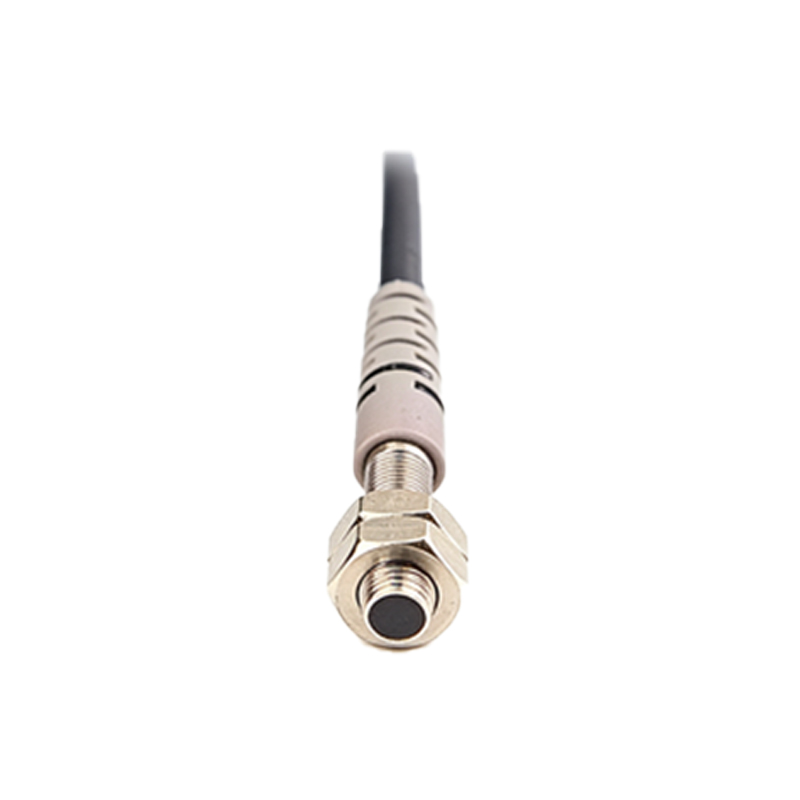
One of the most significant drawbacks of slot sensors is their sensitivity to precise alignment. The emitter and receiver must be perfectly opposed to ensure the light beam hits the receiver's active area directly. Any misalignment, whether angular or lateral, can drastically reduce sensing reliability. Vibration, thermal expansion of mounting structures, or accidental impacts in harsh industrial environments can easily knock these units out of alignment over time. This necessitates regular maintenance checks and realignment procedures, increasing downtime and total cost of ownership. Unlike self-contained, opposed-mode sensors with separate housings that offer some flexibility, the fixed-gap slot design has zero tolerance for misalignment once installed.
Limitations in Object Size and Sensing Gap
The physical size of the slot itself imposes strict limitations. The object being detected must be large enough to reliably interrupt the light beam completely. Very small or thin objects, such as fine wires or small tabs, may pass through without triggering the sensor if they do not obscure a sufficient portion of the beam. Conversely, the slot's width defines the maximum size of the object that can pass through it. This creates a design constraint: the slot must be wide enough for the target object but not so wide that it compromises structural rigidity or allows smaller unwanted objects to pass undetected. This fixed gap cannot be adjusted post-installation, unlike the flexible positioning possible with separate emitter and receiver units.
Susceptibility to Contamination and Environmental Factors
The open slot design is a major vulnerability in dirty or demanding environments. Dust, oil mist, chips, and other airborne contaminants can accumulate on the optical lenses of both the emitter and receiver. This buildup gradually attenuates the light signal, leading to reduced sensing range and eventual failure. While some models offer "gain" adjustments to compensate for lens dirtying, this is only a temporary fix. In applications with heavy contamination, such as machining, woodworking, or food processing, the slot can also become physically clogged, preventing objects from passing through entirely. Sealed versions exist but add cost and complexity. Furthermore, ambient light from strong sources like sunlight or welding arcs can saturate the receiver, causing false triggers or failure to detect.
Reduced Flexibility and Application Constraints
The integrated, one-piece housing of a slot sensor limits its application versatility. It is designed for a specific type of through-beam interruption detection and cannot be easily reconfigured for other sensing modes, such as diffuse-reflective or retro-reflective sensing. Its mounting is also less flexible than a pair of separate sensors; it requires a structure that can accommodate the specific bracket size and orientation. This makes it unsuitable for applications where the sensing path needs to span a large distance or where the object's path is not perfectly aligned with a fixed slot. The need for a clear, unobstructed path on both sides of the machine or process can also complicate mechanical design.
Potential for Mechanical Damage and Wear
The sensor itself, particularly the protruding arms that form the slot, is susceptible to mechanical damage. In high-speed automation lines, mis-fed parts or jams can violently strike the sensor, breaking the housing or damaging the internal electronics. The constant passage of objects, especially abrasive or hot materials, can cause physical wear on the inner edges of the slot. Over time, this wear can change the slot's dimensions or create grooves that affect the smooth passage of objects. While built from durable materials, the sensor remains a physical obstruction in the workflow, representing a potential point of failure that diffuse or proximity sensors avoid.
Electrical and Wiring Considerations
Although slot sensors have a single housing, they contain two active electronic components (emitter and receiver) that typically require separate wiring connections to power and output circuits. This means the sensor cable often contains more conductors than a simple proximity sensor, and the installation requires connecting both sides correctly. Some cost-saving models may have a shared power line, but this can introduce electrical noise issues. Ensuring correct and reliable wiring in a compact connector can be a point of failure. Additionally, the close proximity of the emitter's drive circuit and the receiver's sensitive amplifier in one housing can sometimes lead to internal electrical crosstalk or interference, though modern designs mitigate this.
Conclusion and Alternatives
In summary, while slot-type photoelectric sensors offer a straightforward solution for object detection in clean, stable, and well-aligned applications, their drawbacks are considerable. The challenges of precise alignment, environmental susceptibility, physical constraints, and mechanical vulnerability make them a poor choice for many industrial settings. Engineers should consider robust alternatives like self-contained opposed-mode sensors with separate, rugged housings for longer ranges, or diffuse reflective sensors for detecting objects from one side. For detecting very small objects or in presence of heavy contamination, specialized sensors like fiber optic units or ultrasonic sensors may provide superior reliability and longevity, ultimately reducing maintenance costs and improving system uptime.