Understanding Photoelectric Sensors in PC Applications
Photoelectric sensors, commonly utilized in industrial automation for object detection, are increasingly considered for specialized PC builds and peripherals. These sensors operate by emitting a light beam—typically infrared, visible red, or laser—and detecting changes in the received light to sense the presence, absence, or distance of an object. In the context of personal computing, their application is most prominent in optical encoders for high-precision mice, where they track movement by capturing successive images of the surface below. The core principle involves an LED or laser diode as the light source and a photodetector, such as a phototransistor or CMOS sensor, to interpret the reflected light. This non-contact sensing method offers distinct advantages over mechanical alternatives, including reduced wear, higher response speed, and the ability to detect a wide variety of materials. For engineers and enthusiasts, understanding this fundamental optoelectronic technology is the first step in evaluating its suitability for a computing project, whether for input devices, custom cooling system triggers, or even novel case intrusion detection systems.
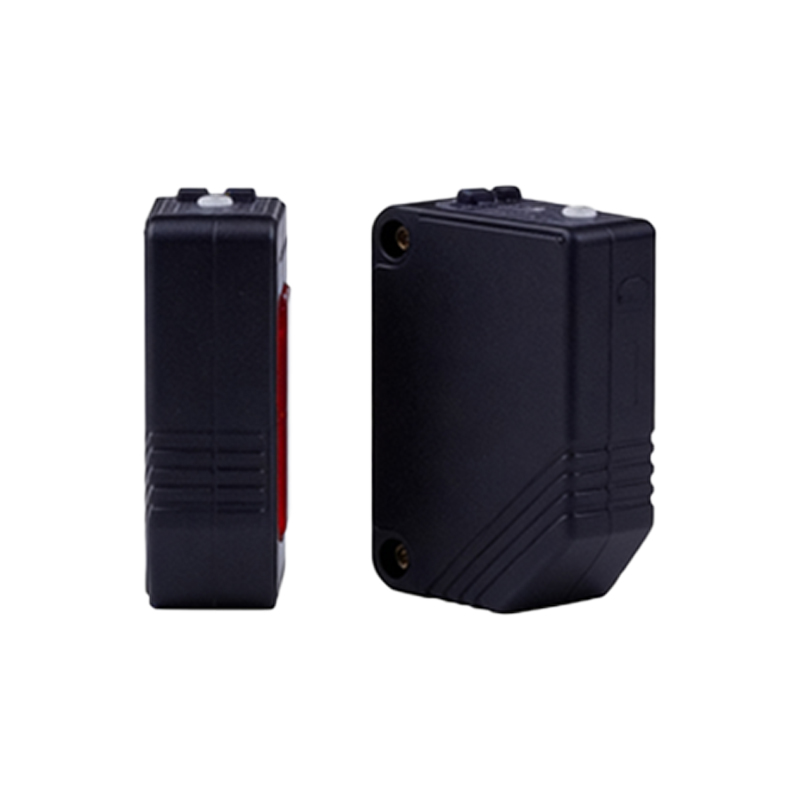
Key Advantages Over Traditional Mechanical Sensors
The primary benefit driving the adoption of photoelectric sensors in PC components is their exceptional durability and longevity. Unlike mechanical switches that rely on physical contact and are prone to wear, oxidation, and debounce issues, optical switches have no moving parts that physically grind against each other. This translates to a significantly longer operational life, often rated for tens of millions of cycles, which is a critical factor for gaming peripherals and high-use workstations. Secondly, they offer superior response times. The actuation is virtually instantaneous upon beam interruption, leading to faster signal registration. This can minimize input lag in gaming mice and keyboards, providing a competitive edge. Furthermore, photoelectric sensors are less susceptible to environmental contaminants like dust and moisture, which can interfere with mechanical contacts. Their consistent performance over time, without the need for periodic cleaning of internal contacts, ensures reliable operation throughout the device's lifespan, a key consideration for mission-critical or always-on systems.
Common Implementations in Modern Computing Hardware
The most ubiquitous implementation is in the optical mouse. Modern gaming and productivity mice use a sophisticated variant: an LED or laser illuminates the surface, and a tiny CMOS sensor captures thousands of images per second. A dedicated Digital Signal Processor (DSP) analyzes these images to determine direction and distance. Another growing application is in optical-mechanical hybrid keyboards. Here, a photoelectric sensor is placed alongside a mechanical switch's stem. When the key is pressed, a shutter interrupts the light beam, registering the keystroke without the need for physical metal contact. This design aims to combine the tactile feel of mechanical switches with the speed and durability of optical sensing. Beyond peripherals, photoelectric sensors can be found in optical disk drives for disc detection, in some AIO coolers for liquid flow detection, and in custom PC builds for innovative purposes like detecting when a side panel is removed or triggering RGB lighting effects based on object proximity.
Technical Considerations for Integration and Selection
Integrating a photoelectric sensor into a PC build or selecting a component that uses one requires careful technical evaluation. First, determine the sensing mode: through-beam, retro-reflective, or diffuse-reflective. Through-beam offers the longest range and highest accuracy but requires separate emitter and receiver units. Diffuse-reflective, common in mice, uses a single unit that detects light reflected from the target. Second, consider the light source wavelength and the target's reflectivity. A laser diode provides more precise tracking on glossy surfaces compared to an LED. The sensor's response frequency and output signal type (digital or analog) must match the requirements of the host controller, such as a keyboard's MCU. Power consumption is another factor, especially for portable devices. Lastly, environmental factors like ambient light immunity are crucial; a good sensor should be shielded from interference from room lighting to prevent false triggers. Engineers must consult datasheets for parameters like sensing distance, repeat accuracy, and supply voltage to ensure compatibility.
Potential Drawbacks and Limitations to Acknowledge
Despite their advantages, photoelectric sensors are not a universal solution. Cost is a primary factor; optical switches and sensors are generally more expensive to manufacture than basic mechanical ones, which can increase the price of the end component. They can also be sensitive to certain surface properties. For instance, some optical mice may perform poorly on transparent glass or highly reflective surfaces unless specifically calibrated. In keyboard applications, while optical switches are fast, the market offering of switch types (tactile, linear, clicky) is currently less diverse than that of traditional mechanical switches, potentially limiting customization for users with specific preferences. Furthermore, the design complexity is higher. Implementing a reliable optical system requires precise alignment of the emitter and detector, proper lensing, and robust firmware to process the signals, which can complicate DIY integration compared to wiring a simple mechanical switch.
The Verdict: Is It Recommended for Your PC?
For the majority of standard office or general-purpose home PCs, the choice between photoelectric and traditional sensors may not be critically noticeable. However, for specific use cases, the recommendation leans strongly towards photoelectric technology. Competitive gamers and esports professionals who benefit from every millisecond of reduced latency will find high-polling-rate optical mice indispensable. Enthusiasts and power users who prioritize longevity and consistent performance over years of heavy use will appreciate the durability of optical switches in keyboards and mice. For custom PC modders and system integrators working on unique automated features within a case, photoelectric sensors offer a reliable, non-contact sensing solution. In summary, while not essential for every build, photoelectric sensors represent a superior technical choice for performance-critical, durability-focused, and innovative computing applications, justifying their growing presence in the market. The decision ultimately hinges on the specific performance requirements, budget constraints, and the value placed on long-term reliability for your individual project.