What is a Photoelectric Sensor?
A photoelectric sensor is a device that uses light to detect the presence, absence, or distance of an object. It operates by emitting a beam of light, typically from a light-emitting diode (LED) or a laser diode, and then measuring the properties of the light that is either reflected back to the sensor or interrupted by the target object. These sensors are fundamental components in modern industrial automation, providing non-contact, reliable, and fast detection capabilities for a vast array of applications. Their ability to sense objects without physical contact makes them ideal for use in harsh environments, with delicate materials, or in high-speed production lines where mechanical wear and tear are significant concerns. The core principle hinges on the interaction between emitted light and the target, which is then converted into an electrical signal for processing and control.
Core Operating Principles
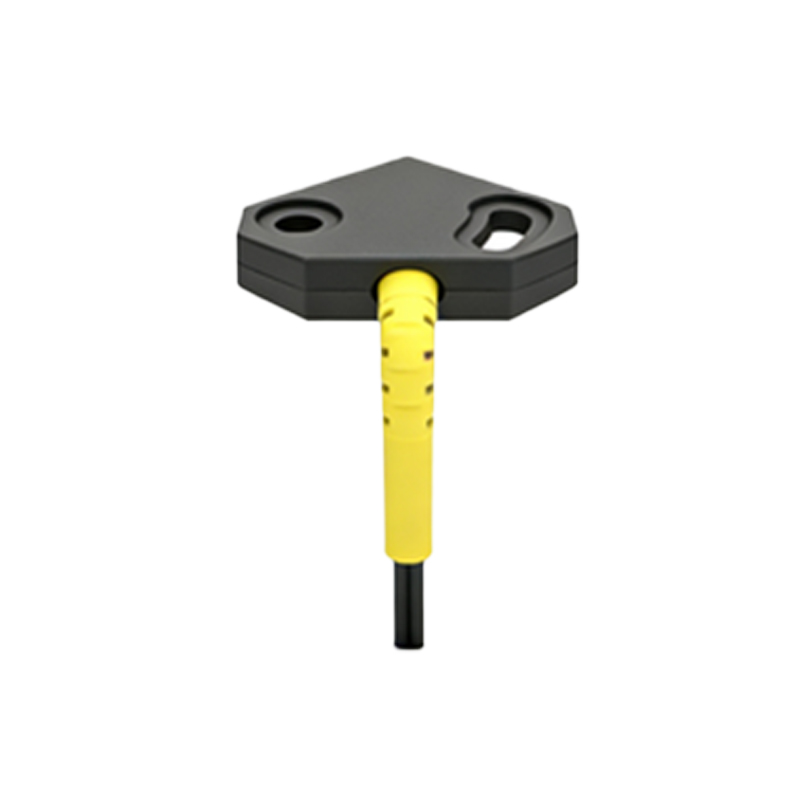
The functionality of photoelectric sensors is based on three primary operating modes: through-beam, retro-reflective, and diffuse-reflective. In the through-beam (or opposed) mode, the emitter and receiver are housed in separate units positioned opposite each other. Detection occurs when the light beam traveling from the emitter to the receiver is physically blocked by an object. This mode offers the longest sensing range and highest reliability, as it is less affected by the object's color, surface finish, or angle. The retro-reflective mode places both the emitter and receiver in the same housing. The emitted light is directed towards a specialized reflector, which bounces the beam directly back to the receiver. An object is detected when it interrupts this return beam. This mode provides a good balance of range and ease of installation. Finally, the diffuse-reflective (or proximity) mode also houses the emitter and receiver together. Here, the sensor detects light that is reflected directly off the surface of the target object itself. The sensing distance is shorter and can be influenced by the object's color and texture, but it requires no separate reflector, simplifying setup for many applications.

Key Components and Light Sources
The essential components of a photoelectric sensor include the light source, the photodetector (receiver), and the signal processing circuitry. The choice of light source is critical and depends on the application requirements. Red LED light is common for general-purpose sensing due to its visibility and cost-effectiveness. Infrared (IR) LEDs are widely used for their invisibility to the human eye and strong resistance to ambient light interference, making them suitable for dusty or outdoor environments. Laser diodes provide a highly focused, coherent beam that enables precise detection of very small objects or exact distance measurement over longer ranges. Blue or green LEDs are sometimes employed for specific material detection, as certain substances reflect or absorb these wavelengths differently. The photodetector, usually a phototransistor or photodiode, converts the received light intensity into a proportional electrical current. Advanced circuitry then amplifies this signal, applies thresholds to filter noise, and outputs a clean digital or analog signal to a programmable logic controller (PLC) or other control system.
Critical Functions in Industrial Systems
Photoelectric sensors perform indispensable roles across manufacturing and logistics. One of their primary functions is object detection and counting on conveyor belts, ensuring proper part flow and inventory management. They are crucial for precise positioning, such as verifying the correct placement of components on an assembly line or detecting the edge of a material in web processing. In packaging machinery, they confirm the presence of a product in a box or detect labels on bottles. Safety systems utilize them as part of light curtains to create invisible barriers around hazardous machinery, instantly stopping operation if the beam is broken. Furthermore, specialized versions can perform color detection, contrast sensing (e.g., detecting a mark on a background), or luminescence sensing. Their versatility allows them to solve complex automation challenges, from simple presence/absence checks to sophisticated quality control inspections, directly contributing to increased efficiency, reduced waste, and enhanced operational safety.
Advantages and Selection Considerations
The advantages of photoelectric sensors are numerous. Their non-contact nature eliminates mechanical wear, ensuring a long operational life and minimal maintenance. They offer high-speed response times, capable of detecting objects moving at extremely high velocities. Many models are designed with robust housings (often IP67 or higher ratings) to withstand dust, moisture, vibration, and temperature extremes common in industrial settings. When selecting a sensor, engineers must consider several factors: the required sensing distance, the size and characteristics of the target object (including color, material, and surface finish), the response speed needed, the environmental conditions (ambient light, contaminants), and the desired output type (e.g., NPN/PNP discrete, analog, or IO-Link for smart sensor capabilities). Proper selection and installation are key to reliable performance, ensuring the sensor integrates seamlessly into the control architecture to provide accurate and consistent data for automated decision-making.