Introduction to Proximity Sensing Technology
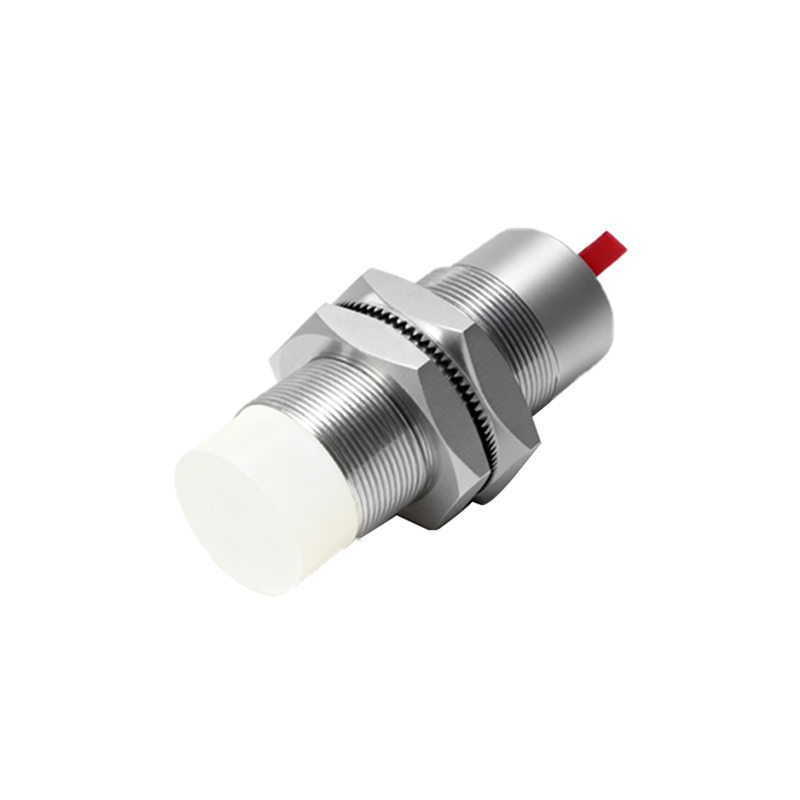
Proximity sensors are fundamental components in modern industrial automation, providing non-contact detection of objects within a specific range. Among the various sensing distances available, the 10mm proximity switch sensor represents a highly versatile and widely adopted standard. This specific sensing range strikes an optimal balance between detection reliability, physical size, and installation flexibility. These sensors operate on principles such as inductive, capacitive, or magnetic fields, with inductive types being predominant for metal detection in machinery. The 10mm designation typically refers to the nominal sensing distance, a critical parameter defining the operational envelope where the sensor can reliably detect a standard target.
Key Operating Principles and Types
The 10mm inductive proximity sensor, the most common variant, generates an oscillating electromagnetic field from its face. When a metallic object enters this field, eddy currents are induced, causing a change in the oscillation amplitude. This change is detected by the sensor's circuitry, triggering a solid-state output signal. Capacitive 10mm sensors function similarly but react to changes in capacitance caused by both conductive and non-conductive materials, making them suitable for liquids, plastics, and granular substances. Magnetic 10mm sensors, or reed switches, activate in the presence of a magnetic field. The choice between these types depends entirely on the target material and the specific application environment, with inductive sensors being the default for general metal detection in factory settings.
Critical Technical Specifications and Selection Criteria
Selecting the correct 10mm proximity switch involves analyzing several key specifications beyond just the sensing distance. The rated operating distance, or Sn, is standardized at 10mm, but engineers must consider factors like the assurance factor, which accounts for voltage fluctuations and temperature drift. The hysteresis, typically 10-20% of Sn, prevents output chatter when a target is at the detection edge. Response frequency dictates how quickly the sensor can detect objects passing by, crucial for high-speed counting applications. Output configuration (PNP/NPN, NO/NC) must match the control system's PLC input card. Furthermore, housing material (often nickel-plated brass or stainless steel), protection rating (IP67/IP69K for washdown environments), and temperature range are vital for ensuring longevity in harsh industrial conditions.
Installation, Mounting, and Alignment Best Practices
Proper installation is paramount for achieving reliable and repeatable detection with a 10mm sensor. A primary rule is to maintain the recommended lateral and axial spacing between multiple sensors to prevent mutual interference of their electromagnetic fields. The sensor should be mounted securely to minimize vibration, which can affect performance. The sensing face must be flush-mounted or, if non-flush (shielded) design is used, it can be embedded in metal. Engineers must account for the "correct sensing object," usually a square steel plate of a standard size, as the rated 10mm distance is calibrated against this. Real-world targets of different sizes, shapes, and materials will exhibit an effective reduction factor, altering the practical sensing range.
Common Industrial Applications and Use Cases
The 10mm sensing range finds extensive application across diverse industries. In automotive manufacturing, these sensors verify the presence of metal components on assembly lines, such as engine blocks or brake calipers. In packaging machinery, they detect the position of metallic parts on rotating cams or confirm the passage of foil-wrapped products. They are integral to CNC machining centers for tool presence verification and part positioning. In material handling, 10mm sensors monitor conveyor chain links, detect pallet positions, and provide end-of-travel limits on actuators. Their robust construction makes them ideal for these demanding roles, providing millions of reliable switching cycles without mechanical wear.
Troubleshooting and Maintenance Guidelines
Despite their robustness, 10mm proximity sensors can encounter issues. Common failures include output signal problems due to wiring errors, load damage, or electrical noise interference. A systematic approach to troubleshooting involves verifying power supply voltage, checking for short circuits, and inspecting the load. Accumulation of metallic swarf or conductive dust on the sensing face can cause permanent activation or reduced sensing distance. Regular cleaning with a non-abrasive cloth is recommended. Using an oscilloscope to monitor the output or a field tester to check the switching state can diagnose intermittent problems. Preventive maintenance includes periodic checks of mounting integrity, cable condition, and performance verification with a standard test target.
Advancements and Future Trends
The evolution of 10mm proximity sensors continues, driven by Industry 4.0 demands. Modern variants now incorporate IO-Link communication, enabling the transmission of detailed diagnostic data (like operating hours, temperature, and switch cycle counts) to higher-level control systems for predictive maintenance.