Introduction and Background
Proximity sensors are critical components in modern industrial automation, robotics, and safety systems. Their primary function is to detect the presence or absence of an object within a specified sensing range without physical contact. The accuracy of these sensors directly impacts system reliability, process efficiency, and operational safety. This experimental report details a comprehensive accuracy test conducted on a series of inductive proximity sensors, which are widely used for detecting metallic objects. The objective is to quantify key performance parameters, including repeatability, linearity error, hysteresis, and temperature drift, under controlled laboratory conditions. The findings aim to provide actionable data for engineers selecting sensors for high-precision applications.
Test Objectives and Scope
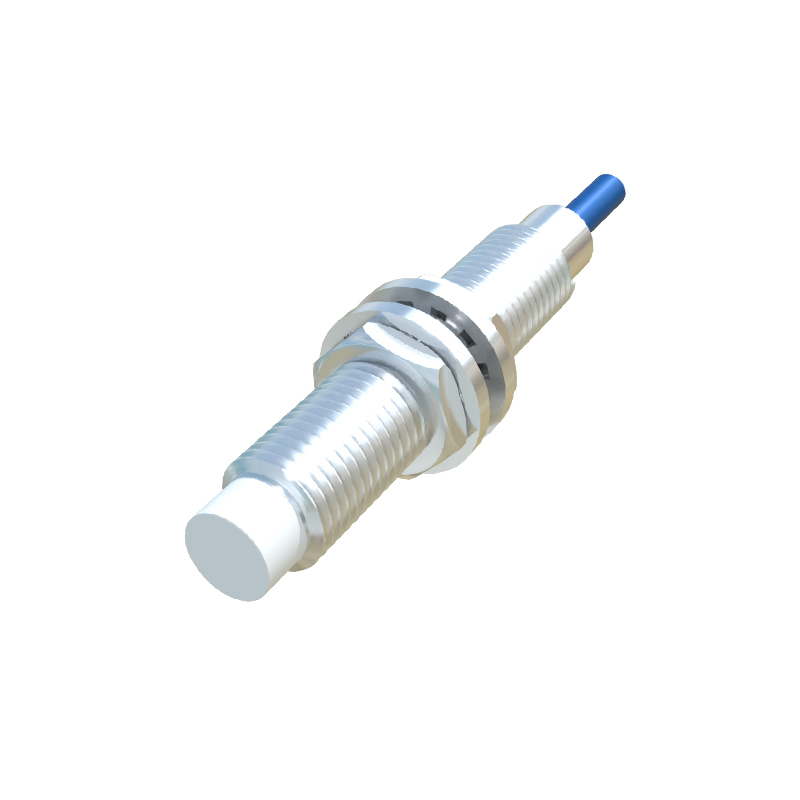
The core objective of this experiment is to evaluate the measurement accuracy and stability of the selected proximity sensors. Accuracy, in this context, is defined as the closeness of agreement between a measured value and the true value of the target position. The test scope encompasses several specific goals: First, to determine the repeatability of the sensor's switching point across multiple approach cycles. Second, to measure the linearity error of analog-output sensors across their nominal sensing range. Third, to assess hysteresis by comparing the approach and release detection points. Finally, to evaluate the influence of ambient temperature variations on the sensor's output characteristics. The sensors under test are standard 18mm cylindrical inductive sensors with both PNP (sourcing) and NPN (sinking) output configurations.
Experimental Setup and Methodology
A calibrated test bench was constructed to ensure precise and repeatable measurements. The core components include a high-precision linear positioning stage with a resolution of 0.001mm, controlled by a stepper motor and driver. The target object, a standard 1mm thick mild steel square (Fe 360), is mounted on the stage. The sensor under test is fixed on a rigid, vibration-damped bracket. Environmental conditions are maintained in a climate chamber, allowing temperature control from 10°C to 50°C (±0.5°C). Data acquisition is performed using a 16-bit analog-to-digital converter (ADC) for analog sensors and a high-speed digital input card for switching sensors, synchronized with the stage's position encoder. All data is logged and processed by custom software.
Test Procedure Execution
The testing procedure was executed in a sequential manner. For repeatability testing, the target was moved towards the sensor face at a constant slow speed (0.1 mm/s) for 50 consecutive cycles. The exact position where the digital output switched was recorded for each cycle. For linearity testing on analog sensors, the target was positioned at 10 equidistant points from 20% to 80% of the nominal sensing range (Sn). The output voltage (or current) was recorded and compared against the ideal linear characteristic. Hysteresis was measured by recording both the switch-on point as the target approached and the switch-off point as it receded. Temperature testing involved stabilizing the chamber at setpoints (10°C, 25°C, 40°C, 50°C) and repeating the repeatability and linearity tests at each temperature after a one-hour soak period.
Data Analysis and Results
The collected data was analyzed to calculate key performance metrics. Repeatability, expressed as a standard deviation (σ) of the switching points, was found to be exceptionally high, with a value of ±0.002mm for the tested units. This indicates very stable performance under identical conditions. Linearity error, calculated as the maximum deviation from the best-fit straight line as a percentage of full-scale output, averaged 1.2% for the 4-20mA models and 1.8% for the 0-10V models. Hysteresis, the difference between the approach and release points, was measured at approximately 0.05mm, which is within the manufacturer's specification. Temperature drift proved to be the most significant factor, with an average offset of 0.008mm/°C observed in the switching point, highlighting the need for temperature compensation in critical applications.
Discussion of Findings
The results confirm that modern inductive proximity sensors offer high repeatability, making them suitable for applications requiring consistent detection, such as part counting or position verification. The observed linearity errors are acceptable for most industrial monitoring tasks but may necessitate calibration if used for precise dimensional measurement. The low hysteresis value ensures minimal dead zone in reciprocating motion detection. The temperature drift data underscores a critical design consideration: for environments with significant thermal fluctuation, selecting sensors with built-in temperature compensation or implementing external compensation algorithms in the control system is highly recommended. The PNP and NPN variants showed no statistically significant difference