Introduction to Photoelectric Sensing Technology
Photoelectric sensors have become a cornerstone of modern automotive security and convenience systems, particularly within door and trunk locking mechanisms. These devices operate on a fundamental principle: they emit a beam of light, typically infrared, and detect changes in the received light signal. In the context of automotive locks, this technology is primarily employed for position sensing and object detection. The core components include an emitter, a receiver, and associated control circuitry. The emitter generates the light signal, which travels to a target—often a reflective surface or a designated receiver unit. Any interruption, reflection, or modulation of this beam is precisely detected by the receiver, generating an electrical signal for the vehicle's electronic control unit (ECU). This non-contact method offers significant advantages over traditional mechanical switches, including higher reliability, longer lifespan, and immunity to environmental contaminants like dust when properly sealed. The evolution from simple mechanical linkages to these sophisticated electronic sentinels marks a critical leap in automotive design, enabling smarter, more responsive vehicle access systems.
Core Operating Principles in Locking Mechanisms
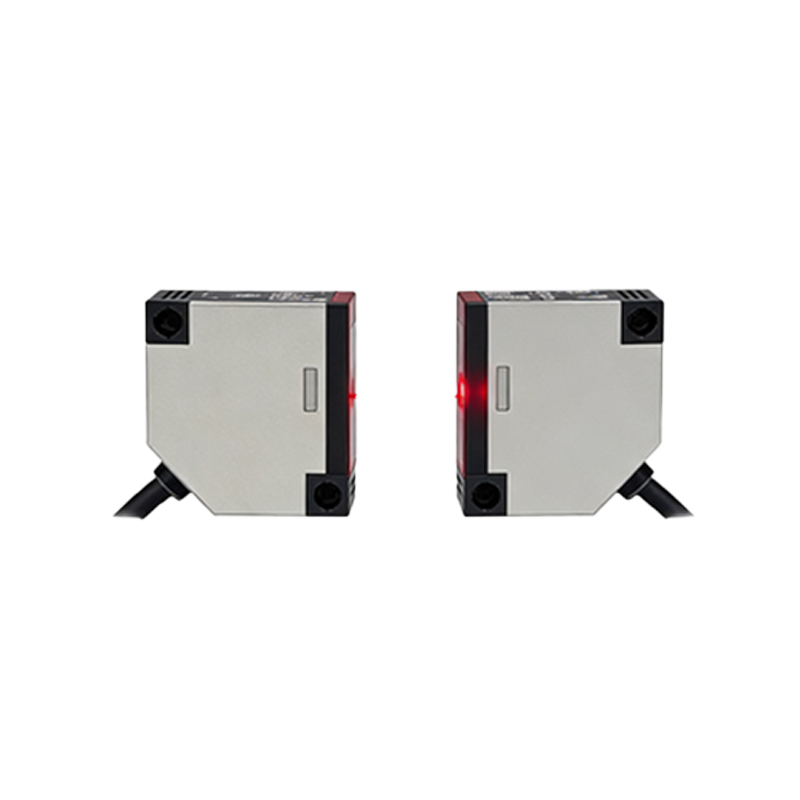
Within an automotive door handle or trunk latch assembly, photoelectric sensors function as precise digital eyes. Two primary configurations are prevalent: through-beam and reflective. In a through-beam setup, the emitter and receiver are separate units positioned opposite each other. When a user's hand interrupts the invisible beam between them, the sensor triggers a signal. This is commonly used for "hands-free" trunk opening systems or approach detection for keyless entry. The reflective type, often with the emitter and receiver housed together, detects the presence or absence of a specific reflective target attached to a moving part of the lock mechanism. For instance, it can monitor the exact position of the latch bolt or the rotary cam inside the door. By confirming whether the latch is in a "locked," "unlocked," or "ajar" state, the sensor provides crucial feedback to the central locking system and the vehicle's instrument cluster, ensuring the driver is accurately informed of the door's status.
Key Applications in Modern Vehicle Access
The integration of photoelectric sensors extends across various access points in contemporary vehicles. Their primary application is in Passive Keyless Entry (PKE) and Hands-Free Power Tailgate systems. A network of sensors embedded in door handles detects the approach of a key fob or an authorized user's hand, initiating an authentication sequence with the vehicle. This allows for door unlocking without physically pressing a button. Similarly, a kick-sensor under the rear bumper for trunk access utilizes an array of photoelectric sensors to detect specific foot motion, enhancing convenience when hands are full. Furthermore, these sensors are integral to anti-pinch systems in power windows and sunroofs, though in locks, their role is more about precise positional feedback. They ensure that a power-operated door or trunk latch completes its full opening or closing cycle safely and reliably, preventing mechanical damage and potential safety hazards.
Advantages Over Traditional Mechanical Switches
The adoption of photoelectric sensors in automotive locks is driven by several compelling advantages. Firstly, their non-contact nature eliminates mechanical wear and tear associated with physical switches and levers, leading to dramatically improved longevity and reduced maintenance. Secondly, they offer superior precision and faster response times, which are essential for seamless user experience in keyless systems. Thirdly, they are less susceptible to failure from moisture, dirt, or temperature fluctuations when hermetically sealed, a critical requirement in the harsh automotive environment. Unlike mechanical contacts that can corrode or become intermittent, the optical path, if kept clean, remains consistently reliable. This robustness directly translates to higher vehicle reliability ratings and reduced warranty claims for automakers. Additionally, their digital output interfaces seamlessly with modern vehicle CAN/LIN bus networks, simplifying wiring harnesses and enabling more complex, software-driven logic for access control.
Design Challenges and Environmental Considerations
Despite their benefits, implementing photoelectric sensors in automotive locks presents distinct engineering challenges. The foremost issue is contamination. Dirt, ice, or road film on the lens can attenuate or block the light beam, causing sensor failure. Designers combat this with hydrophobic coatings, self-cleaning lens designs, and redundant sensing algorithms. Secondly, extreme environmental conditions must be accounted for. Sensors must operate flawlessly across a temperature range from -40°C to 85°C and withstand intense vibration, humidity, and exposure to various chemicals like car wash detergents. Optical interference from direct sunlight or other infrared sources is another critical factor. This is mitigated by using modulated light signals at specific frequencies and advanced filtering in the receiver circuitry to distinguish the genuine signal from ambient noise. The placement of these sensors is also crucial; they must be inconspicuous for aesthetics yet optimally positioned for functional reliability, often requiring extensive prototyping and validation testing.
Future Trends and Integration with Smart Systems
The future of photoelectric sensors in automotive locks is tightly interwoven with the progression towards fully autonomous and connected vehicles. Next-generation sensors are evolving towards miniaturization and integration with other sensing modalities. We are moving towards multi-functional modules that combine photoelectric sensing with capacitive touch, ultrasonic proximity detection, or even simple camera-based vision. This sensor fusion creates a more robust and context-aware perception system for vehicle access. Furthermore, as biometric authentication (like fingerprint or facial recognition) becomes more prevalent, photoelectric sensors may play a supporting role in enabling these functions. The concept of the "digital key" stored on a smartphone will rely heavily on precise, low-power proximity sensors to detect a user's approach and intent. Ultimately, the humble photoelectric sensor will remain a vital, albeit increasingly intelligent, component in the ecosystem of secure, convenient, and intuitive vehicle access for years to come.