Introduction to Vibration Measurement with Photoelectric Sensors
Vibration measurement is a critical aspect of industrial monitoring and predictive maintenance, enabling the early detection of machinery faults and ensuring operational safety. Traditional methods, such as accelerometers or piezoelectric sensors, have been widely used but often involve physical contact with the target, which can introduce mass loading effects or be impractical in harsh environments. In contrast, photoelectric sensors offer a non-contact alternative that leverages light-based technology to detect and quantify vibration. These sensors operate by emitting a light beam—typically infrared, laser, or visible light—toward a target surface and measuring changes in the reflected or interrupted light caused by motion. By analyzing these variations, engineers can derive vibration parameters like displacement, frequency, and amplitude without direct interaction, making them ideal for applications where contamination, high temperatures, or accessibility issues exist. This article explores the principles, setup, and practical considerations for using photoelectric sensors in vibration measurement, highlighting their advantages and limitations in industrial settings.
Working Principles of Photoelectric Vibration Sensors
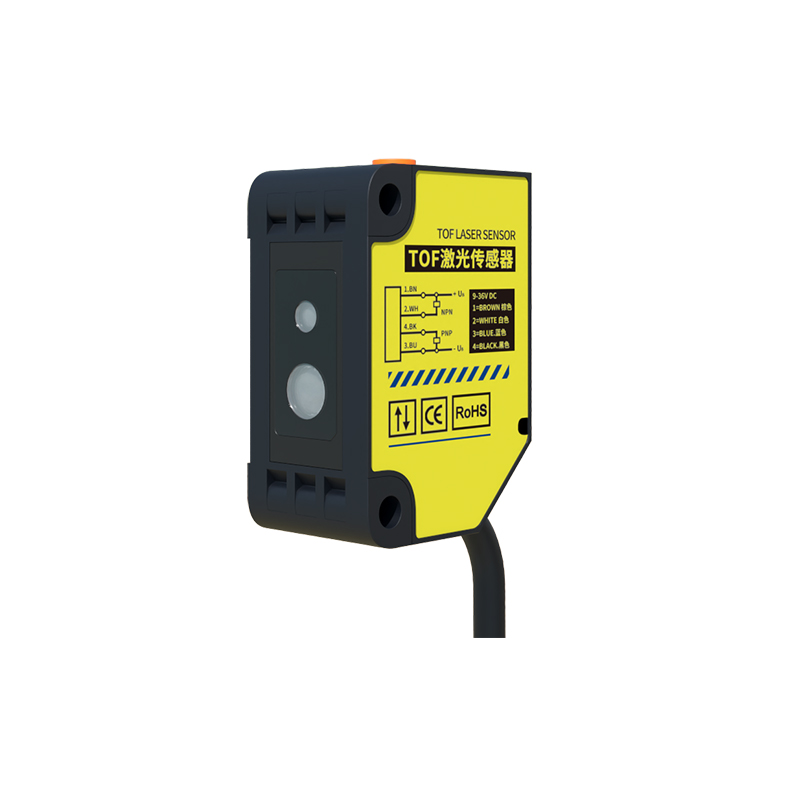
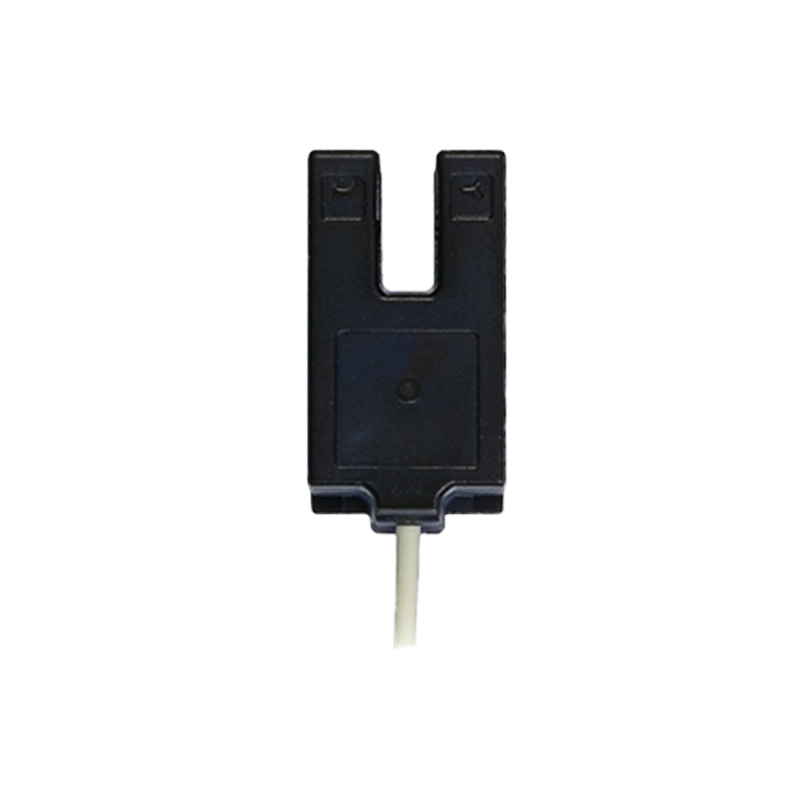
Photoelectric sensors for vibration measurement rely on optical principles to capture motion data. The most common types include through-beam, retro-reflective, and diffuse-reflective sensors, each suited to different scenarios. In vibration analysis, diffuse-reflective sensors are often preferred as they require only a single unit and can detect light reflected directly from the target surface. The sensor emits a modulated light beam that strikes the vibrating object; as the object moves, the distance between the sensor and surface changes, altering the intensity or position of the reflected light. This change is converted into an electrical signal by a photodetector, such as a photodiode or phototransistor, which is then processed to extract vibration characteristics. Advanced sensors may incorporate laser Doppler vibrometry principles, where the frequency shift of reflected light due to the Doppler effect is measured to calculate velocity and displacement with high precision. Key parameters influencing accuracy include the wavelength of light, sensor resolution, response time, and the reflectivity of the target surface. For instance, laser-based sensors provide finer resolution and longer ranges, making them suitable for high-frequency vibrations in precision equipment, while infrared sensors are more cost-effective for general-purpose monitoring.
System Setup and Calibration Procedures
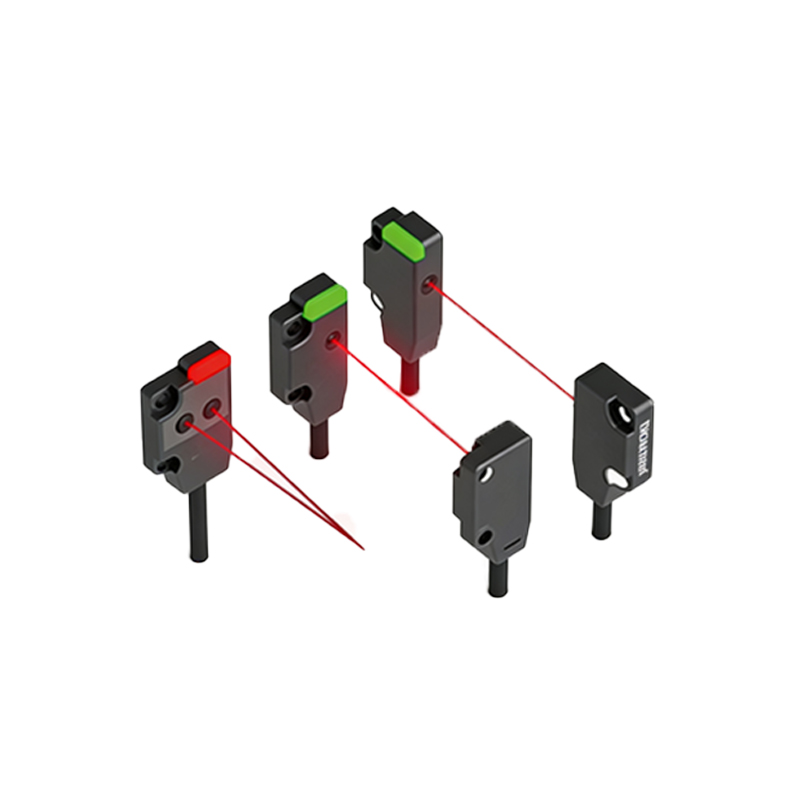
Implementing a photoelectric sensor system for vibration measurement requires careful setup to ensure reliable data acquisition. First, select a sensor with appropriate specifications, such as a measuring range that matches the expected vibration amplitudes (e.g., from microns to millimeters) and a frequency response that covers the relevant spectrum (typically from 0.1 Hz to several kHz). Mount the sensor securely on a stable platform, aligning it perpendicular to the target surface to minimize angular errors. Environmental factors like ambient light, dust, or temperature fluctuations can interfere with readings, so consider using shielded enclosures or sensors with background suppression technology. Calibration is essential for accuracy: begin by placing the target at a known reference distance and recording the sensor output. Use a calibration tool, such as a shaker table with a reference accelerometer, to correlate the photoelectric sensor's signal with standard vibration metrics. Adjust gain and filtering settings in the signal conditioning unit to enhance signal-to-noise ratio, especially in low-amplitude scenarios. For dynamic measurements, integrate the sensor with data acquisition hardware like oscilloscopes or PLCs, and employ software algorithms—such as Fast Fourier Transform (FFT)—to analyze frequency domains. Regular validation against certified instruments helps maintain long-term precision, particularly in critical applications like turbine monitoring or structural health assessment.
Advantages and Limitations in Industrial Applications
Photoelectric sensors offer distinct benefits for vibration measurement in industrial environments. Their non-contact nature eliminates wear and tear, allowing continuous monitoring without affecting the target's dynamics. This is valuable in high-speed machinery, rotating components, or delicate structures where physical sensors could cause damage. Additionally, they provide fast response times and high resolution, enabling detection of subtle vibrations that might indicate early-stage faults like imbalance, misalignment, or bearing wear. They are also versatile, capable of measuring a wide range of materials, including metals, plastics, and composites, as long as the surface is sufficiently reflective. However, limitations exist: performance can degrade with opaque or absorptive surfaces, requiring surface preparation or reflective tapes. Environmental interferences, such as strong ambient light or airborne particles, may necessitate protective measures. Cost can be higher than traditional contact sensors for advanced models, and setup complexity might require specialized expertise. Despite these challenges, photoelectric sensors are increasingly adopted in industries like automotive, aerospace, and manufacturing for condition monitoring, quality control, and research applications, where their precision and non-intrusive operation justify the investment.
Case Studies and Practical Implementation Examples
In real-world scenarios, photoelectric sensors have proven effective for diverse vibration measurement tasks. For example, in a paper manufacturing plant, laser-based sensors were installed to monitor the vibration of rotating rollers. By detecting amplitude changes at frequencies above 500 Hz, the system identified bearing defects weeks before failure, reducing downtime and maintenance costs. Another case involves wind turbine blade monitoring, where infrared photoelectric sensors mounted on towers measure blade oscillations during operation. The non-contact approach avoids adding mass to the blades, and data analysis helps optimize aerodynamic performance and structural integrity. In automotive testing, photoelectric sensors assess engine component vibrations under load, providing insights into noise, vibration, and harshness (NVH) characteristics without physical contact that could alter results. For laboratory research, high-precision laser Doppler vibrometers—a specialized photoelectric type—are used to analyze micro-vibrations in electronic devices or biological samples. These examples underscore the adaptability of photoelectric technology, though success depends on tailoring the sensor choice to specific conditions, such as selecting a wavelength that penetrates factory smoke or using ruggedized housings for outdoor use.
Future Trends and Technological Developments
The future of photoelectric vibration measurement is shaped by advancements in sensor technology and data analytics. Miniaturization and cost reduction are making high-resolution sensors more accessible for widespread industrial use. Integration with IoT platforms allows real-time wireless monitoring, where photoelectric sensors transmit vibration data to cloud systems for predictive analytics and automated alerts. Enhanced algorithms, including machine learning models, can improve fault diagnosis by correlating vibration patterns with historical failure data. Developments in multi-point sensing and 3D vibration mapping using arrayed photoelectric sensors enable comprehensive structural analysis. Additionally, improvements in light source efficiency and noise reduction techniques are expanding applicability in challenging environments, such as high-temperature zones or corrosive atmospheres. As industries embrace smart manufacturing and digital twins, photoelectric sensors will play a pivotal role in providing accurate, non-contact vibration data for optimizing machinery health and operational efficiency. Engineers should stay informed about these trends to leverage photoelectric solutions effectively, ensuring robust and forward-looking vibration monitoring strategies.