Understanding Photoelectric Sensors in Industrial Automation
Photoelectric sensors are indispensable components in modern industrial machinery, serving as the eyes of automated systems. These devices operate by emitting a beam of light, typically infrared, visible red, or laser, and detecting changes in the received light signal. The fundamental principle involves the interruption, reflection, or modulation of this light beam by a target object. This capability allows for non-contact detection, measurement, and positioning of objects with high precision and reliability. In the context of machinery, photoelectric sensors are deployed for a vast array of tasks, from simple part presence verification on a conveyor belt to complex dimensional gauging and edge detection in high-speed packaging lines. Their non-contact nature eliminates mechanical wear and tear, ensuring long service life and minimal maintenance, which is critical for continuous production environments. The ability to detect a wide range of materials, including metals, plastics, glass, and liquids, further enhances their versatility across different manufacturing sectors.
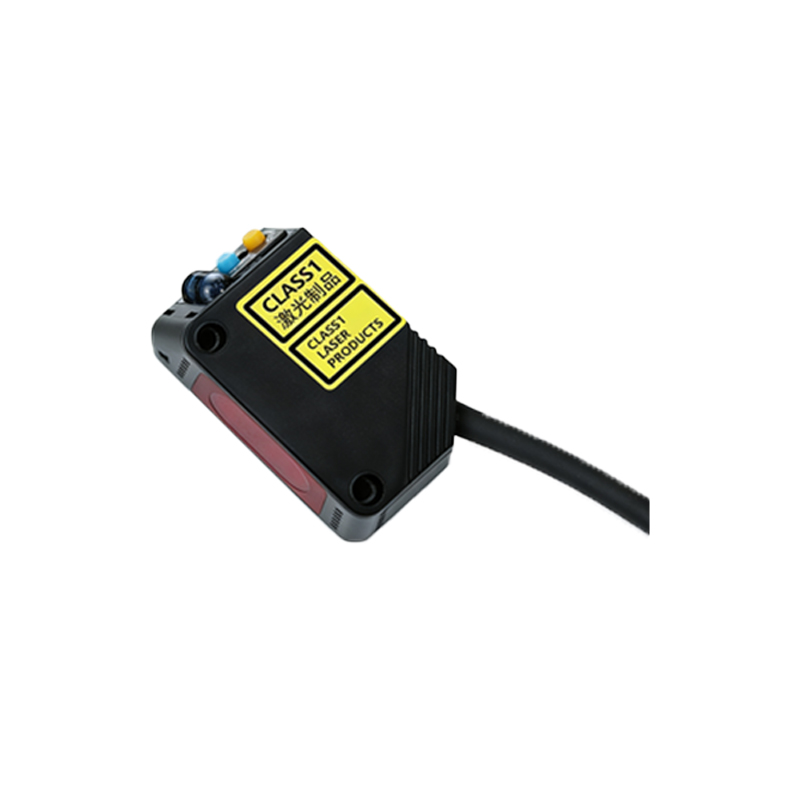
Key Types and Sensing Modes for Machinery Applications
Selecting the right photoelectric sensor begins with understanding the primary sensing modes. The three fundamental types are through-beam, retro-reflective, and diffuse reflective. Through-beam sensors consist of separate emitter and receiver units. The object is detected when it breaks the light beam between them. This mode offers the longest sensing range and highest reliability, ideal for precise detection in harsh environments or for small objects. Retro-reflective sensors house both emitter and receiver in a single housing, using a reflector to bounce the light beam back. Detection occurs when an object interrupts the beam. They provide a good balance of range and ease of installation, suitable for palletizing and material handling. Diffuse reflective sensors detect objects by measuring the light reflected directly off the target's surface. Their sensing distance depends on the target's color, reflectivity, and surface texture. This self-contained mode is perfect for applications where mounting a reflector or separate receiver is impractical, such as detecting objects on a vibrating platform or within a confined space.
Critical Selection Criteria for Optimal Performance
Choosing the correct photoelectric sensor requires a detailed analysis of the application parameters. First, consider the sensing distance and the required excess gain—a measure of the sensor's reserve light energy to overcome environmental challenges like dust, fog, or dirty lenses. For long-range or dirty environments, a sensor with high excess gain is essential. Second, the size, material, color, and surface finish of the target object directly influence the sensor's response. A glossy white object reflects more light than a matte black one, potentially requiring a different sensor model or adjustment. Third, the operating environment dictates the needed housing material (e.g., metal or plastic), ingress protection (IP) rating for resistance to dust and water, and temperature tolerance. Vibration, ambient light from factory fixtures, and electrical noise are other environmental factors that must be mitigated. Finally, the output type (e.g., NPN/PNP transistor, analog, or IO-Link) must be compatible with the machinery's programmable logic controller (PLC) or other control systems.
Advanced Features Enhancing Machinery Intelligence
Modern photoelectric sensors incorporate advanced features that elevate machinery intelligence and flexibility. Background suppression technology allows a diffuse sensor to ignore objects beyond a set distance, enabling precise detection at a specific range regardless of color or reflectivity, which is invaluable for robotic pick-and-place operations. Contrast sensors are specialized for detecting marks or print on materials, crucial in labeling and packaging. Fiber optic versions, where the sensing head is connected via flexible light cables, enable detection in extremely hot, space-constrained, or hazardous areas. The integration of IO-Link communication transforms a simple sensor into a smart device, enabling remote parameter setting, real-time diagnostics, and process data monitoring. This digital connectivity facilitates predictive maintenance, reduces downtime, and simplifies integration into Industry 4.0 frameworks. Laser-based sensors offer extremely small, precise spot sizes for detecting minute parts or performing exact positioning tasks.
Application-Specific Solutions Across Industries
The application of photoelectric sensors spans the entire industrial landscape. In automotive assembly, they ensure correct part sequencing and robot guidance. In food and beverage processing, stainless steel housings and high-pressure washdown ratings are used for hygiene-critical detection tasks. In packaging machinery, sensors count products, control fill levels, and verify label placement at high speeds. In material handling and logistics, they control conveyor flow, detect jams, and manage sorting systems. In woodworking and metalworking, they provide safety interlocks and position feedback for cutting tools. For every application, a tailored solution exists. It is paramount to consult with sensor specialists or utilize detailed selection guides provided by manufacturers. Providing clear application details—such as target description, required sensing distance, environmental conditions, and desired output—ensures the selection of a sensor that delivers reliable, long-term performance, maximizing machinery uptime and productivity.