Introduction to Analog Proximity Sensors
Analog proximity sensors are essential components in modern industrial automation, designed to detect the presence or absence of objects without physical contact. Unlike digital sensors that provide a simple on/off signal, analog variants offer continuous output signals proportional to the distance between the sensor and the target. This capability enables precise measurement and control in applications such as position monitoring, thickness gauging, and material handling. The working principle relies on electromagnetic or capacitive fields, with common types including inductive and capacitive analog sensors. These devices are widely used in manufacturing, robotics, and automotive industries due to their reliability and adaptability to varying environmental conditions.
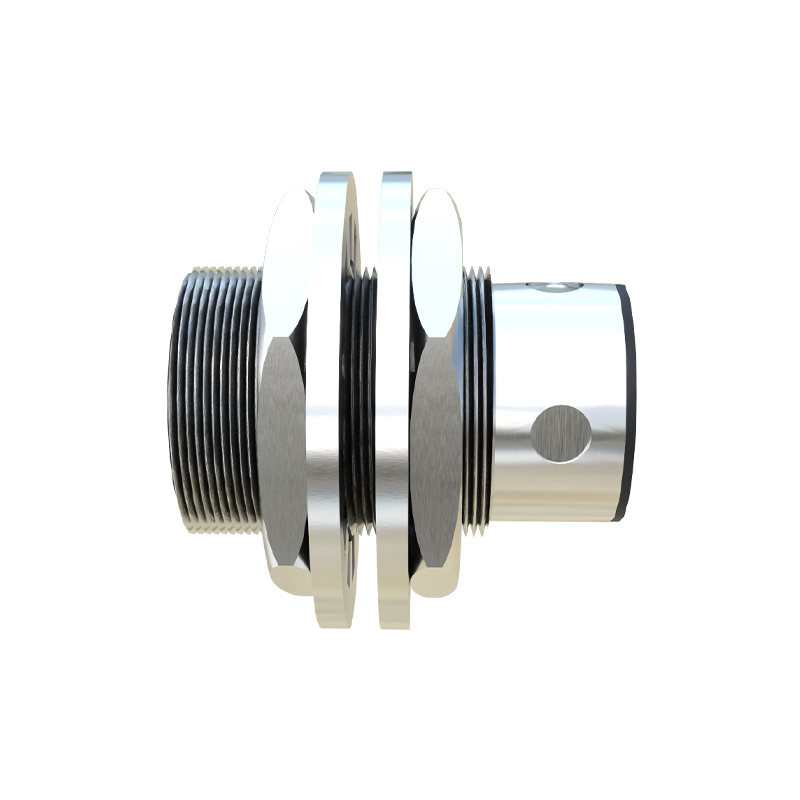
Core Operating Principles
The fundamental operation of analog proximity sensors involves generating an electromagnetic or electrostatic field and measuring changes caused by a target object. Inductive sensors, for instance, use a coil and oscillator to produce a high-frequency magnetic field. When a metallic object enters this field, eddy currents are induced, altering the oscillation amplitude. The sensor's circuitry converts this change into an analog voltage or current signal, typically ranging from 0-10V or 4-20mA, which corresponds linearly to the distance. Capacitive sensors operate similarly but detect both metallic and non-metallic materials by measuring changes in capacitance between the sensor and the target. This versatility makes them suitable for diverse materials like plastics, liquids, or granular substances.
Signal Output and Calibration
Analog proximity sensors provide continuous output signals that vary with distance, allowing for fine-tuned control in industrial systems. The output is often linearized to ensure accuracy across the sensing range, with common standards including voltage outputs (e.g., 0-10V) and current loops (e.g., 4-20mA). Calibration is critical to account for factors like target material, size, and environmental interference. Engineers typically adjust the sensor's zero and span settings to map the output signal to specific distance values. For example, in a packaging line, a calibrated analog sensor can monitor product height with millimeter precision, triggering adjustments in real-time to maintain quality. Regular maintenance, including cleaning and recalibration, ensures long-term performance and minimizes drift.
Applications in Industrial Automation
In industrial settings, analog proximity sensors play a pivotal role in enhancing efficiency and safety. They are employed in position feedback systems for robotic arms, where continuous distance data enables smooth and accurate movements. In conveyor systems, these sensors monitor object placement and detect jams by measuring gaps between items. Additionally, they are used in level sensing for tanks or silos, providing analog readings of material volumes to prevent overflows or shortages. The automotive industry utilizes them for assembly line inspections, such as verifying component alignment or measuring gaps in body panels. Their ability to operate in harsh conditions—like high temperatures, dust, or moisture—makes them indispensable for rugged environments.
Advantages Over Digital Sensors
Analog proximity sensors offer distinct benefits compared to digital counterparts, primarily due to their continuous output capability. They provide richer data for process control, enabling systems to respond to subtle changes rather than just threshold-based triggers. This is particularly useful in applications requiring proportional control, such as speed regulation based on object proximity or adaptive braking in machinery. Moreover, analog sensors reduce the need for multiple digital units, as a single analog device can cover a range of distances with high resolution. However, they may require more complex interfacing, such as analog-to-digital converters, when integrated with digital control systems like PLCs. Despite this, their precision and flexibility often justify the added complexity.
Selection and Installation Considerations
Choosing the right analog proximity sensor involves evaluating factors like sensing range, target material, output type, and environmental resilience. For metallic targets, inductive sensors are preferred, while capacitive sensors suit non-metallic applications. The sensing range should match the operational distance, with typical ranges from a few millimeters to several centimeters. Installation requires careful mounting to avoid interference from nearby objects or electrical noise, which can affect signal accuracy. Shielding and proper grounding are recommended to minimize electromagnetic interference. Additionally, users should consider the sensor's response time and temperature tolerance to ensure compatibility with dynamic industrial processes. Consulting manufacturer datasheets and industry standards, such as IEC 60947-5-2, aids in optimal selection.
Future Trends and Innovations
The evolution of analog proximity sensors is driven by advancements in miniaturization, smart connectivity, and enhanced materials. Emerging trends include the integration of IoT capabilities, allowing sensors to transmit analog data wirelessly for remote monitoring and predictive maintenance. Improved signal processing algorithms are increasing accuracy and reducing noise susceptibility, even in challenging environments. Furthermore, the development of hybrid sensors that combine analog outputs with