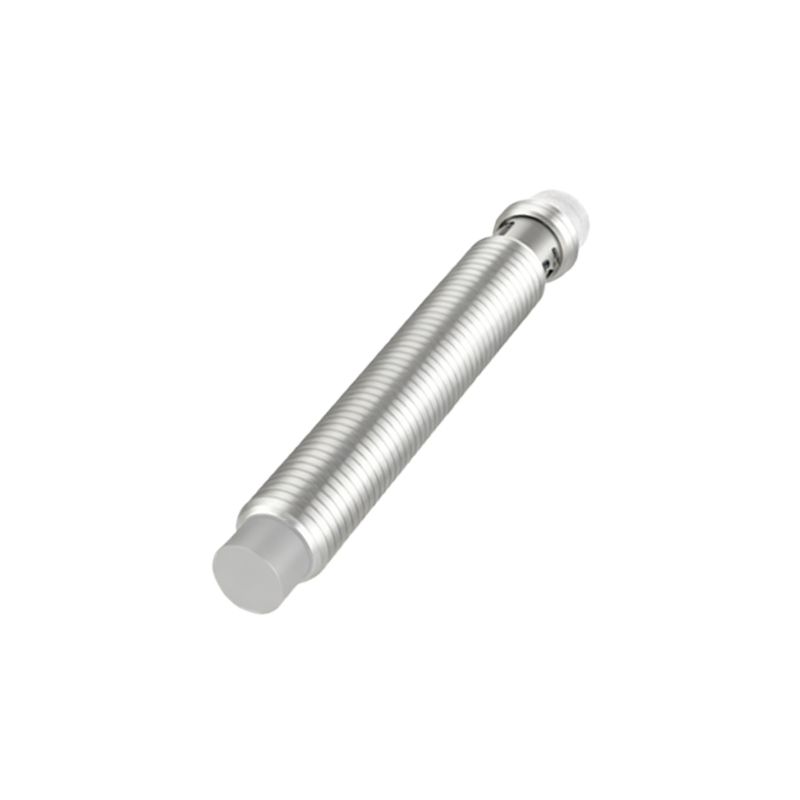
Proximity sensors are indispensable components in modern industrial automation, robotics, and countless electronic devices. Their primary function is to detect the presence or absence of an object within a specific range without physical contact. To select the right sensor for an application, engineers must thoroughly understand its key parameters. These specifications dictate the sensor's performance, reliability, and suitability for a given environment. This guide delves into the essential proximity sensor parameters, explaining their significance and impact.
Sensing Distance
This is arguably the most critical parameter. The nominal sensing distance, often labeled as Sn, is the ideal operating distance at which a standard target triggers the sensor under specified conditions. It is crucial to note that this is a theoretical value. The effective or real sensing distance can vary due to factors like target material, size, temperature, and supply voltage. Always consult the sensor's characteristic curves. For instance, a sensor rated for 10mm might reliably detect a mild steel square plate of a specified size at that distance, but the detection range for stainless steel or aluminum might be significantly less due to different electromagnetic properties.
Hysteresis
Hysteresis is the difference between the switch-on point (when the target approaches) and the switch-off point (when the target recedes). Expressed as a percentage of the sensing distance, this parameter prevents output signal oscillation or "chatter" when a target is positioned at the exact threshold of detection. A typical hysteresis of 3-10% ensures a clean, single switching action even in the presence of vibration or minor target position fluctuations.
Repeatability
Repeatability defines the sensor's precision. It is the maximum deviation observed when repeatedly detecting the same target under identical conditions (same approach direction, speed, temperature, and voltage). High repeatability, often within microns, is vital for precision positioning and measurement tasks. This parameter is distinct from accuracy, which relates to the deviation from an absolute true value.
Response Time
This parameter defines the sensor's speed. It includes both the approach time (from target entry into sensing range to output switch) and the release time (from target exit to output reset). Fast response times, measured in milliseconds or even microseconds, are essential for high-speed counting, sorting, or controlling fast-moving machinery. The total response time must be faster than the process cycle time.
Output Type
The electrical output determines how the sensor interfaces with control systems. The main types are:
Digital (Switching): NPN (sinking) or PNP (sourcing) transistor outputs are standard for DC sensors. They act as an electronic switch.
Analog: Provides a continuous output signal (e.g., 0-10V, 4-20mA) proportional to the distance to the target, enabling precise position monitoring.
IO-Link: A digital point-to-point communication protocol that transmits not only the switching signal but also detailed parameter data and diagnostic information, enabling Industry 4.0 capabilities.
Switching Frequency
Measured in Hertz (Hz), this indicates the maximum number of switching cycles (on/off) the sensor can perform per second. A sensor with a 1kHz switching frequency can handle 1000 detection events per second. This is critical for applications involving rapidly passing objects, such as on conveyor lines or rotary encoders.
Environmental Ratings
IP Rating (Ingress Protection): The IP code (e.g., IP67, IP69K) indicates protection against solid particles and liquids. IP67 allows temporary immersion, while IP69K protects against high-pressure, high-temperature washdowns.
Temperature Range: Specifies the ambient operating and storage temperature limits. Industrial sensors typically operate from -25°C to +70°C. Extreme environments may require specialized variants.
EMC (Electromagnetic Compatibility): Defines the sensor's immunity to electromagnetic interference from sources like motors or radio transmitters and its level of emitted interference.
Target Material and Size
Inductive proximity sensors detect metallic objects, with a correction factor applied for non-ferrous metals. Capacitive sensors can detect non-metallic materials. The sensor's datasheet specifies the standard target material (usually mild steel) and the minimum required target size for reliable operation at the rated sensing distance. Using a target smaller than specified reduces the effective range.
Mounting Considerations
Flush-mountable sensors can be installed embedded in metal without affecting their sensing range. Non-flush sensors require a clear lateral area (free of metal) to achieve their full range. The datasheet provides precise dimensional drawings and mounting clearances.
Understanding and cross-referencing these parameters against application requirements is the key to a successful implementation. Factors like the target material, required precision, environmental harshness, and needed response speed will dictate which sensor specifications are most critical. Always consult