Introduction to Color Mark Sensing Technology
In the high-speed, precision-driven world of industrial packaging, the ability to accurately detect registration marks, color codes, and print patterns is paramount. Color mark photoelectric sensors are specialized electro-optical devices engineered for this exact purpose. Unlike standard photoelectric sensors that detect presence or absence based on light intensity, color mark sensors discriminate based on the contrast in reflectivity between a specific colored mark and its background. This functionality is critical for tasks such as label placement, print registration, cut-to-length control, and product sorting based on color-coded packaging. The core principle involves emitting a beam of light—often red, green, or blue LED-based—onto a target surface and analyzing the reflected light's intensity at specific wavelengths. By comparing the reflected signal from the mark and the background, the sensor provides a reliable output signal to the packaging machine's controller, ensuring operations are synchronized and accurate.
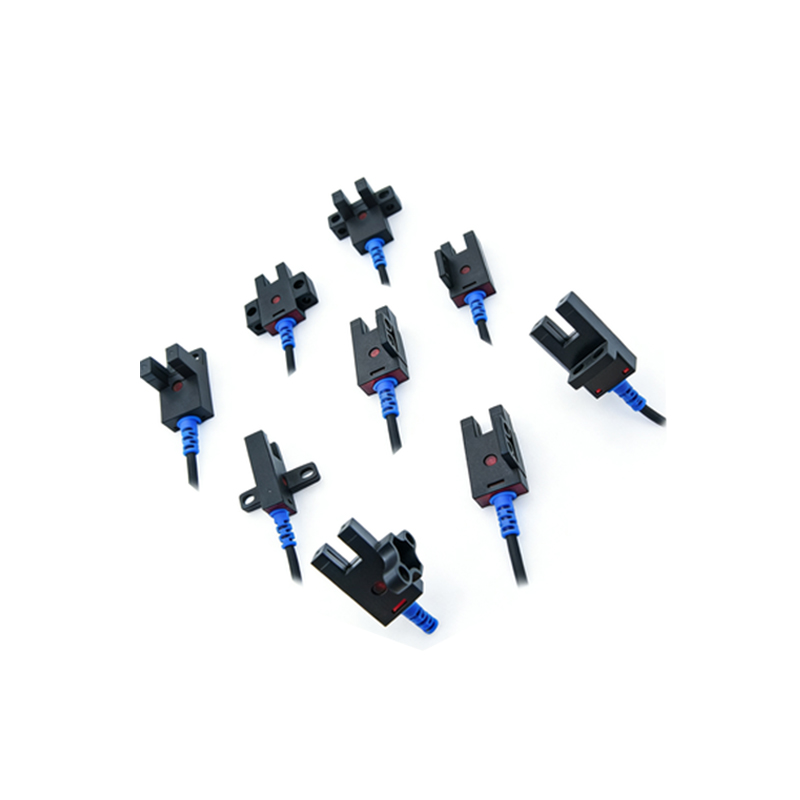
Core Operating Principles and Light Sources
The effectiveness of a color mark sensor hinges on its light source and receiver system. Common configurations use a red LED light source paired with a phototransistor receiver. However, for more challenging applications involving low-contrast marks or specific colors, sensors with green or blue LEDs are deployed. The choice of color is strategic: a green LED is highly effective for detecting marks on red backgrounds, while a blue LED excels with yellow or orange marks. Advanced models may incorporate RGB (Red, Green, Blue) technology or a dedicated white light source with a true-color recognition system. These systems analyze the full spectrum of reflected light, providing superior discrimination for subtle color differences. The sensor's receiver is tuned to be sensitive to the specific wavelength of the emitted light, and internal circuitry is designed to evaluate the contrast ratio, not just the absolute light level, making it immune to ambient light fluctuations and minor variations in sensing distance.
Key Performance Parameters for Selection
Selecting the appropriate color mark sensor requires careful analysis of several technical parameters. Sensing distance, the gap between the sensor head and the target, must be compatible with the machine's mechanical design. The mark size dictates the required spot size of the light beam; a smaller, more focused beam is necessary for detecting tiny registration dots. Contrast ratio, perhaps the most critical factor, is the difference in reflectivity between the mark and the background. Sensors specify a minimum detectable contrast, often as a percentage (e.g., 10:1). Response time, measured in microseconds, must be fast enough to keep pace with the line speed to avoid missed detections. Environmental robustness is also crucial; factors like dust, moisture, vibration, and exposure to cleaning chemicals necessitate sensors with high IP (Ingress Protection) ratings, such as IP67, and rugged, stainless-steel housings for washdown environments common in food and pharmaceutical packaging.
Integration and Setup in Packaging Systems
Successful integration goes beyond physical mounting. Proper alignment of the sensor perpendicular to the target surface is essential to ensure the light beam is correctly reflected. Setup involves teaching the sensor the reference values for both the mark and the background. This is typically done via a push-button or through a remote teach-in cable, allowing an operator to present each condition to the sensor. Modern sensors feature digital displays and intuitive interfaces for adjusting sensitivity thresholds, response speed, and output logic (light-on/dark-on). The output, usually an NPN or PNP transistor signal, is wired to the PLC or controller of the packaging machine. For complex applications, such as web guiding or multi-lane inspection, arrays of sensors can be networked or synchronized to provide coordinated control, ensuring precise timing for actions like cutting, folding, or applying labels.
Advanced Features and Industry 4.0 Connectivity
The evolution of Industry 4.0 and smart manufacturing has propelled color mark sensors into a new era of intelligence and connectivity. Contemporary sensors offer advanced features like automatic teach functions that continuously optimize sensitivity based on changing conditions, reducing maintenance downtime. Built-in diagnostics can monitor lens contamination or LED degradation, providing pre-failure alerts. Connectivity via IO-Link is becoming standard, enabling bidirectional digital communication. Through IO-Link, engineers can remotely monitor real-time sensor data (e.g., received light intensity, operating temperature), change parameters on-the-fly from a central HMI, and streamline device replacement and configuration. This data integration facilitates predictive maintenance, traceability, and overall equipment effectiveness (OEE) optimization, making the packaging line more adaptive and efficient.
Troubleshooting Common Application Challenges
Even with proper selection and setup, challenges can arise. Inconsistent detection often stems from poor contrast. Solutions include experimenting with different light source colors, adjusting the sensor's sensitivity threshold, or modifying the mark/background materials. Erratic signals may be caused by external light interference, requiring the use of sensors with modulated light sources or physical shrouding. Vibration can cause alignment drift, necessitating secure mounting brackets. For products with glossy or transparent packaging, polarized lens filters can be used to eliminate false triggers from specular reflections. A systematic approach—verifying power supply, checking output wiring, confirming teach values, and inspecting the optical lens for dirt—is the foundation of effective troubleshooting in high-availability packaging environments.
Conclusion and Future Outlook
Color mark photoelectric sensors are indispensable components in modern packaging machinery, ensuring precision, efficiency, and quality control. Their technology has matured from simple contrast detection to sophisticated color analysis with smart features. For the packaging engineer, a deep understanding of their operating principles, selection criteria, and integration techniques is essential for designing and maintaining high-performance systems. The future points toward even greater miniaturization, higher-speed processing for ultra-fast lines, and deeper integration with machine vision systems and AI-driven analytics for complex pattern recognition. As packaging demands continue to evolve toward greater customization and flexibility, the role of the intelligent, connected color mark sensor will only become more central to automated packaging success.