Understanding the Core Principle
Capacitive proximity sensors operate on the fundamental principle of capacitance change. At their heart is an oscillator circuit that generates an electrostatic field from the sensing face or a defined area. When a target object enters this active field, it alters the dielectric properties between the sensor's electrode and ground. This intrusion causes a measurable change in the circuit's capacitance. Once this change reaches a predetermined threshold, the sensor's output state switches, triggering an action such as turning a load on or off. Unlike inductive sensors, capacitive variants can detect a wide range of materials, including liquids, powders, granules, and both metallic and non-metallic solids, by sensing changes in the dielectric constant.
Key Components and Internal Architecture

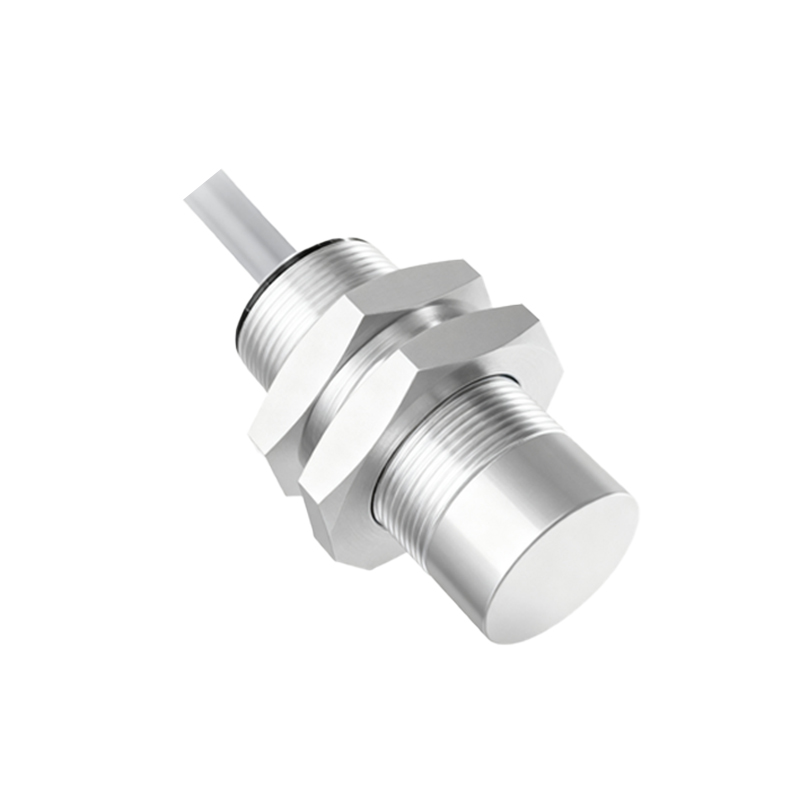
A standard capacitive proximity sensor comprises several critical components. The primary element is the sensing electrode, which forms the active surface. This is connected to a high-frequency oscillator. A Schmitt trigger circuit evaluates the oscillator's amplitude, converting the analog capacitance change into a definitive digital output signal. Modern sensors also incorporate compensation electrodes to mitigate the effects of humidity, condensation, or contaminant buildup on the face, enhancing stability. The housing is typically made from materials like PTFE or PBT to protect the electronics and ensure reliable performance in harsh industrial environments, offering high degrees of ingress protection (IP67, IP69K).
Primary Advantages Over Other Sensor Types
The most significant advantage of capacitive sensors is their material versatility. They are indispensable for applications where the target is non-metallic, such as detecting plastic bottles, wood panels, or glass containers. They excel at level detection for liquids or bulk solids through non-metallic container walls, enabling non-contact monitoring. Furthermore, they are less susceptible to environmental factors like dust or airborne particles compared to optical sensors, as the electrostatic field can penetrate certain non-conductive contaminants. Their solid-state design ensures long operational life with no moving parts to wear out.
Common Industrial Applications and Use Cases
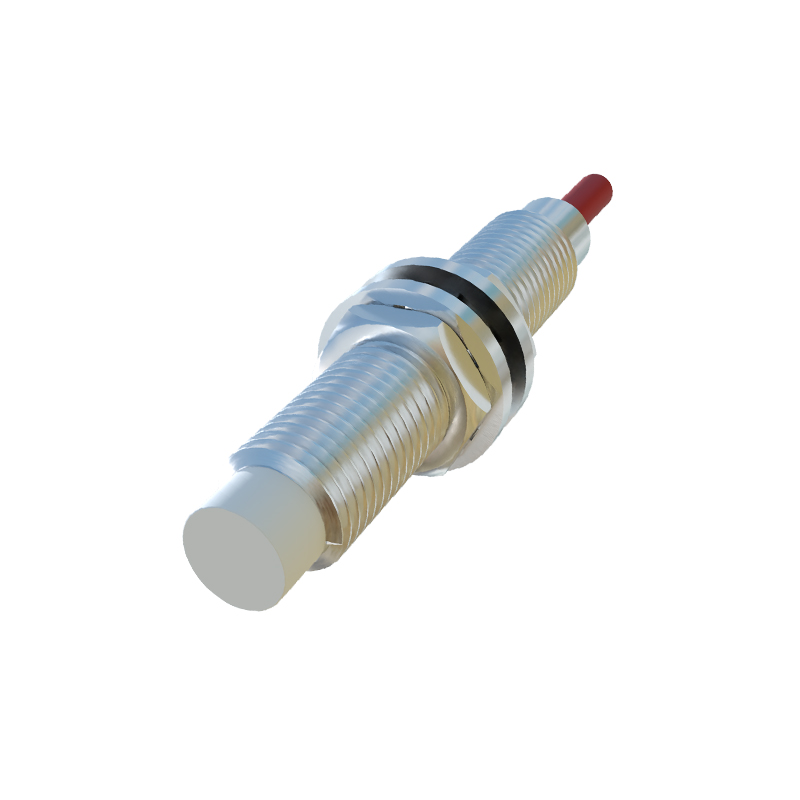
Capacitive sensors find widespread use across numerous industries. In packaging, they detect the presence of filled containers, labels, or foil seals. In the food and beverage sector, they are crucial for liquid level control in tanks and bottles. Woodworking and paper processing lines use them to sense material presence and sheet break detection. Another critical application is in assembly automation, where they verify the presence of gaskets, O-rings, or small plastic components. Their ability to function through thin walls makes them ideal for encapsulated or hygienic designs where the sensing element must be isolated from the process medium.
Critical Selection Parameters for Engineers
Selecting the correct capacitive sensor requires careful consideration of several parameters. The nominal sensing distance, or Sn, is specified for a standard target (often metal) but must be derated for materials with lower dielectric constants. The switching frequency determines how fast the sensor can respond to targets. Engineers must also consider the output type (PNP/NPN, NO/NC, analog) and the supply voltage range. Environmental factors dictate the needed housing material, temperature rating, and IP classification. For level sensing, the dielectric constant of the material and the container wall thickness are paramount for reliable operation.
Installation Best Practices and Calibration
Proper installation is key to optimal performance. Sensors should be mounted securely to minimize vibration effects. A critical practice is maintaining adequate clearance from surrounding metal objects (the "flush-mountable" or "non-flush" specification dictates this). For non-flush models, a metal-free zone around the sensing face is required to prevent false triggering. Most capacitive sensors feature a potentiometer for sensitivity adjustment. Calibration involves introducing the target material at the desired detection point and adjusting the sensitivity until the output reliably switches, then reducing it slightly to provide a safety margin against environmental drift.
Troubleshooting Common Operational Issues
Common issues include unstable switching or failure to detect. This is often due to an improperly adjusted sensitivity setting, either too high (causing false triggers from background objects or moisture) or too low. Contamination buildup on the sensing face can act as a permanent target, requiring cleaning. Electrical interference in cabling can be mitigated by using shielded cables and proper grounding. If a sensor detects targets through the container wall unintentionally, reducing the sensitivity or selecting a sensor with a smaller sensing field may be necessary. Always verify the target material's dielectric constant is sufficient for the sensor's capability.
Future Trends and Technological Developments
The future of capacitive sensing technology points toward miniaturization, enhanced intelligence, and greater integration. Chip-level sensors are enabling integration into consumer electronics and IoT devices. Advanced signal processing algorithms are improving discrimination between the actual target and environmental noise, such as water films