Introduction to Square Proximity Sensors
Square proximity sensors are a specialized category of non-contact detection devices widely utilized in industrial automation. Characterized by their compact, rectangular housing, these sensors offer distinct mechanical and electrical advantages over traditional cylindrical models. They are designed to detect the presence or absence of metallic objects without physical contact, primarily operating on inductive principles. The square form factor allows for efficient use of space in control panels and machinery, facilitating easier installation and integration into modern manufacturing systems. Their robust construction typically involves materials like PBT or stainless steel, ensuring reliable performance in challenging industrial environments involving dust, coolant, or mechanical vibration.
Key Technical Features and Advantages
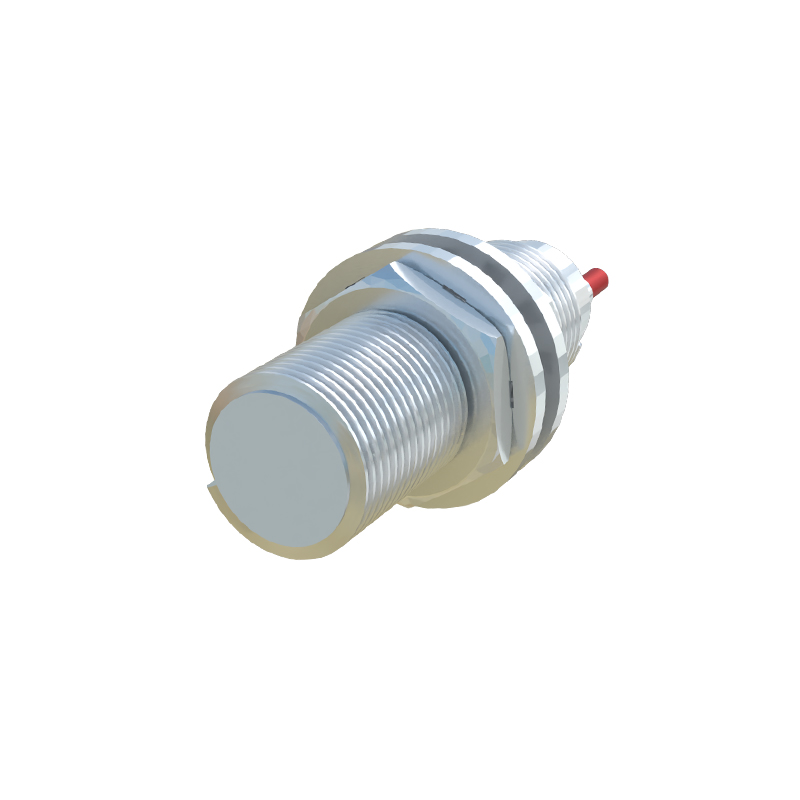
The defining features of square proximity sensors contribute significantly to their reliability. One primary advantage is their high switching frequency, enabling rapid detection in high-speed automation processes such as packaging or assembly lines. Many models offer a long sensing range relative to their size, with some capable of detecting ferrous metals from several millimeters away. The square design inherently provides multiple mounting options, including side or top mounting with standardized brackets, enhancing flexibility in machine design. Electrically, they often feature short-circuit and reverse polarity protection, alongside LED status indicators for easy diagnostics. Furthermore, their solid-state design ensures a long operational life with minimal maintenance, as there are no moving parts to wear out.
Operating Principles and Sensing Modes
Inductive square proximity sensors generate an electromagnetic field from an oscillator circuit within the sensor face. When a metallic object enters this field, eddy currents are induced, causing a change in the oscillation amplitude. This change is detected by a threshold circuit, which subsequently switches the sensor's output state. The sensors are available in different output configurations, including NPN (sinking), PNP (sourcing), and analog (4-20 mA or 0-10V) versions to interface seamlessly with various PLCs and controllers. Some advanced models also incorporate teach-in functionality or IO-Link communication for digital parameter setting and condition monitoring, enabling predictive maintenance strategies in Industry 4.0 applications.
Primary Industrial Applications
The application scope for square proximity sensors is vast across factory automation. A common use is in material handling systems for position detection of pallets, carriers, or robotic arms. Their flat sides make them ideal for embedding into machine frames or conveyor structures for end-of-travel or jam detection. In metalworking and CNC machining centers, they are employed for tool presence verification, workpiece counting, and door interlocking for safety. The packaging industry relies on them for detecting foil seals, cap placement on bottles, and carton presence on filling lines. Their environmental resilience also makes them suitable for washdown areas in food and beverage processing or outdoor applications in logistics.
Selection Criteria and Installation Guidelines
Selecting the appropriate square proximity sensor requires careful consideration of several parameters. The sensing distance must be chosen with a safety margin (typically 70-80% of the rated value) to account for target material variations and temperature effects. The housing material should be compatible with the environment—stainless steel for corrosive settings, and plastic for cost-sensitive general applications. Engineers must also match the output type (NPN/PNP) with the control system's input card specifications. For installation, ensuring a metal-free zone around the sensing face is critical to prevent false triggering. Proper shielding and cable routing away from high-power lines minimize electrical noise interference, guaranteeing stable signal integrity. Regular functional testing is recommended as part of preventive maintenance schedules.
Future Trends and Conclusion
The evolution of square proximity sensors is closely tied to smart manufacturing trends. Future developments are focusing on miniaturization while extending sensing ranges, integrating more advanced diagnostics directly into the sensor electronics. The adoption of IO-Link is becoming standard, allowing for remote configuration and the collection of operational data for analytics. Furthermore, enhanced resistance to extreme temperatures and electromagnetic interference is a continuous area of R&D. In conclusion, the square proximity sensor remains an indispensable component in industrial automation. Its unique blend of robust physical design, reliable non-contact sensing, and adaptability to harsh conditions ensures its continued critical role in improving efficiency, safety, and productivity across countless automated processes.