Introduction to the 1204P Proximity Sensor
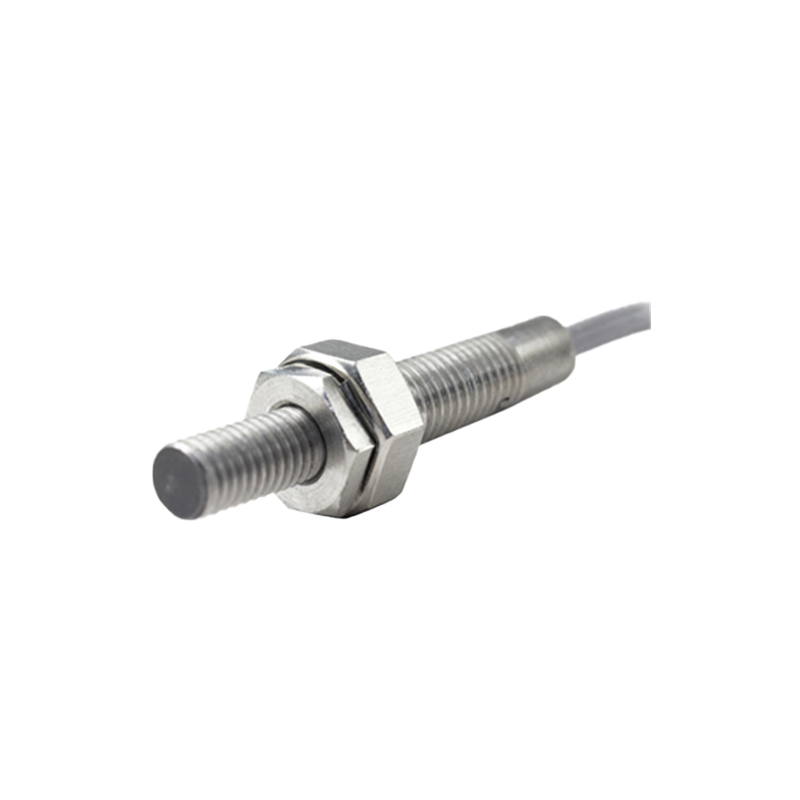
The 1204P is a widely recognized inductive proximity sensor designed for robust industrial automation applications. As a non-contact sensing solution, it detects the presence of metallic objects without physical interaction, ensuring high reliability and longevity in demanding environments. This sensor operates on the principle of electromagnetic induction, where an oscillator generates a high-frequency electromagnetic field from its sensing face. When a conductive metal target enters this field, eddy currents are induced, causing a change in the oscillator's amplitude. This change is detected by the sensor's circuitry, triggering a solid-state output switch. The 1204P model is particularly noted for its cylindrical M12 housing, making it compatible with standard mounting fixtures, and its PNP (sourcing) output configuration, which is a common standard in many PLC and control system architectures. Its compact design, coupled with a typical sensing range, allows for versatile integration into machinery for tasks such as position verification, part counting, and end-of-travel detection.
Key Technical Specifications and Performance
Delving into the specifications, the 1204P proximity sensor typically operates within a DC voltage range of 10-30V DC, ensuring compatibility with standard industrial power supplies. The output is a PNP, normally open (NO) configuration, capable of switching currents up to 200mA, sufficient to drive relays, PLC inputs, or small solenoids directly. Its sensing distance, or nominal range, is standardized, often around 4mm for mild steel targets. It is crucial to note that this sensing distance can vary with different metals; for instance, the effective range for stainless steel or aluminum is reduced due to their different electrical conductivity and magnetic permeability. The sensor features a short-circuit and reverse polarity protection circuit, safeguarding it from common wiring errors. Its housing is rated at IP67, indicating complete protection against dust ingress and protection against temporary immersion in water, which is vital for washdown environments or areas with significant particulate contamination. The operating temperature range is robust, typically from -25°C to +70°C, ensuring stable performance across most factory conditions.

Wiring and Installation Best Practices
Correct installation is paramount for optimal performance and longevity. The 1204P sensor commonly features a 3-wire design: brown wire for positive DC supply (+V), blue wire for common negative (0V), and black wire for the switched PNP output signal. For a standard NO operation, when a target is detected, the black wire switches to supply +V to the load. The sensor should be mounted securely using its M12 threaded barrel, ensuring the sensing face is parallel to the expected target path and free from obstructions. Installers must maintain the specified mounting distances from surrounding metal surfaces to prevent false triggering or shielding effects. It is recommended to use shielded cables in electrically noisy environments and to keep sensor wiring separate from high-voltage AC power lines to minimize electromagnetic interference. Always refer to the manufacturer's datasheet for precise dimensional drawings, mounting clearances, and wiring diagrams before proceeding with installation.
Application Scenarios in Industrial Automation
The 1204P finds extensive use across diverse automation sectors. In automotive assembly lines, it is employed for verifying the presence of metal components like pistons or bolts before a robotic arm proceeds to the next operation. In packaging machinery, it acts as a part counter for metal cans or foil lids, ensuring correct batch quantities. On conveyor systems, it serves as a limit or position sensor to detect the passage of pallets or metal carriers, providing feedback for motor control logic. Within material handling, it can detect the position of a metal gripper or the open/closed status of a metal door. Its reliability in dirty or wet conditions, thanks to the IP67 rating, makes it suitable for food and beverage processing or outdoor applications where exposure to elements is possible. The key to successful application is selecting the correct sensor for the target material and ensuring the environmental conditions are within the sensor's specified ratings.
Troubleshooting Common Operational Issues

Even with a reliable device like the 1204P, issues may arise. A frequent problem is failure to detect a target. This can be caused by using a non-metallic or incorrect metal target, the target being outside the effective sensing range, or accumulation of debris on the sensing face. Ensure the target material is ferrous or non-ferrous metal and is within the adjusted sensing distance. Another common issue is erratic switching or false triggers, often stemming from electrical noise interference, grounding problems, or the proximity of other metal objects within the sensor's magnetic field. Verify proper cable shielding, grounding, and adherence to mounting clearances. If the