Introduction to Photoelectric Sensing in Rotor Balancing
The precise balancing of rotating components is a cornerstone of modern industrial machinery, directly impacting operational efficiency, noise reduction, and equipment longevity. At the heart of this critical process lies the photoelectric sensor, a sophisticated component within rotor balancing systems. This technology provides the essential reference signal that defines the rotational position of the rotor, enabling the balancer's computer to accurately measure vibration vectors and calculate the necessary corrective weight placements. Unlike mechanical or magnetic pickups, photoelectric sensors offer non-contact, high-resolution detection, making them indispensable for high-speed and high-precision balancing applications across industries such as automotive, aerospace, and power generation.
Core Operating Principles and Components
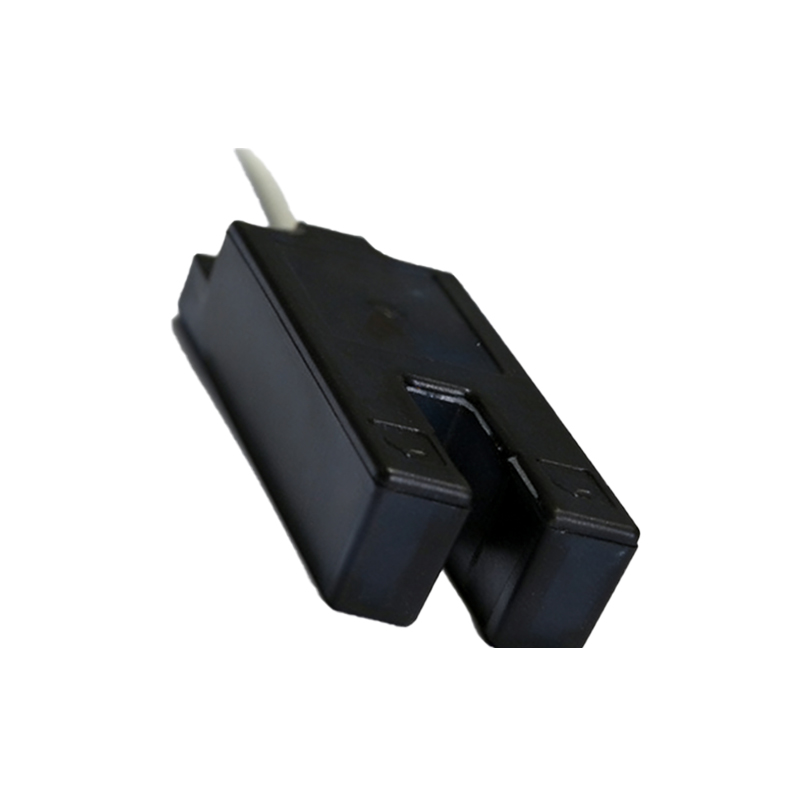
A photoelectric sensor system in a rotor balancer typically consists of three main elements: a light source (often an LED or laser diode), a photodetector (such as a phototransistor or photodiode), and a reflective or interruptive target attached to the rotor shaft. The most common configuration is the retro-reflective type. A reflective strip or piece of tape is placed on the rotor. As the rotor spins, the sensor emits a continuous beam of light. When the reflective mark passes through the beam, light is reflected back to the detector, generating a sharp electrical pulse. This single pulse per revolution serves as the precise angular reference point, or "phase zero," for the entire balancing measurement cycle. The system's electronics precisely time the interval between this reference pulse and the vibration signals from accelerometers to determine the angular location of imbalance.
Key Advantages Over Alternative Technologies
The adoption of photoelectric sensors in balancing machines is driven by several compelling advantages. Their non-contact nature eliminates wear and tear, ensuring long-term reliability and consistency without the need for frequent recalibration due to mechanical degradation. They provide exceptionally fast response times and high signal resolution, capable of detecting the reflective mark at extremely high rotational speeds, which is crucial for balancing turbine rotors or high-RPM automotive components. Furthermore, photoelectric sensors are largely immune to electromagnetic interference (EMI) from nearby motors or drives, a common challenge in industrial environments. They also offer greater flexibility in mounting and can be used at a greater stand-off distance from the rotor compared to proximity probes, simplifying machine design and maintenance.
Critical Selection Criteria for Optimal Performance
Selecting the appropriate photoelectric sensor is vital for balancing accuracy. Engineers must consider the operating speed range of the balancer; the sensor must have a sufficient switching frequency to reliably detect the mark at maximum RPM. The size and reflectivity of the mark are also crucial—specialized balancing tape with high retro-reflectivity is often used to ensure a strong, clean signal even in ambient light conditions. Environmental factors such as dust, oil mist, or coolant splash require sensors with adequate ingress protection (IP) ratings. For harsh environments, models with built-in diagnostics or modulated light signals (which ignore ambient light) are preferred. The output signal type (e.g., NPN/PNP, push-pull) must also be compatible with the balancer's controller input card.
Common Challenges and Troubleshooting Practices
Despite their robustness, photoelectric sensor systems can encounter issues that affect balancing results. A weak or inconsistent signal is a frequent problem, often caused by a dirty or degraded reflective mark, misalignment of the sensor head, or contamination on the sensor lens. This can lead to missed reference pulses or "double-pulsing," causing the balancer to display unstable phase readings. Ambient light interference, particularly from strobe lights or direct sunlight, can also disrupt operation. Standard troubleshooting involves verifying the mark's condition and alignment, cleaning optical surfaces, checking cable connections for integrity, and using an oscilloscope to inspect the quality and amplitude of the pulse signal generated by the sensor. Ensuring a stable power supply to the sensor is another fundamental step.
Integration with Modern Balancing Systems
In today's advanced balancing systems, the photoelectric sensor is more than a simple switch; it is an integrated data source. Modern balancers use sophisticated algorithms that analyze the consistency of the time interval between reference pulses to monitor speed stability during the measurement cycle. Any significant jitter or variation can trigger a measurement fault, ensuring data is only captured under stable rotational conditions. Furthermore, the sensor's signal is often used to trigger stroboscopic lights for visual observation of rotor motion or to synchronize other measurement activities. In fully automated production line balancers, the reliability of the photoelectric sensor directly impacts cycle time and overall equipment effectiveness (OEE).
Future Trends and Technological Evolution
The future of photoelectric sensing in rotor balancing aligns with broader trends in industrial digitization and precision. The integration of IO-Link and other smart sensor communication protocols is emerging, allowing for remote monitoring of sensor health, predictive maintenance alerts, and digital parameter setting without physical adjustments. There is also a trend towards miniaturization, enabling their use in compact portable balancers. Laser-based systems are becoming more accessible, offering even finer beam collimation for applications involving very small rotors or where the reflective mark must be extremely narrow. As balancing tolerances become tighter and production speeds increase, the demand for faster, more intelligent, and more robust photoelectric sensors will continue to grow, solidifying their role as a critical enabler of rotational precision.