Introduction to Light Sensing Technology
Light sensors and photoelectric sensors are often mentioned interchangeably in industrial and electronic contexts, but they represent distinct categories with overlapping functionalities. Light sensors, broadly defined, are devices that detect the presence, intensity, or wavelength of light, converting optical signals into electrical outputs. These include simple ambient light sensors used in consumer electronics to adjust screen brightness. Photoelectric sensors, a subset of light-based detection systems, specifically utilize light beams to sense objects, distances, or changes in conditions, often employing emitters and receivers. While all photoelectric sensors are light sensors, not all light sensors function as photoelectric sensors. This distinction is crucial in engineering applications where precision, response time, and environmental factors dictate sensor selection. Understanding the technical nuances helps professionals optimize systems for automation, safety, and efficiency.
Core Principles of Light Sensors
Light sensors operate based on photodetection principles, where photons interact with semiconductor materials to generate electrical signals. Common types include photodiodes, phototransistors, and photovoltaic cells, each suited to specific applications. For instance, photodiodes offer fast response times for optical communication, while photovoltaic cells convert light energy into electricity for solar panels. These sensors typically measure light intensity (in lux or lumens) and may incorporate filters for spectral sensitivity. They are integral in devices like digital cameras, streetlights, and wearable gadgets, where monitoring ambient light is key. Their design focuses on sensitivity and linearity, without necessarily involving active light emission for object detection—a feature that sets them apart from photoelectric variants.
Functionality of Photoelectric Sensors
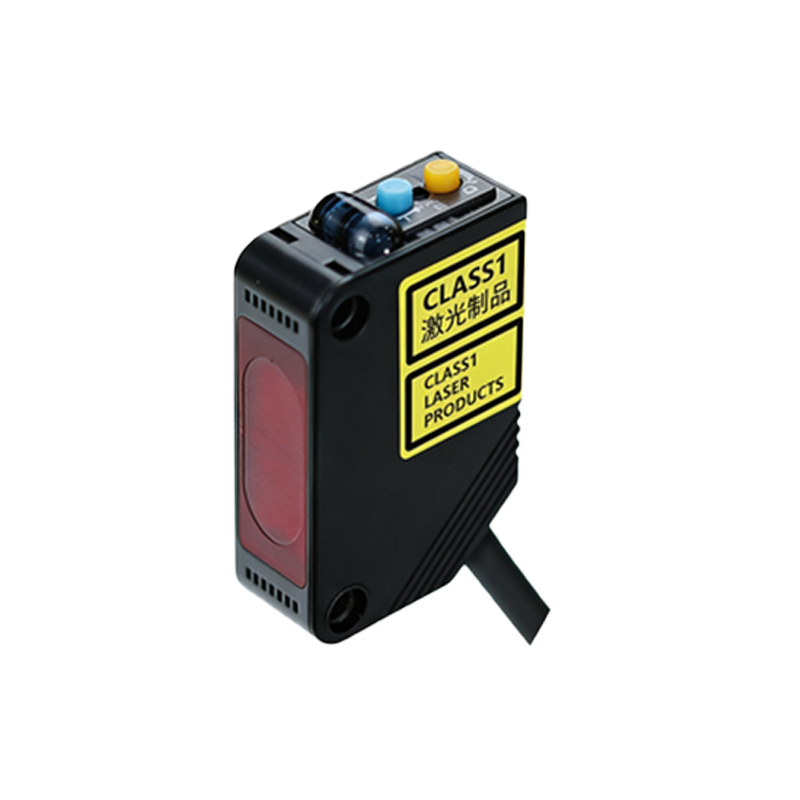
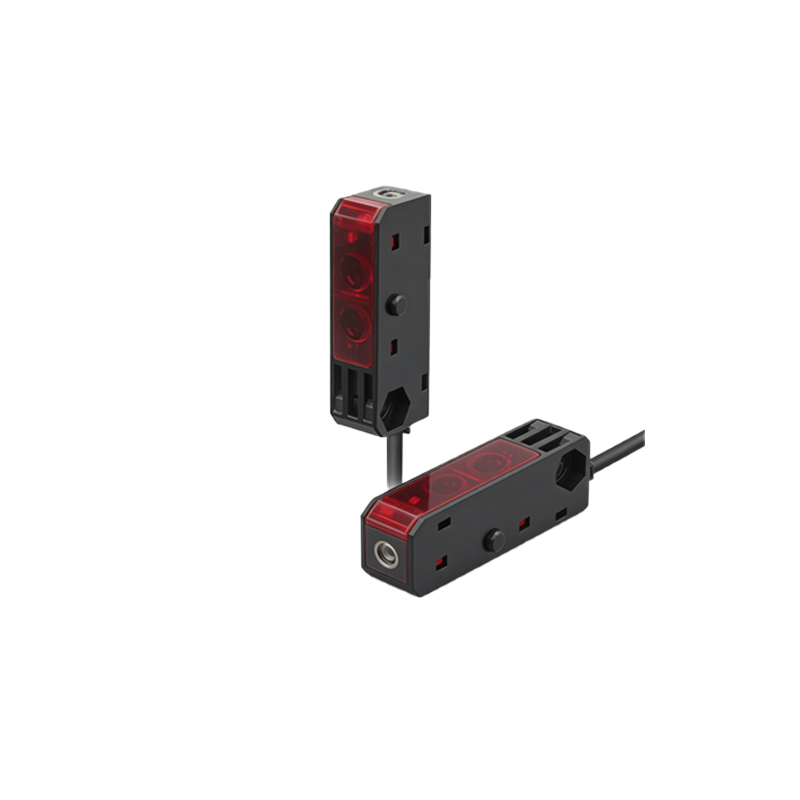
Photoelectric sensors, in contrast, are active devices that combine a light source (usually LED or laser) with a receiver to detect objects or measure distances. They work on principles such as through-beam, retro-reflective, or diffuse reflection modes. In through-beam setups, an emitter and receiver are placed opposite each other; an object interrupting the beam triggers a signal. Retro-reflective sensors use a reflector to bounce light back, while diffuse types rely on light reflecting off the target itself. These sensors excel in industrial automation for tasks like counting, positioning, or safety guarding, offering high accuracy and long-range capabilities. Their output is often digital (on/off) or analog, tailored for control systems rather than mere light measurement.
Key Differences in Application and Design
The primary difference lies in application scope. Light sensors are passive, measuring existing light conditions, whereas photoelectric sensors actively project light to interact with objects. For example, a light sensor in a smartphone adjusts display brightness based on surroundings, but a photoelectric sensor on a conveyor belt detects packages by breaking a light beam. Design-wise, photoelectric sensors are built for robustness in harsh environments, with enclosures resistant to dust, moisture, and vibration. They often include features like background suppression or fiber optic elements for precise detection. Light sensors, while versatile, may lack these industrial-grade attributes, focusing instead on compactness and low power consumption for consumer electronics.
Industry Use Cases and Selection Criteria
In industrial settings, photoelectric sensors are preferred for automation and control. They are deployed in manufacturing lines for object detection, quality inspection, or robotic guidance, where reliability and speed are paramount. Light sensors, however, find use in environmental monitoring, such as measuring daylight for energy management in smart buildings. When selecting a sensor, engineers consider factors like range, response time, and environmental interference. Photoelectric sensors may struggle in highly reflective or transparent object scenarios, requiring specialized models. Light sensors, if used beyond their intended scope, can fail in dynamic conditions. Thus, matching sensor type to application ensures optimal performance and cost-efficiency.
Technological Advancements and Future Trends
Advancements in both fields are driven by IoT and Industry 4.0. Light sensors are evolving with higher sensitivity and integration into wearable health devices for UV monitoring. Photoelectric sensors are incorporating smart features like IO-Link connectivity for real-time data exchange and self-diagnostics. Miniaturization and enhanced materials, such as graphene-based detectors, are pushing boundaries. Future trends may blur lines, with hybrid sensors offering multi-functional capabilities. However, the fundamental distinction—passive light measurement versus active object sensing—will remain relevant for engineering specifications. Professionals must stay updated on standards and innovations to leverage these technologies effectively.
Conclusion and Best Practices
In summary, light sensors and photoelectric sensors serve different roles despite sharing a photonic basis. Light sensors are general-purpose detectors for ambient light, while photoelectric sensors are specialized for object interaction in automated systems. Misinterpreting them can lead to suboptimal designs or operational failures. Best practices include consulting datasheets for parameters like spectral range and output type, testing in real-world conditions, and considering total cost of ownership. As technology progresses, clear terminology and application-focused selection will continue to be vital in electrical and automation engineering, ensuring systems are both intelligent and reliable.