Introduction to Photoelectric Sensor Technology
Photoelectric sensors are indispensable components in modern industrial automation, providing non-contact detection of objects, distances, and surface conditions. Their operation is based on the emission of a light beam, typically from an LED or laser diode, and the detection of changes in the received light signal. These changes are caused by the presence, absence, or specific characteristics of a target object. The core principle involves a transmitter and a receiver. The key advantages include high precision, fast response times, and the ability to detect a wide variety of materials, including transparent or reflective surfaces. As industries strive for greater efficiency and reliability, the demand for high-performance photoelectric sensors continues to grow, making the choice of manufacturer a critical decision for system integrators and OEMs.
Key Criteria for Evaluating Manufacturers
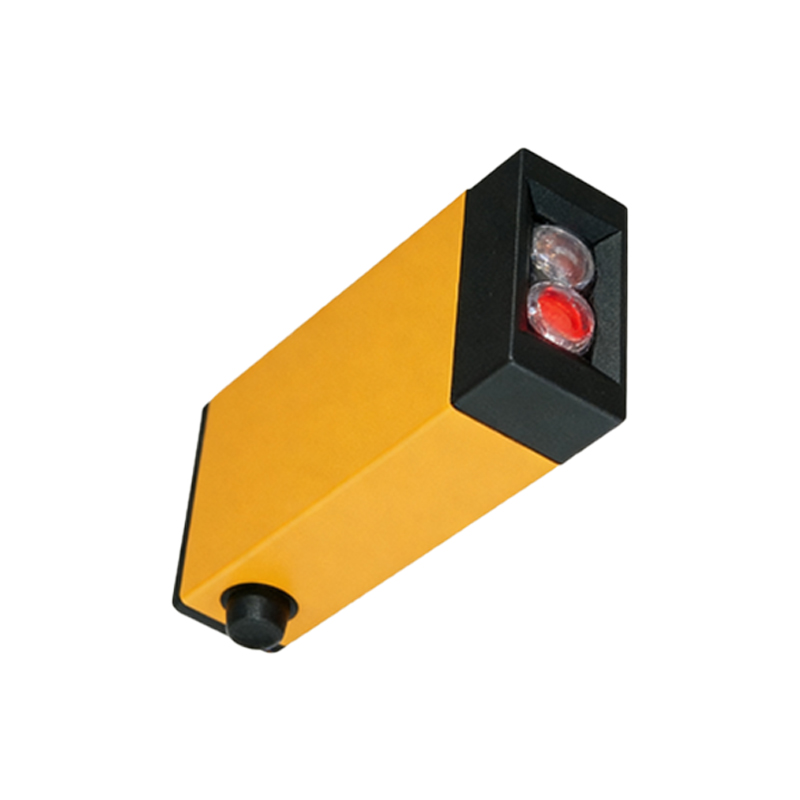
Selecting a leading photoelectric sensor manufacturer requires a thorough evaluation beyond basic product specifications. First and foremost, product portfolio breadth is essential. A top-tier manufacturer should offer a comprehensive range, including diffuse, retro-reflective, through-beam, and background suppression sensors, as well as specialized variants like color recognition or contrast sensors. Secondly, technical innovation and R&D capability are paramount. This is reflected in features such as advanced sensing algorithms, robust housing designs for harsh environments (IP67/IP69K ratings), and integration with Industry 4.0 protocols like IO-Link and Ethernet/IP. Thirdly, global support and application engineering expertise are crucial. Manufacturers must provide extensive technical documentation, reliable global distribution, and skilled engineers who can solve complex application challenges. Finally, proven reliability and a strong track record in demanding sectors like automotive, packaging, and material handling serve as the ultimate testament to a manufacturer's strength.
Analysis of Leading Global Manufacturers
Several manufacturers have established themselves as leaders through consistent innovation and quality. Omron Automation stands out for its extensive sensor lineup, particularly renowned for its E3Z and E3JM series, known for exceptional durability and advanced functions like precise background suppression. Their focus on miniaturization and smart sensor technology is notable. Sick AG is another powerhouse, especially in logistics and factory automation. Sick's sensors are celebrated for their robustness, long sensing ranges, and innovative technologies such as patented HD optics for clearer signal evaluation. Banner Engineering Corp. is highly regarded for its user-friendly design, application versatility, and strong value proposition. Their QS18 and EZ-BEAM series are industry staples, offering excellent performance across a wide range of standard applications. Pepperl+Fuchs excels in providing solutions for hazardous areas and extreme conditions, with a deep expertise in intrinsic safety and explosion-proof certifications. Finally, Keyence Corporation is synonymous with ultra-high precision and advanced functionality, often incorporating laser and fiber optic technology for micron-level accuracy in electronics and semiconductor manufacturing.
Specialized and Niche Market Leaders
Beyond the broad-line giants, several manufacturers excel in specific niches. Balluff GmbH, for instance, has a strong reputation in RFID systems and sensor solutions for the automotive industry, offering highly integrated and network-ready photoelectric sensors. Turck GmbH is a leader in ruggedized sensor technology and connectivity, producing sensors with exceptionally robust connectors and housings designed for the most challenging industrial environments. Ifm Electronic GmbH is recognized for its systematic approach to condition monitoring and its intuitive, tool-free configuration processes, making sensor setup and maintenance remarkably straightforward. These companies may not have the universal brand recognition of the largest players, but they provide unparalleled expertise and optimized solutions within their focused domains, often becoming the preferred choice for specialized engineering challenges.
Future Trends and Industry Direction
The future of photoelectric sensor manufacturing is being shaped by several convergent trends. The integration of Industrial Internet of Things (IIoT) capabilities is paramount. Next-generation sensors are evolving into intelligent data points, equipped with self-diagnostic functions, predictive maintenance alerts, and the ability to communicate rich process data directly to cloud platforms. Miniaturization continues unabated, enabling sensors to fit into increasingly compact machinery without sacrificing performance. Furthermore, there is a growing emphasis on simplifying complex tasks. Manufacturers are developing sensors with enhanced software tools that automate setup, teach-in procedures, and parameter adjustment, reducing engineering time and potential for error. Finally, the demand for sensors capable of handling new materials, such as dark or low-contrast objects in e-commerce fulfillment, is driving innovation in light wavelength selection and receiver sensitivity.
Conclusion and Selection Guidance
Determining the "strongest" photoelectric sensor manufacturer is not a one-size-fits-all proposition. The optimal choice is inherently application-dependent. For high-volume, standard automation tasks requiring reliability and cost-effectiveness, manufacturers like Banner or Omron are excellent starting points. For extreme environments or hazardous locations, the specialized expertise of Pepperl+Fuchs or Turck is indispensable. When the application demands the highest possible precision or advanced feature detection, Keyence and Sick are often the benchmarks. Ultimately, the strongest manufacturer for a specific project is the one whose product portfolio, technical support, and proven experience align most closely with the unique technical requirements, environmental conditions, and total cost of ownership goals of that application. Engaging with application engineers from shortlisted companies for a proof-of-concept test remains the most reliable method for final selection.