Introduction to Capacitive Sensing Technology
Capacitive proximity sensors operate by generating an electrostatic field and detecting changes in capacitance caused by the presence of an object. Unlike inductive sensors that only detect metals, capacitive sensors can identify a wide range of materials by measuring dielectric properties. This versatility stems from their ability to sense changes in the dielectric constant between the sensor's electrode and the target object. The sensor's oscillator circuit responds to these variations, triggering an output signal when a predefined threshold is reached. This fundamental principle enables capacitive sensors to perform in diverse industrial and commercial applications, from liquid level detection to material handling. Their non-contact nature ensures minimal wear and high reliability, making them suitable for harsh environments where physical contact is impractical or hazardous.
Conductive Materials Detection

Capacitive proximity sensors excel at detecting conductive materials, including metals such as steel, aluminum, copper, and brass. When a conductive object enters the sensor's electrostatic field, it alters the capacitance significantly due to its high dielectric constant and ability to act as a ground plane. This results in a strong, reliable signal that facilitates precise detection even at extended sensing ranges. In industrial settings, these sensors are commonly used for metal part positioning, conveyor belt monitoring, and robotic arm guidance. Their sensitivity can be adjusted to ignore non-target materials, reducing false triggers. For instance, in automotive assembly lines, capacitive sensors ensure metal components are correctly aligned before welding or fastening processes, enhancing production accuracy and efficiency.
Non-Conductive Materials and Solids
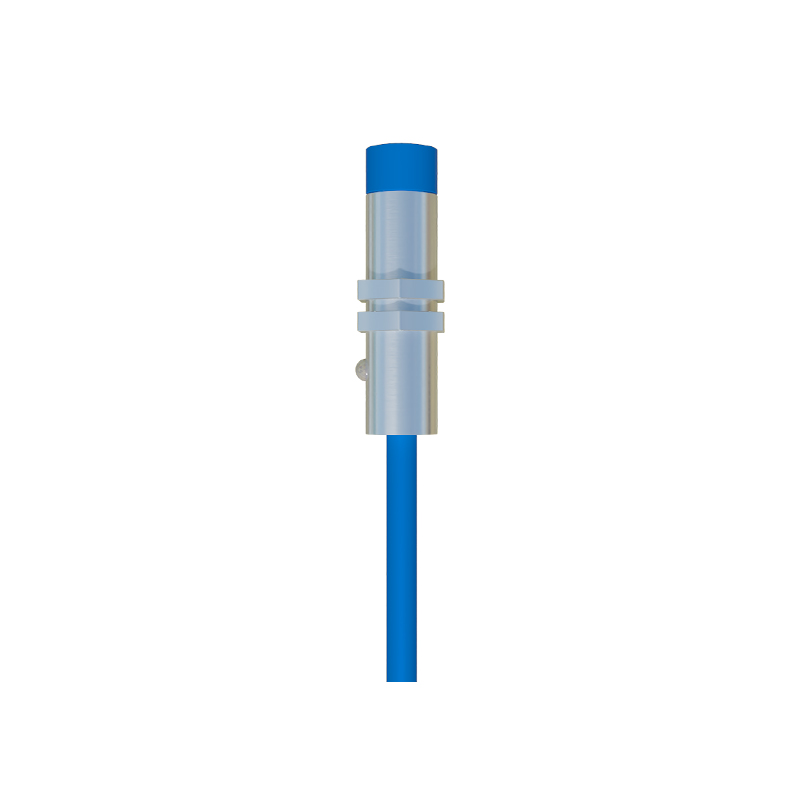
A key advantage of capacitive sensors is their capability to detect non-conductive solids, such as plastics, wood, glass, ceramics, and paper. These materials have lower dielectric constants compared to metals, but modern sensors with adjustable sensitivity can reliably sense them by calibrating to specific material properties. Applications include detecting plastic bottles on filling lines, monitoring wood blocks in sawmills, or verifying glass panels in manufacturing. The sensor's sensitivity setting allows it to differentiate between material types, enabling tasks like sorting or quality control. In packaging industries, capacitive sensors identify cardboard boxes or foam inserts, ensuring proper placement and reducing material waste. Their ability to penetrate thin non-conductive barriers also allows detection through container walls, useful in sealed systems.
Liquid and Granular Substance Detection
Capacitive proximity sensors are widely employed for detecting liquids and granular materials, such as water, oil, chemicals, powders, and grains. These substances exhibit varying dielectric constants that influence capacitance changes. Sensors can be mounted externally on tanks or silos to monitor levels without direct contact, preventing contamination or corrosion. For example, in food processing, they detect milk or juice levels in stainless steel vats, while in agriculture, they monitor grain levels in storage bins. Adjustable sensitivity helps account for viscosity or density variations, ensuring consistent performance. In pharmaceutical production, sensors verify powder levels in mixing vessels, maintaining batch consistency. Their hermetic sealing options make them ideal for hygienic or explosive environments, where safety and cleanliness are paramount.
Organic and Biological Materials
These sensors can also detect organic and biological materials, including fruits, vegetables, meat, and human tissue, due to their water content and dielectric properties. In agricultural automation, capacitive sensors sort produce by size or ripeness on conveyor belts, improving efficiency. In medical devices, they enable touchless interfaces or proximity detection for hygiene-sensitive equipment. For instance, sensors in hand dryers or faucets activate when hands are present, conserving resources. Their non-invasive nature avoids damage to delicate materials, making them suitable for food quality inspection or laboratory settings. Sensitivity adjustments allow discrimination between different organic types, such as distinguishing ripe from unripe fruit based on moisture content.
Challenges and Calibration Considerations
Despite their versatility, capacitive sensors face challenges like environmental interference from humidity, temperature fluctuations, or airborne contaminants. Proper calibration is essential to optimize performance for specific object types. Techniques include setting sensitivity thresholds, using shielding to reduce stray capacitance, and selecting sensors with temperature compensation. In practice, engineers must consider factors like object size, shape, and dielectric constant when installing sensors. For mixed-material detection, multi-channel sensors or programmable logic controllers (PLCs) can enhance accuracy. Regular maintenance, such as cleaning sensor faces, ensures long-term reliability. By understanding these nuances, industries can leverage capacitive sensors for complex tasks, from waste recycling to smart appliance control.