In the realm of industrial automation, reliable and precise object detection is a cornerstone of efficiency and safety. Among the diverse array of sensing technologies, the flat head metal proximity sensor stands out for its robust performance in demanding environments. Characterized by its low-profile, cylindrical housing with a flat sensing face, this sensor is engineered specifically for the non-contact detection of metallic objects, making it an indispensable component in modern manufacturing, packaging, and material handling systems.
The fundamental operating principle of most flat head metal proximity sensors is based on electromagnetic induction. The sensor generates a high-frequency oscillating electromagnetic field from its flat face. When a ferrous or non-ferrous metal target enters this active field, eddy currents are induced on the target's surface. This causes a change in the oscillation amplitude within the sensor's internal coil circuit. An integrated evaluation circuit detects this change and triggers a solid-state switching output, signaling the presence of the object. This entire process occurs without any physical contact, eliminating mechanical wear and tear and ensuring a long operational lifespan.
The defining "flat head" design is not merely an aesthetic choice; it offers significant functional advantages. The flush-mounted installation capability is paramount. These sensors can be embedded directly into metal brackets or machine frames with their sensing face perfectly aligned with the surrounding surface. This design protects the sensor from physical damage caused by accidental impacts, flying debris, or direct contact with passing objects. It is particularly crucial in applications with limited space or where protruding sensors could be sheared off. Furthermore, the flat surface minimizes the accumulation of dust, chips, or coolant, which could otherwise interfere with sensing reliability.
When selecting a flat head metal proximity sensor, several key specifications demand attention. Sensing distance, typically ranging from a few millimeters to several tens of millimeters, must be carefully chosen based on the application's requirements. It is critical to note that the rated sensing distance is defined for a standard mild steel target. For other metals like aluminum, brass, or stainless steel, a correction factor must be applied, as the sensing range can be significantly reduced due to differing electrical conductivity and magnetic permeability. Another vital parameter is the housing material. Sensors are commonly available in stainless steel or nickel-plated brass bodies, offering high resistance to corrosion, chemicals, and mechanical stress, suitable for harsh industrial settings.
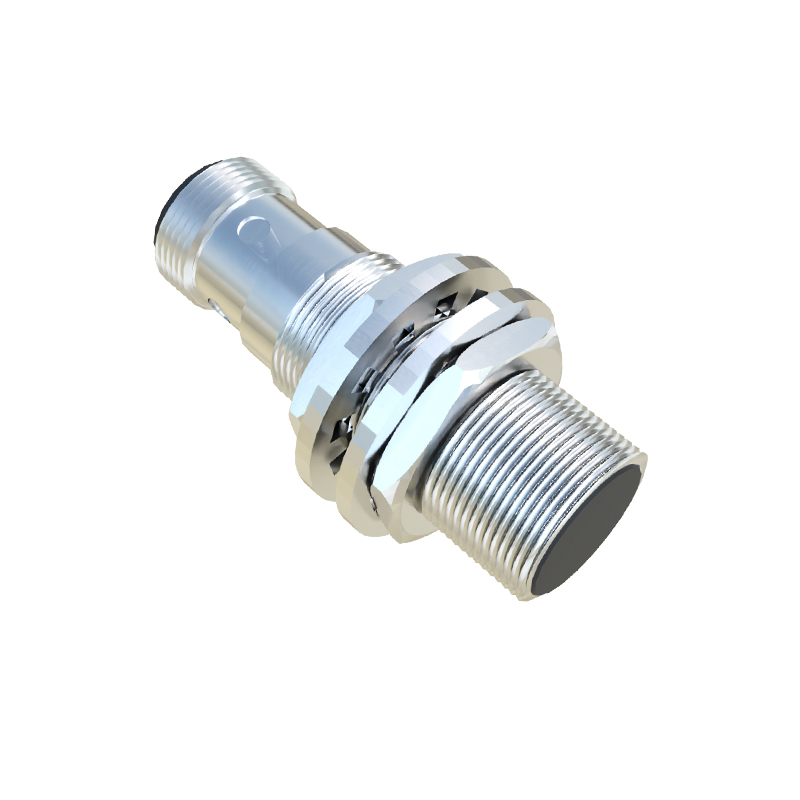
The output configuration is another critical selection criterion. These sensors primarily provide digital switching signals. Two-wire DC sensors are simple to wire but require a small leakage current even when off. Three-wire DC sensors (with NPN or PNP transistor outputs) and four-wire DC sensors (featuring both a Normally Open and a Normally Closed output) offer more precise control and are widely used with Programmable Logic Controllers (PLCs). Some advanced models also offer analog current (4-20 mA) or voltage (0-10 V) outputs, providing continuous distance measurement rather than a simple on/off signal, which is valuable for positioning applications.
Installation and environmental considerations are pivotal for optimal performance. Maintaining the proper lateral and axial clearance around the sensor, as specified by the manufacturer, is essential to prevent interference from adjacent metal structures—a phenomenon known as "shielding." While inherently robust, these sensors have operating temperature limits, usually between -25°C and +70°C, and specific ingress protection (IP) ratings like IP67 or IP68, indicating their resistance to dust and temporary or prolonged immersion in water. Understanding these ratings ensures reliable operation in washdown areas or outdoor installations.
The applications for flat head metal proximity sensors are vast and varied. They are routinely employed for end-of-travel detection on pneumatic cylinders, verifying the presence or absence of metal parts on conveyor lines, monitoring the position of machine tool slides, counting metal products, and controlling robotic arm movements. Their durability and non-contact nature make them ideal for high-cycle operations where mechanical limit switches would fail prematurely.
In conclusion, the flat head metal proximity sensor is a mature, highly reliable workhorse of industrial sensing. Its compact, rugged design, coupled with precise and wear-free operation, provides a critical link in automated control systems. By understanding its operating principles, key specifications, and installation guidelines, engineers and technicians can effectively deploy these sensors to enhance machine productivity, ensure process consistency, and contribute to safer, more intelligent manufacturing operations. Their continued evolution, including miniaturization and enhanced connectivity for Industry 4.0, promises to further solidify their role in the automated factories of the future.