Introduction to Photoelectric Sensing Technology
Photoelectric sensors are a cornerstone of modern industrial automation, providing non-contact detection of objects based on the modulation of light. These devices operate by emitting a beam of light—typically infrared, visible red, or laser—and detecting changes in the received light signal caused by the presence or absence of a target. The fundamental principle involves a transmitter (light source) and a receiver (photodetector). When an object interrupts or reflects the light beam, the sensor's output state changes, triggering a control action. The achievable sensing distance is a critical performance parameter, directly impacting application suitability. A 1-meter sensing range represents a significant and versatile capability, bridging the gap between short-range proximity detection and long-range scanning, making it ideal for a vast array of mid-range industrial tasks.
Key Factors Enabling a 1-Meter Range
Achieving a consistent and reliable 1-meter detection distance is not arbitrary; it results from specific engineering design choices. The primary factor is the optical system's power and sensitivity. Sensors designed for this range often utilize modulated LED light sources or focused laser diodes. Modulation, where the light is pulsed at a specific frequency, allows the receiver to distinguish the signal from ambient light, greatly enhancing noise immunity and effective range. The lens design is equally crucial. A well-collimated (parallel) beam minimizes dispersion over distance, maintaining energy density to ensure sufficient light returns to the receiver. Furthermore, the sensitivity of the photodetector (such as a phototransistor or photodiode) and the sophistication of the signal processing circuitry determine how weak a return signal can be reliably interpreted, directly extending the practical sensing distance.
Operating Modes for One-Meter Detection
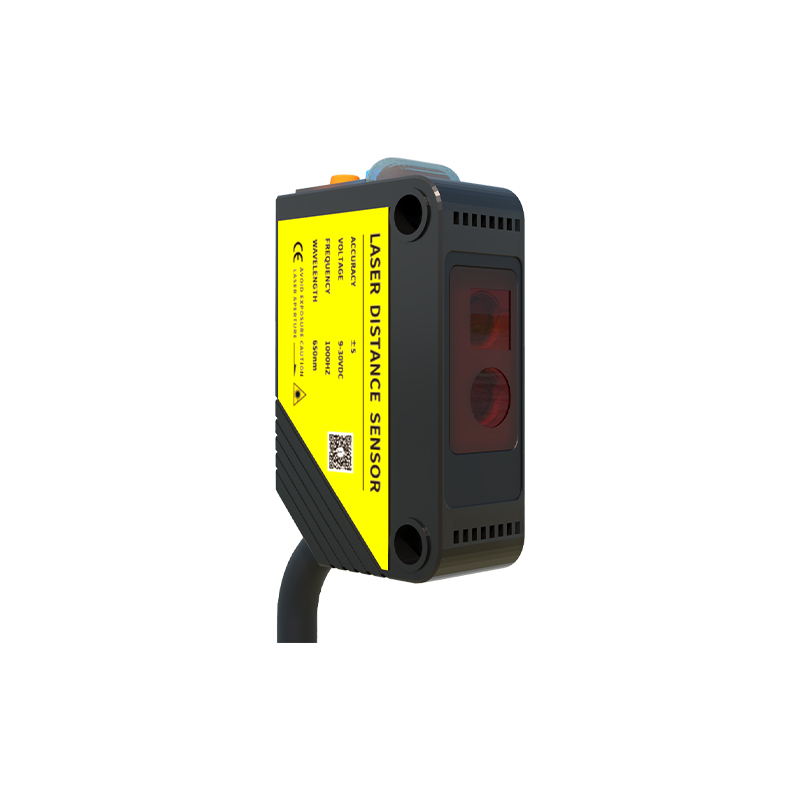
Photoelectric sensors achieve detection through different operational modes, each suitable for a 1-meter range under specific conditions. The through-beam (or opposed) mode, with separate transmitter and receiver units, is the most robust for long distances. At 1 meter, it offers the highest reliability and is immune to target color, reflectivity, or surface angle. The retro-reflective mode uses a single housing containing both emitter and receiver, along with a specialized reflector. This mode efficiently achieves 1-meter sensing but can be fooled by shiny objects that reflect light directly. Finally, the diffuse (proximity) mode, where the sensor detects light reflected directly off the target, is the most challenging for a 1-meter range. It requires a powerful emitter, sensitive receiver, and is highly dependent on the target's size, color, and surface texture. Advanced background suppression or foreground suppression techniques in diffuse sensors help stabilize the 1-meter point despite target reflectivity variations.
Critical Considerations for Reliable Operation
Specifying a 1-meter sensor requires careful attention to application variables beyond the nominal range. The target properties are paramount. A large, white, matte target will be detected easily at 1 meter in diffuse mode, while a small, black, glossy object may require a through-beam sensor. Environmental factors pose significant challenges. Airborne contaminants like dust, fog, or steam can attenuate the light beam, effectively reducing the operational range. Intense ambient light from welding arcs or sunlight can saturate the receiver. Modern sensors combat this with robust housing (IP67/IP69K ratings), optical filters, and high-frequency modulation. Electrical noise from motors and variable frequency drives can also interfere with sensor signals, necessitating proper shielding and installation practices to maintain signal integrity at the 1-meter threshold.
Typical Industrial Applications
The 1-meter sensing range finds extensive use across diverse industries. In material handling and packaging, these sensors are perfect for detecting the presence of boxes on conveyor belts, verifying pallet stacking height, or counting objects passing through a defined portal. In automated assembly, they can monitor part placement on fixtures or verify robot end-of-arm tooling positions. Within the automotive sector, they are employed for vehicle positioning on assembly lines or detecting door and panel gaps. In warehouse automation, they facilitate object detection for automated guided vehicles (AGVs) and inventory management systems. The range is long enough to provide a safety or process buffer zone yet short enough to offer precise positional accuracy and resistance to environmental interference common in industrial settings.
Selection and Installation Best Practices
Selecting the right sensor for a 1-meter application involves a systematic approach. First, define the target characteristics (size, material, color) and the required sensing mode based on mounting constraints. Review the sensor's data sheet for the precise sensing-distance graph, which shows the reduction factor for different target colors and materials. Always consider a safety factor; do not operate the sensor at its absolute maximum published range. During installation, ensure precise alignment for through-beam and retro-reflective types. For diffuse sensors, conduct teach-in or calibration at the actual installation point with the actual target to account for environmental reflections. Regular maintenance, including lens cleaning and periodic functional verification, is essential to sustain the designed 1-meter performance over the sensor's lifecycle, ensuring continuous process reliability.