Introduction to Proximity Sensing Fundamentals
Proximity sensors are indispensable components in modern industrial automation, robotics, and safety systems. Their primary function is to detect the presence or absence of an object within a specified sensing range without any physical contact. This non-contact detection capability is crucial for applications requiring high reliability, fast response times, and minimal mechanical wear. The core principle involves generating an electromagnetic field or beam and detecting changes in that field caused by a target object. The specific method of generating and interpreting this signal defines the sensor's fundamental technology, such as inductive, capacitive, ultrasonic, or photoelectric. Understanding these underlying technologies is the first step in comprehending the various operating modes that dictate how a sensor reacts to a detected target.
Defining the Standard Operating Modes
Proximity sensors typically operate in one of several predefined modes, which are often selectable via wiring configuration, built-in switches, or software parameters. The two most fundamental and widely used modes are Normally Open (NO) and Normally Closed (NC). In a Normally Open mode, the sensor's output circuit is open (non-conducting) when no target is present. Upon detecting a target within its sensing range, the output circuit closes (conducts), allowing current to flow. This mode is intuitive: the sensor "turns on" when it sees something. Conversely, in a Normally Closed mode, the output circuit is closed under normal, no-target conditions. When a target enters the sensing field, the circuit opens, interrupting the current flow. This mode is often used in safety-critical applications where a wire break or sensor failure should cause a machine to stop, mimicking the behavior of a safety interlock.
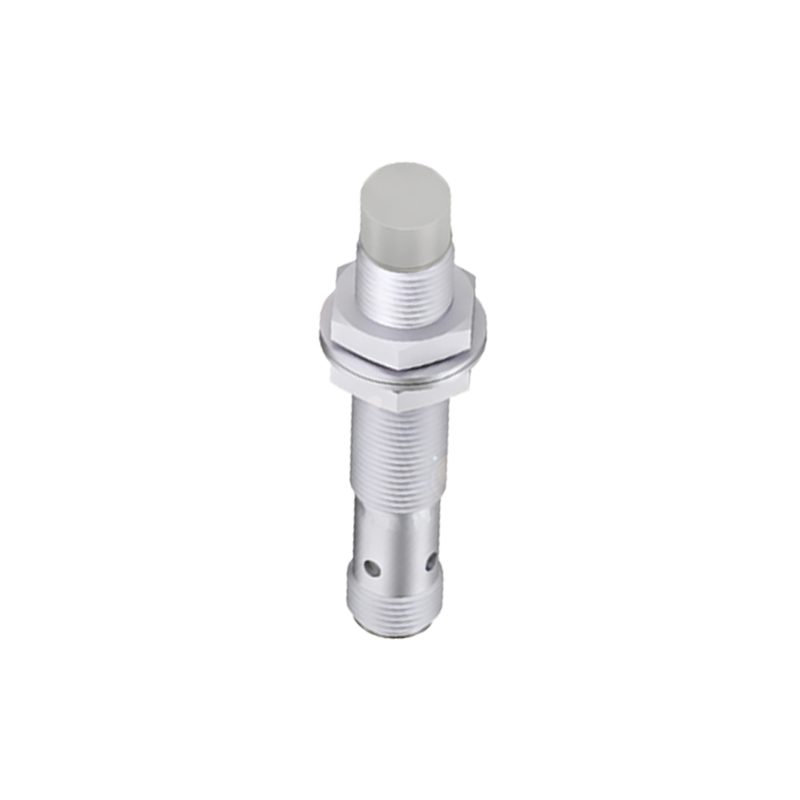
Advanced Mode: The Latching or Memory Function
Beyond the basic NO and NC modes, many advanced proximity sensors offer a latching or memory function. This operating mode is designed for applications where the sensor needs to maintain its output state even after the target moves away. In a standard NO sensor, the output turns off as soon as the target exits the sensing range. A latching sensor, however, will "latch" its output to the ON state upon the first detection event. It will then remain ON until a specific reset condition is met. This reset is typically triggered by a separate reset signal, another sensor, or a second detection of the target from a different angle or position. This mode is extremely useful in counting applications, batch processing, or any scenario where a transient detection needs to trigger a sustained action or state change in the control logic.
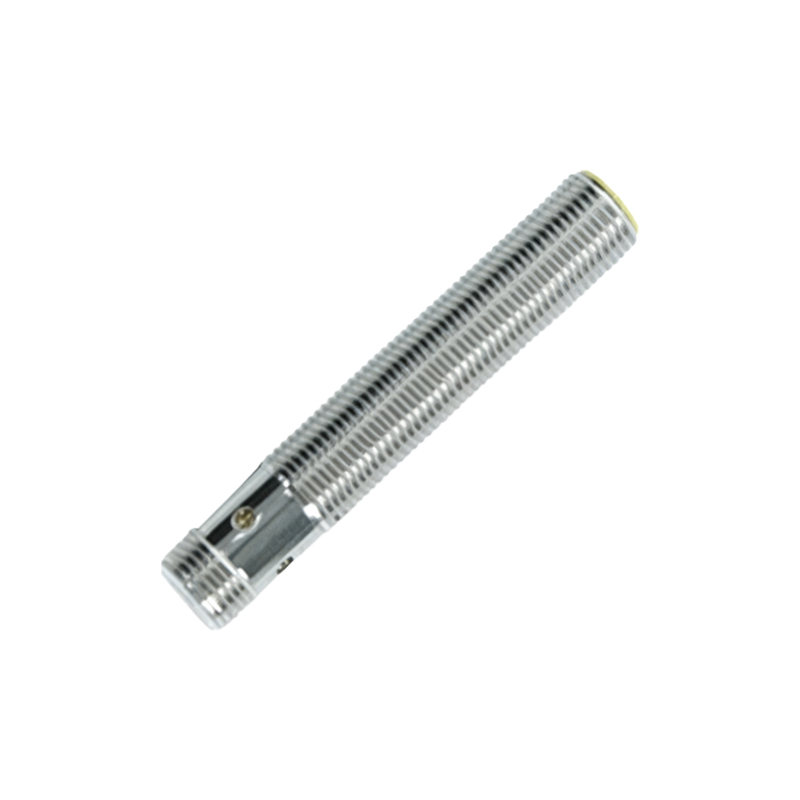
Dynamic Response: The One-Shot or Timer Modes
To interface effectively with complex control systems and manage signal timing, proximity sensors often incorporate timer-based operating modes. Two common examples are the On-Delay and Off-Delay modes, sometimes collectively referred to as "One-Shot" timers. In an On-Delay mode, when a target is detected, the sensor waits for a user-defined delay period before switching its output. This is useful for debouncing signals or ensuring a target is stably present. In an Off-Delay mode, when a target leaves the sensing range, the output remains active for the preset delay time before turning off. This can prevent rapid cycling of machinery if a target is hovering near the sensing limit or provide a guaranteed minimum signal duration for downstream equipment. These modes add a layer of intelligent timing directly at the sensor level, simplifying PLC programming.
Application-Specific Modes: Analog and Teach-In
For applications requiring more than a simple on/off signal, analog output and teach-in modes become essential. Analog output sensors do not have a discrete operating mode like NO/NC. Instead, they continuously vary their output signal (e.g., 4-20mA, 0-10V) proportionally to the distance of the target from the sensor face. This provides precise positional information. The "teach-in" mode is a sophisticated feature where the sensor can be programmed to recognize specific sensing conditions. By pressing a button or sending a command when a target is at a desired position, the sensor "learns" and sets that distance as its new switching point. This allows for incredibly flexible and rapid setup in variable production environments, enabling one sensor model to handle different target sizes or mounting positions without manual recalibration.
Selecting the Correct Mode for Your System
Choosing the appropriate operating mode is a critical design decision that impacts system safety, reliability, and functionality. The selection process must consider the control logic requirements, failure mode behavior, and the nature of the target movement. For standard presence detection triggering an action, Normally Open is often sufficient. For safety gates or emergency stops, Normally Closed wiring provides a fail-safe design. L