In the realm of industrial automation and precision measurement, analog output laser sensors have established themselves as indispensable tools. Unlike their digital counterparts that provide simple on/off signals, these sensors deliver a continuous voltage or current signal that is directly proportional to the measured parameter, such as distance, position, or thickness. This continuous data stream offers a high-resolution view of a process, enabling nuanced control and detailed monitoring that is critical in modern manufacturing and quality assurance environments.
The core operating principle of an analog output laser sensor typically involves triangulation or time-of-flight measurement. In a common triangulation setup, a laser diode projects a focused beam onto a target. The reflected light is then captured by a receiving element, such as a position-sensitive detector (PSD) or a charge-coupled device (CCD). As the target's distance changes, the position of the reflected spot shifts on the receiver. The sensor's internal circuitry converts this positional shift into a precise analog signal. The output is usually standardized, with common ranges being 0-10 V DC or 4-20 mA. The 4-20 mA current loop is particularly valued in industrial settings for its inherent noise immunity and ability to indicate a wire break (signal falls below 4 mA).
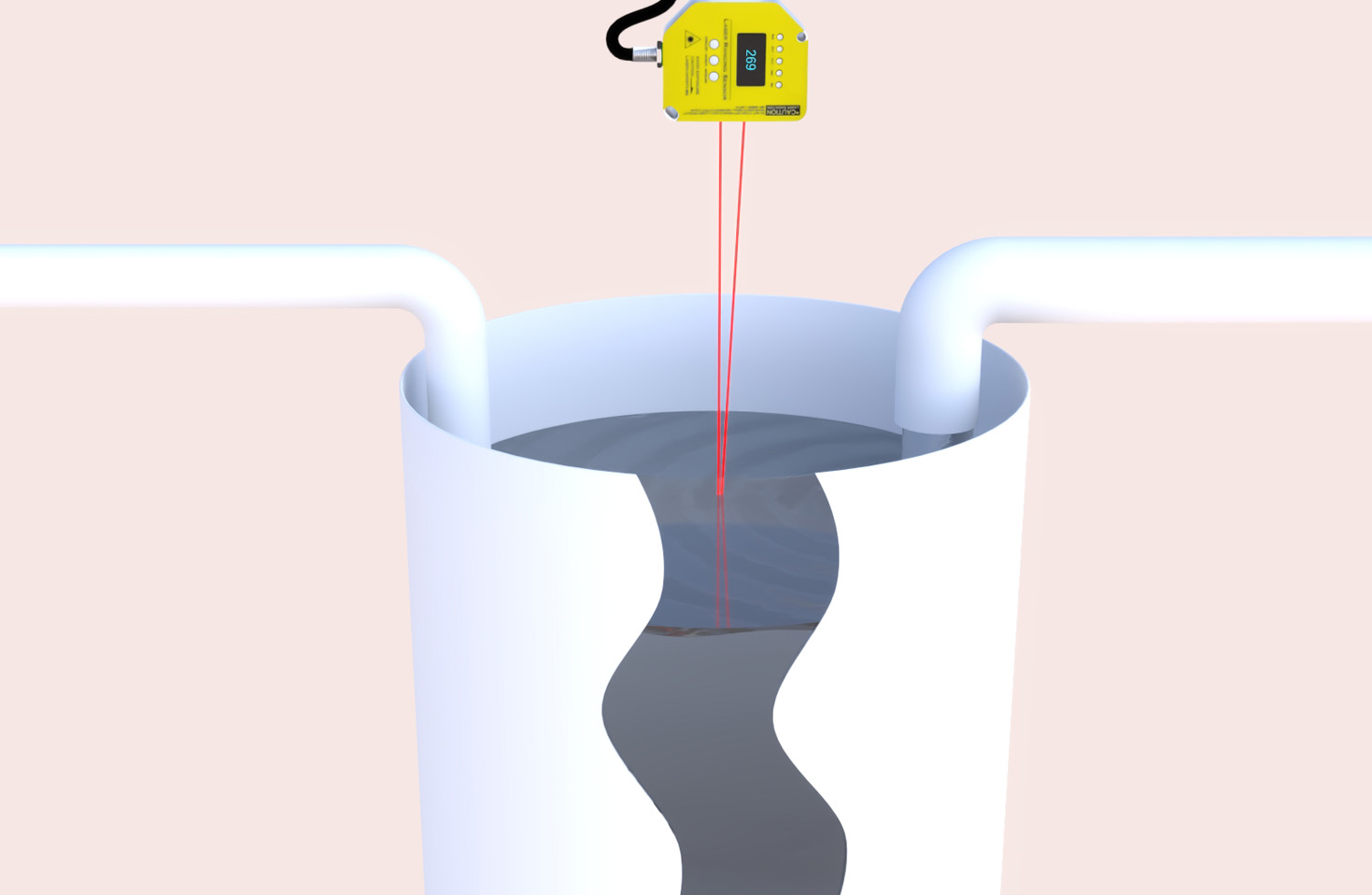
The advantages of utilizing analog output are significant. The primary benefit is resolution. By providing a continuous signal, these sensors can detect minute changes that a digital sensor might miss between its threshold points. This allows for applications like precise profiling, continuous thickness monitoring of materials, or controlling the exact fill level in a tank. Furthermore, the analog signal can be directly fed into programmable logic controllers (PLCs), data acquisition systems, or chart recorders without the need for intermediate pulse-counting or encoding, simplifying system integration.

Applications for analog output laser sensors are vast and varied across industries. In automotive manufacturing, they are used to measure body panel gaps and flushness with extreme accuracy. In the electronics sector, they verify the coplanarity of integrated circuit leads or the thickness of silicon wafers. On packaging lines, they ensure consistent fill levels in bottles and containers. In metal processing, they monitor the diameter of wires or the thickness of rolled sheets in real-time, allowing for immediate process adjustments. Their ability to measure delicate or shiny objects without physical contact makes them ideal for these demanding tasks.
Selecting the right analog output laser sensor requires careful consideration of several key parameters. The *measuring range* defines the minimum and maximum distances over which the sensor provides a linear analog output. The *spot size* determines the minimum feature that can be resolved; a smaller spot allows for higher precision on small targets. *Linearity* is a critical specification, indicating how closely the analog signal follows a straight line relative to the actual distance. A typical specification might be ±0.1% of the full scale. *Resolution* refers to the smallest change in distance the sensor can detect and reliably represent in its output signal. Finally, environmental factors like ambient light, temperature fluctuations, and the target's surface properties (color, reflectivity, texture) must be accounted for, as they can influence performance. Many modern sensors feature built-in teach-in functions or software to compensate for different surface conditions.
When integrating these sensors, proper calibration and setup are paramount. The sensor must often be "taught" the analog output range by defining the output voltages or currents that correspond to the near and far limits of the desired measurement window. Shielding cables from electrical noise is crucial, especially for voltage outputs, to maintain signal integrity. Regular maintenance, including lens cleaning and verification checks against a known standard, ensures long-term accuracy and reliability.
In conclusion, analog output laser sensors bridge the gap between simple presence detection and high-fidelity metrology. Their continuous output provides the granular data necessary for advanced process control, quality monitoring, and automation in an era where precision and efficiency are paramount. By understanding their operating principles, strengths, and key selection criteria, engineers and technicians can effectively harness their capabilities to optimize complex systems, improve product quality, and enhance operational intelligence across countless industrial applications.