Introduction to Glass Detection Challenges
Detecting transparent materials like glass presents a significant challenge in industrial automation. Traditional sensors, such as standard diffuse or retro-reflective photoelectric sensors, often fail because glass allows most light to pass through, making it appear "invisible." This can lead to process errors, misalignment in production lines, or safety hazards. The core issue lies in the material's high transmissivity and low reflectivity for visible and near-infrared light. Overcoming this requires specialized sensing principles and careful consideration of the glass's properties, such as thickness, surface quality, and the presence of coatings or contaminants.
Working Principle: Polarized Retro-Reflective Sensing
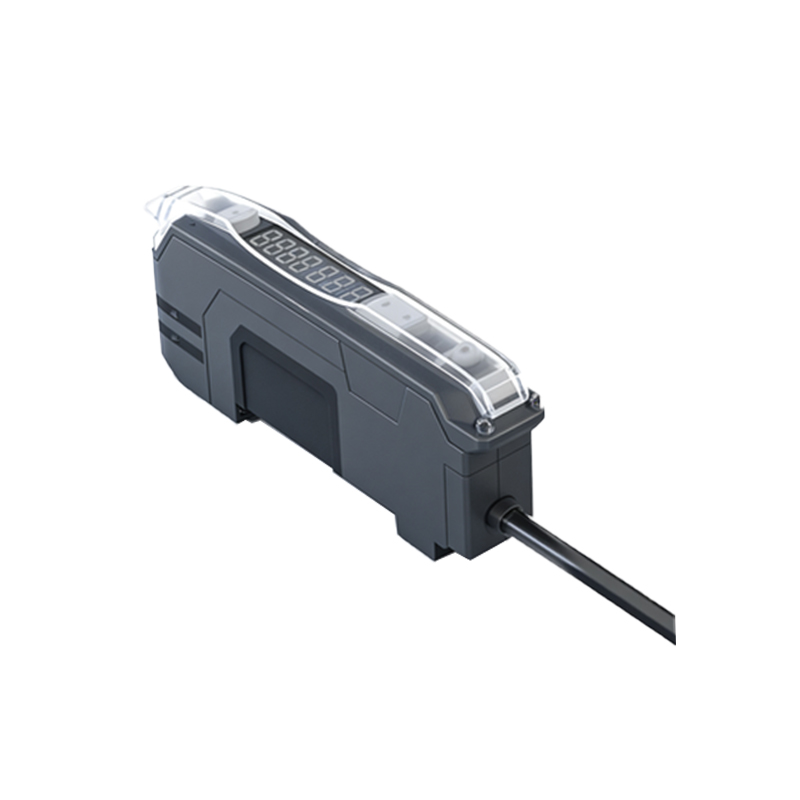
The most common and effective photoelectric sensor type for reliable glass detection is the polarized retro-reflective sensor. This sensor operates by emitting a beam of light towards a specialized retro-reflector, often a corner-cube reflector. The key component is a polarizing filter placed in front of the sensor's receiver. The emitted light is polarized in a specific plane. A standard retro-reflector would depolarize the reflected light, allowing it to pass through the receiver's polarizing filter. However, when a smooth, non-metallic surface like glass interrupts the beam, it acts as a specular reflector. This type of reflection preserves the polarization of the light. The receiver's polarizing filter is oriented at a 90-degree angle to the emitter's filter, effectively blocking the polarized light reflected from the glass. Therefore, the sensor detects a "beam broken" condition, reliably identifying the presence of the transparent object.
Alternative Methods: Through-Beam and Diffuse Sensors
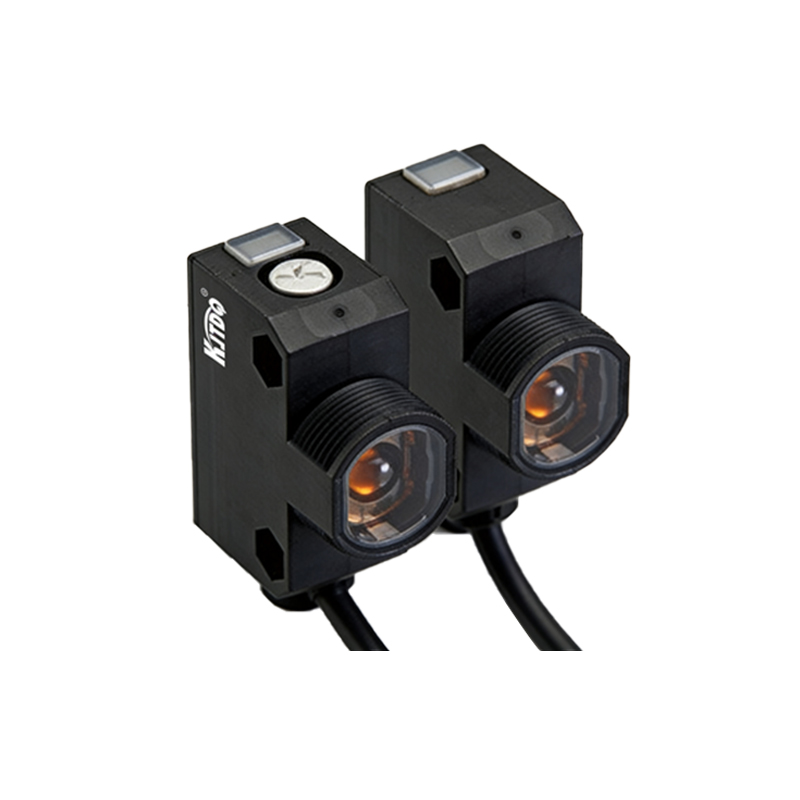
While polarized retro-reflective sensors are the primary solution, other photoelectric methods can be applied in specific scenarios. Through-beam sensors, consisting of separate emitter and receiver units, can detect glass if the material causes even a slight attenuation of the light beam. This method is highly reliable for detecting clear glass but requires precise alignment and more installation space. Conversely, certain diffuse sensors with background suppression or fixed-field technology can be tuned to detect the minimal reflection from the front or rear surface of a glass pane. These are suitable when a retro-reflector cannot be installed, but their performance is highly dependent on the glass surface angle, cleanliness, and the sensor's precise adjustment to ignore the background.
Critical Factors Affecting Detection Reliability
Several practical factors must be evaluated to ensure consistent glass detection. The angle of incidence is paramount; the sensor must be positioned so that the light beam strikes the glass surface at a near-perpendicular angle to achieve optimal specular reflection. Surface conditions like dirt, water droplets, or frosting can scatter light, potentially causing detection failures or false triggers. The thickness and type of glass (e.g., float glass, tempered, laminated) also influence reflectivity. Furthermore, environmental factors such as ambient light interference, particularly from high-intensity sources, must be mitigated. Selecting sensors with robust housing (IP67/IP69K ratings), stable LED light sources, and teach-in functionality for easy setup is crucial for harsh industrial environments.
Application Examples in Industrial Automation
Photoelectric sensors for glass detection are indispensable across numerous industries. In bottling and packaging lines, they verify the presence of glass containers before filling, capping, or labeling, preventing jams and ensuring process integrity. The automotive industry uses them to confirm the placement of windshields and windows during assembly. In glass manufacturing and processing, these sensors control cutting, etching, and tempering lines by detecting the leading and trailing edges of glass sheets. Electronics manufacturing relies on them for handling glass substrates for displays and touch panels. In each case, the sensor ensures precise positioning, prevents collisions, and maintains the high-speed flow of automated processes.
Selection and Installation Best Practices
Successful implementation begins with a thorough analysis of the application: object size, required sensing distance, cycle speed, and environmental conditions. For most clear glass detection tasks, a polarized retro-reflective sensor is the default choice. Ensure the sensor's specified sensing distance accounts for the reduced effective range when detecting a low-reflectivity target. During installation, meticulously align the sensor and retro-reflector. Use mounting brackets to prevent vibration-induced misalignment. For through-beam setups, ensure the receiver is not saturated by ambient light. Always perform rigorous testing under real-world conditions, including with wet or slightly soiled glass, to validate reliability. Regular maintenance schedules should include lens cleaning and functional checks.
Future Trends and Technological Advancements
The evolution of photoelectric sensing continues to address the nuances of material detection. Advanced sensors now incorporate laser light sources, which provide a more focused, intense beam that can improve signal stability on very thin or highly transparent glass. Multi-technology sensors that combine photoelectric sensing with other principles, like ultrasonic, are emerging for challenging applications. Furthermore, the integration of IO-Link and other industrial communication protocols allows for detailed diagnostic data monitoring, predictive maintenance, and remote parameter adjustment, enhancing system intelligence and uptime. As Industry 4.0 progresses, smart sensors will play an even greater role in complex material handling systems involving transparent substrates.