Understanding the Core Technology
Infrared (IR) proximity sensors are fundamental components in modern automation and electronics, operating on the principle of detecting infrared light reflected from objects. At their core, these sensors consist of an IR emitter, typically an infrared LED, and an IR receiver, such as a photodiode or phototransistor. The emitter projects a beam of infrared light, which is invisible to the human eye. When an object enters the sensor's detection field, a portion of this light is reflected back and captured by the receiver. The sensor's internal circuitry then processes this signal, often by measuring the intensity of the reflected light or the phase shift, to determine the presence or absence of an object and, in more advanced models, its approximate distance. This non-contact detection method is highly reliable for a wide range of materials and surfaces.
Key Operational Modes and Configurations
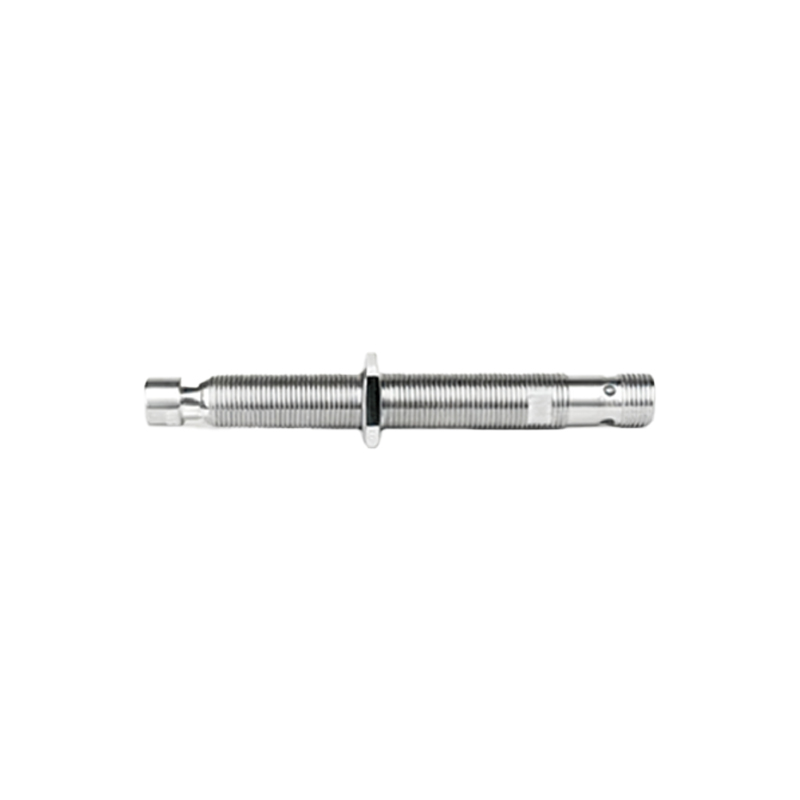
IR proximity sensors primarily function in two distinct modes: diffuse (proximity) mode and retro-reflective mode. In the diffuse mode, the most common configuration, both the emitter and receiver are housed in the same unit. Detection occurs when the emitted IR light bounces off a target and returns to the receiver. This setup is ideal for direct object detection. The retro-reflective mode involves a separate reflector. The sensor unit emits IR light towards a specialized reflector, which sends it directly back. An object interrupting this beam triggers the detection. This mode allows for longer sensing distances and is less dependent on the object's reflectivity. Additionally, advanced sensors incorporate background suppression technology, which uses triangulation to ignore distant objects and reflections, focusing only on targets within a precise, predefined range.
Critical Performance Parameters for Engineers
Selecting the right IR sensor requires a careful analysis of several technical specifications. Sensing range is paramount, defining the minimum and maximum distances for reliable operation. Response time indicates how quickly the sensor can detect a change and output a signal, crucial for high-speed automation. The repeatability, or the consistency of detection at the same point, affects system precision. Environmental factors like ambient light immunity is vital; quality sensors use modulated IR signals to filter out interference from sunlight or artificial lighting. Operating voltage and output type (e.g., NPN/PNP transistor, analog voltage, or digital IO) must match the control system. Finally, the housing material and Ingress Protection (IP) rating determine the sensor's durability against dust, moisture, and physical impact in industrial settings.
Diverse Industrial and Commercial Applications
The application spectrum for IR proximity sensors is vast. In industrial automation, they are ubiquitous for object detection on conveyor belts, part positioning in assembly robots, and jam detection in packaging machinery. Consumer electronics heavily rely on them; smartphones use IR sensors for automatic display dimming during calls, and touchless faucets or soap dispensers employ them for hygiene-conscious activation. In the automotive sector, they contribute to safety systems like obstacle detection in parking assistance. Furthermore, they are integral to robotics for navigation and obstacle avoidance, and in building automation for people counting and occupancy-based lighting control. Their non-contact nature makes them perfect for detecting delicate, transparent, or liquid-filled objects where physical switches would fail.
Advantages Over Alternative Sensing Technologies
Compared to other proximity sensing technologies like ultrasonic or capacitive sensors, IR sensors offer distinct benefits. They provide excellent resolution and fast response times, superior to ultrasonic sensors in short-range, high-speed applications. Unlike capacitive sensors, which detect conductive materials, IR sensors can detect almost any solid object regardless of material composition. They are generally more compact and cost-effective for mass-produced consumer devices. However, engineers must also consider their limitations: performance can degrade with highly absorbent (dark) or specular (shiny) surfaces, and they can be susceptible to interference from other strong IR sources or heavy environmental contaminants like fog or dust, which ultrasonic sensors may handle better.
Practical Selection and Implementation Guidelines
Successful implementation starts with a clear definition of the application requirements: target material, size, required sensing distance, and environmental conditions. For standard detection tasks, a diffuse sensor with background suppression is often the best starting point. Always consult the sensor's datasheet for specific characteristics like the "detection curve," which shows the effective sensing distance for different materials and colors. During installation, ensure the sensor is mounted securely and aligned correctly. Avoid mounting near highly reflective backgrounds that could cause false triggers. For reliable operation in challenging environments, select sensors with high IP ratings and robust housing. Regular maintenance, including lens cleaning to prevent dirt buildup, is essential for long-term reliability and consistent performance.