Introduction to Through-Beam Photoelectric Sensing
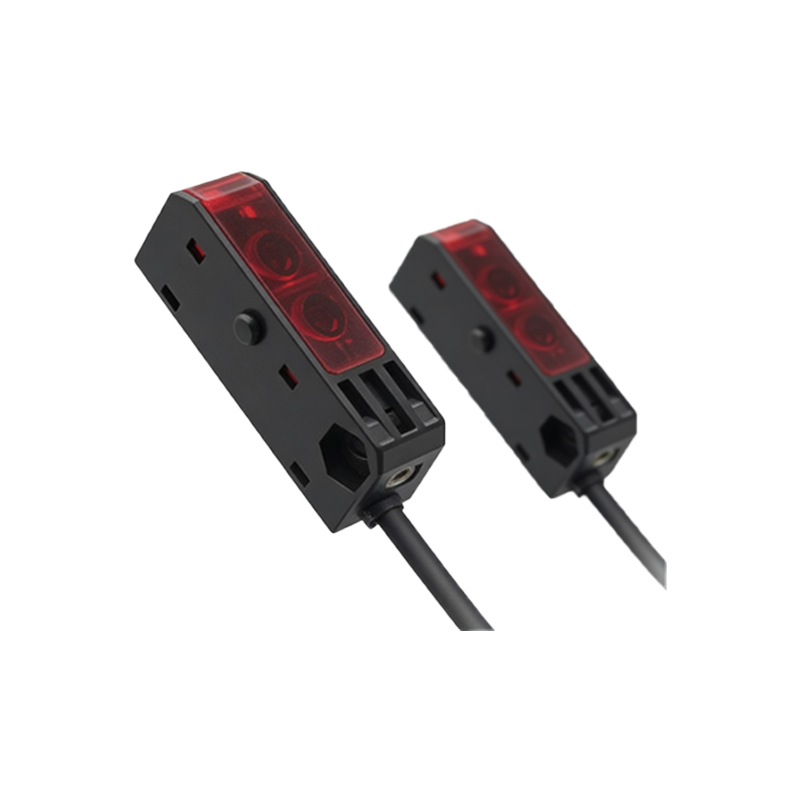
Through-beam photoelectric sensors, consisting of a separate emitter and receiver, are fundamental components in industrial automation. They provide highly reliable object detection over long ranges by detecting the interruption of a light beam. The traditional wired configuration, while robust, introduces challenges in installation, maintenance, and system flexibility, especially in dynamic or expansive factory layouts. The transition to wireless connectivity addresses these challenges but imposes a distinct set of critical requirements to ensure performance parity with wired systems.
Reliability and Signal Integrity
The paramount requirement for any wireless industrial sensor is unwavering reliability. In through-beam applications, a single missed detection can lead to production line stoppages, quality defects, or safety incidents. The wireless protocol must guarantee extremely high data integrity and minimal packet loss. This necessitates robust error-checking mechanisms, adaptive signal strength management, and immunity to the electromagnetic interference (EMI) prevalent in industrial environments. The link must maintain stability despite moving machinery, metal obstructions, and other RF noise sources.
Low Latency and Real-Time Performance
Through-beam sensors often function in high-speed counting, sorting, or positioning applications where detection events occur in milliseconds. Therefore, wireless systems must exhibit consistently low latency. The time from beam interruption to the transmission, reception, and processing of the signal must be predictable and sufficiently fast for the control system's requirements. Protocols designed for real-time industrial communication, rather than consumer-grade Wi-Fi or Bluetooth, are typically necessary to meet sub-millisecond response times in critical loops.
Power Management and Battery Life
Wireless sensors are frequently battery-powered, making efficient power management a core requirement. The emitter and receiver units must operate for extended periods—often years—without maintenance. This demands ultra-low-power electronics, sophisticated sleep/wake cycles synchronized between the paired units, and energy-harvesting considerations (e.g., solar, vibration). The design must balance power savings with the sensor's readiness to detect an event instantaneously, a key challenge in through-beam setups where the receiver must constantly listen for the emitter's signal.
Network Security and Data Encryption
Integrating wireless devices into an Industrial Internet of Things (IIoT) network introduces cybersecurity risks. Unauthorized access or signal jamming could disrupt operations. Thus, industrial-grade encryption for all transmitted data is non-negotiable. The system must support secure authentication protocols for pairing the emitter and receiver, preventing spoofing or malicious interference. Features like frequency hopping and unique device identifiers further enhance security, ensuring that the sensor link cannot be easily compromised.
Range and Environmental Robustness
The operational range of a wireless through-beam sensor must match or exceed its optical sensing range. Requirements vary from a few meters in confined spaces to over 100 meters in large warehouses. The RF technology (e.g., proprietary ISM band, WirelessHART, 5G) must provide stable connectivity at these distances while penetrating environmental obstacles. Furthermore, the hardware must maintain its wireless and sensing performance under extreme conditions—temperature swings, humidity, dust, and vibration—adhering to IP67 or higher ingress protection ratings.
Ease of Integration and Diagnostics
A successful wireless solution must integrate seamlessly with existing Programmable Logic Controllers (PLCs) and control networks. This requires standardized communication interfaces (e.g., IO-Link Wireless, digital I/O) and simple configuration tools. Comprehensive diagnostic capabilities are also crucial. The system should provide clear status indicators for signal strength, battery level, and sensor alignment, enabling proactive maintenance and rapid troubleshooting without physical access to potentially remote sensor locations.
Scalability and Network Management
In large-scale deployments, dozens or hundreds of wireless sensors may operate concurrently. The wireless system must support this scalability without self-interference or network congestion. Requirements include efficient channel management, mesh networking capabilities for extended coverage, and a centralized management platform for monitoring the health and status of all sensor pairs. The network should be self-organizing and capable of dynamically adapting to changes in the environment or layout.
Conclusion: Balancing Innovation with Core Functionality
Implementing wireless technology in through-beam photoelectric sensors is not merely about eliminating cables. It is about meeting a stringent set of requirements that uphold the sensor's primary mission: reliable, precise, and fast object detection. By rigorously addressing reliability, latency, power, security, and robustness, wireless through-beam sensors can unlock new levels of flexibility and efficiency in industrial automation, paving the way for more adaptive and intelligent manufacturing systems without compromising on the core performance that industry depends on.