Introduction to Photoelectric Sensors in Robotic Applications
The evolution of industrial automation is fundamentally linked to advancements in sensing technology. Among the most critical components enabling the sophisticated functionality of modern smart robotic hands are photoelectric sensors. These devices serve as the primary interface between the robotic system and its environment, providing the essential data for precise object detection, positioning, and quality control. Unlike simple mechanical limit switches, photoelectric sensors offer non-contact, high-speed, and highly accurate sensing capabilities. They operate by emitting a beam of light, typically infrared, visible red, or laser, and detecting changes in the received light signal caused by the presence, absence, or characteristics of a target object. This principle allows robotic systems to interact with their workspace intelligently and responsively, forming the backbone of flexible and adaptive automation cells in manufacturing, logistics, and assembly lines.
Core Operating Principles and Sensor Types
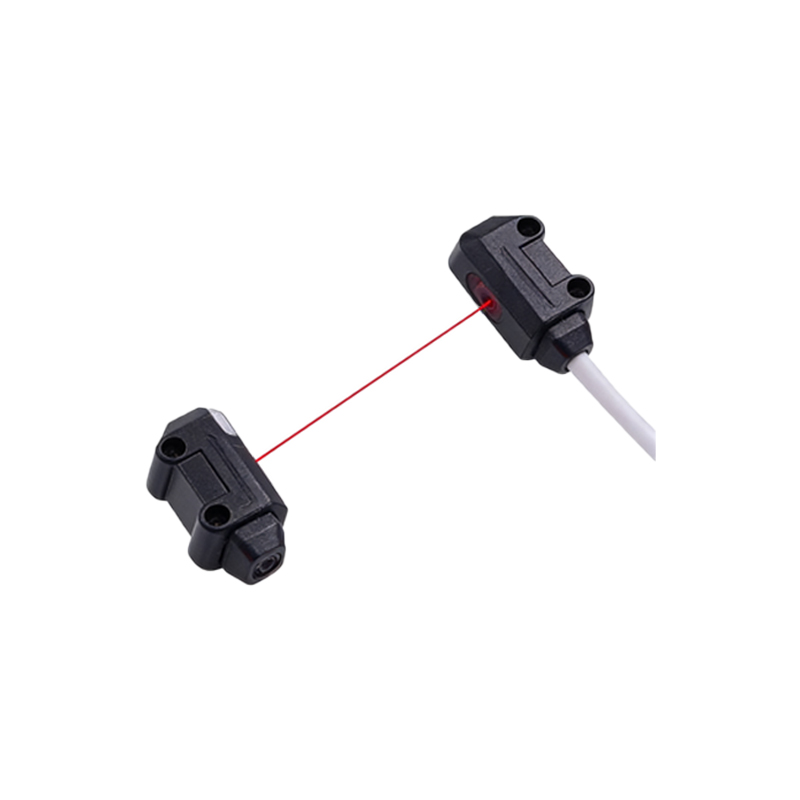
Understanding the operational modes of photoelectric sensors is key to their effective application in smart robotic hands. The three primary configurations are through-beam, retro-reflective, and diffuse reflective sensors. Through-beam sensors consist of separate emitter and receiver units. The object is detected when it interrupts the light beam traveling between them, offering the longest sensing ranges and highest reliability. Retro-reflective sensors house both emitter and receiver in a single housing, using a reflector to bounce the light beam back. Detection occurs when an object breaks this reflected beam. Diffuse reflective sensors, also single-unit devices, detect light reflected directly off the target object itself, making them ideal for detecting objects without a clear background or for measuring distance via analog output. For robotic hands, miniature diffuse and through-beam sensors are often integrated into gripper fingers or end-of-arm tooling to provide real-time feedback on grip status, part presence, or orientation.
Integration with Smart Robotic Hand Systems
The integration of photoelectric sensors transforms a standard robotic gripper into a "smart" system capable of complex decision-making. These sensors are strategically embedded within the hand's structure. For instance, sensors placed at the fingertip or palm can confirm successful part acquisition before the robot initiates a movement cycle, preventing costly drops or misplacements. Others can be used to verify part orientation or detect specific features, enabling the hand to adjust its grip or trigger a secondary process. The sensor data is fed into the robot's controller or a dedicated Programmable Logic Controller (PLC) via digital or analog I/O modules or increasingly via industrial Ethernet protocols like EtherNet/IP or PROFINET. This seamless data flow allows for closed-loop control, where the robot's actions are continuously adjusted based on sensory feedback, enhancing precision in tasks like precision insertion, component assembly, or bin picking from unstructured piles.
Key Performance Parameters and Selection Criteria
Selecting the right photoelectric sensor for a robotic hand application requires careful consideration of several technical parameters. Sensing range is paramount and varies greatly between types; through-beam sensors can work over several meters, while precise diffuse sensors for small parts may have a range of only a few centimeters. Response time, often in microseconds, determines how quickly the sensor can detect a change and send a signal, which is critical for high-speed pick-and-place operations. The size and form factor of the sensor are equally important, as space within a robotic gripper is extremely limited, driving demand for miniaturized, M8 or M12 threaded barrel-style sensors. Environmental robustness is a non-negotiable criterion; sensors must be rated with appropriate Ingress Protection (IP67/IP69K) to withstand dust, coolants, and high-pressure washdowns common in industrial settings. Furthermore, immunity to ambient light interference and the ability to detect challenging surfaces (e.g., shiny, transparent, or dark materials) are solved by sensors with specialized optics, polarized filters, or background suppression technology.
Advanced Features: Background Suppression and Color Sensing
To tackle complex real-world scenarios, advanced photoelectric sensors offer specialized functionalities. Background Suppression (BGS) or Fixed Field sensors are a breakthrough for robotic hands. They use triangulation principles to detect an object only within a precise, defined distance window, ignoring any objects or surfaces beyond that set point. This is invaluable for reliably picking a part from a conveyor belt or a bin, ignoring the belt surface or bin walls behind it. True color sensors represent another advanced tier. They evaluate the RGB components of reflected light to distinguish between colors or shades. In robotic assembly, this allows a hand to sort parts by color, verify the correct colored wire is installed, or check for product labeling and packaging accuracy. These intelligent sensors move beyond simple presence/absence detection to provide richer qualitative data about the workpiece.
Application Examples Across Industries
The practical applications of photoelectric-sensor-equipped robotic hands are vast. In the automotive industry, they ensure precise placement of windshield glass, verify the presence of gaskets on engine blocks, and guide robots in welding and painting operations. In electronics manufacturing, ultra-precise sensors guide robotic arms in placing surface-mount devices (SMDs) onto circuit boards and inspecting solder joint quality. Pharmaceutical and packaging lines use them to count pills in blister packs, verify cap placement on bottles, and inspect filled levels. In logistics, robotic depalletizers and order-picking systems rely on arrays of sensors to identify box edges, check for labels, and ensure secure grasping without damage. Each application leverages the sensor's speed, accuracy, and reliability to reduce cycle times, minimize errors, and increase overall equipment effectiveness (OEE).
Future Trends and Industry 4.0 Connectivity
The future of photoelectric sensors in smart robotics is intertwined with the rise of Industry 4.0 and the Industrial Internet of Things (IIoT). Next-generation sensors are becoming smarter with integrated microprocessors and IO-Link communication capability. IO-Link transforms a standard digital sensor into a bi-directional data point. It allows for remote configuration and monitoring of parameters like sensing range or output mode directly from the control cabinet. More importantly, it enables the transmission of detailed device health data (operating temperature, signal strength, contamination levels) for predictive maintenance, preventing unplanned downtime. Furthermore, the miniaturization trend continues, enabling even more sensors to be packed into dexterous robotic hands, approaching the sensory density of a human hand. The convergence of precise sensing, robust connectivity, and intelligent data analysis is paving the way for truly autonomous, self-optimizing robotic systems that can adapt to variable production tasks with minimal human intervention.