Introduction to the Q5MD1 Proximity Sensor
The Q5MD1 represents a significant advancement in the field of industrial sensing technology. As a compact, high-performance inductive proximity sensor, it is engineered to deliver reliable non-contact detection of metallic objects in demanding environments. Its design prioritizes durability, precision, and ease of integration, making it a preferred component in automated manufacturing lines, material handling systems, and robotic applications. The sensor operates on the principle of electromagnetic induction, where an oscillator circuit generates a high-frequency electromagnetic field from its sensing face. When a metallic target enters this field, eddy currents are induced, causing a change in the oscillation amplitude. This change is detected by the sensor's circuitry, triggering a solid-state output signal. The Q5MD1 is specifically calibrated for optimal performance with ferrous metals, offering a consistent sensing range and high switching frequency critical for modern, high-speed automation.
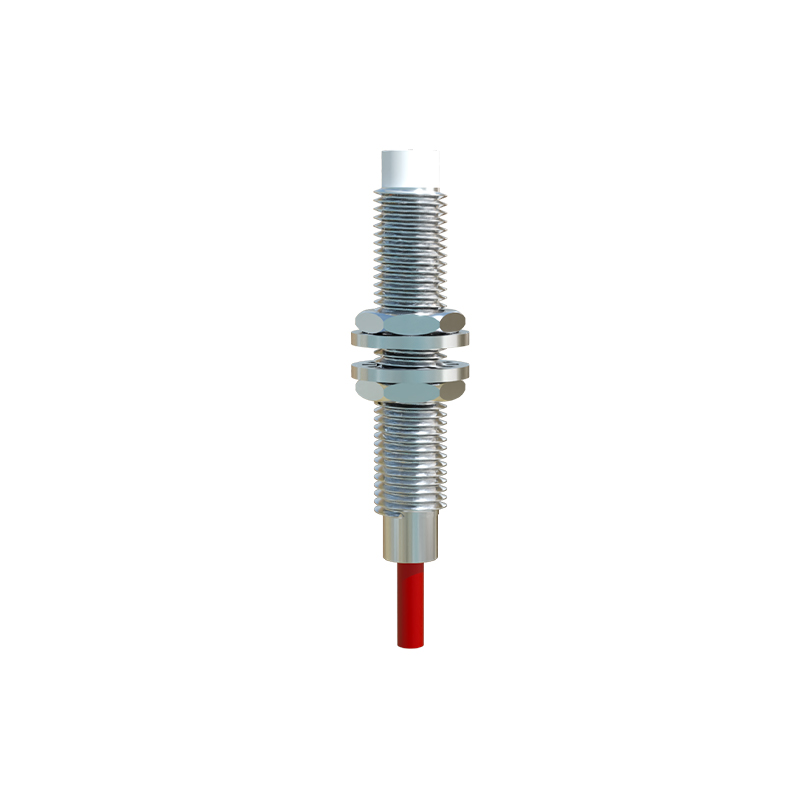
Key Technical Specifications and Performance Data
The operational excellence of the Q5MD1 is defined by its precise technical parameters. It typically features a standard sensing distance, often 5mm, with a guaranteed operational range that accounts for manufacturing tolerances and environmental factors. The sensor is designed to function across a wide voltage range, commonly from 10 to 30 VDC, ensuring compatibility with various industrial control systems. Its output configuration is typically a 3-wire design with a PNP (sourcing) transistor output, capable of driving loads such as PLC inputs, relays, or indicators directly. Key performance metrics include a high switching frequency, often exceeding 1 kHz, which allows for the detection of rapidly moving objects. Furthermore, it boasts a high degree of immunity to electrical noise (EMI/RFI) and is built with robust housing materials, typically nickel-plated brass or stainless steel, providing an IP67 or higher ingress protection rating against dust and temporary immersion in water.
Installation, Wiring, and Configuration Guidelines
Proper installation is paramount for realizing the full potential of the Q5MD1 sensor. It is crucial to mount the sensor securely, ensuring the target approaches the active sensing face perpendicularly. Adequate clearance must be maintained around the sensor body to prevent interference from surrounding metal, a condition known as "side-metal" or "flush-mount" interference. For flush-mountable models, they can be installed embedded in metal without affecting the sensing range. The wiring process is straightforward: the brown wire connects to the positive DC supply, the blue wire to the negative DC supply (0V), and the black wire serves as the switched positive output. A protective fuse or circuit breaker is recommended in the supply line. Configuration is generally fixed; however, some variants may include features like short-circuit protection, reverse polarity protection, and an LED status indicator for operational diagnostics, simplifying commissioning and maintenance.
Application Scenarios and Industry Use Cases
The versatility of the Q5MD1 makes it indispensable across numerous industrial sectors. In automotive assembly, it is used for precise part presence verification, such as detecting pistons in engine blocks or confirming the position of robotic grippers. Within packaging machinery, it counts metallic items on conveyor belts or verifies the closure of metal lids. In metalworking and CNC machining centers, it acts as a tool breakage detector or a part-positioning limit switch. Its robust construction allows it to perform reliably in harsh conditions found in foundries or woodworking shops (detecting metal staples or fasteners). The sensor's fast response is critical in high-speed sorting systems and robotic pick-and-place units, where millisecond-level detection accuracy ensures process efficiency and product quality.
Comparative Advantages and Selection Considerations
When selecting a proximity sensor like the Q5MD1, engineers evaluate it against alternatives such as capacitive, ultrasonic, or photoelectric sensors. The Q5MD1's primary advantage lies in its exceptional reliability for metal detection, unaffected by color, transparency, or surface finish of the target, unlike optical sensors. It is also impervious to dust, dirt, and oil splashes that could obscure a photoelectric beam. Compared to capacitive sensors, it is immune to non-metallic materials and environmental humidity changes. Key selection factors include the required sensing distance, target material (ferrous vs. non-ferrous metals), output type (PNP/NPN), housing size and shape (threaded barrel, rectangular), and the required environmental protection rating. The Q5MD1 often stands out for its balanced combination of standard range, robust output, and industrial-grade resilience.
Maintenance, Troubleshooting, and Best Practices
While the Q5MD1 is designed for longevity with no moving parts, periodic checks ensure sustained performance. Routine maintenance involves cleaning the sensing face of any