Introduction to Photoelectric Sensors in Garage Systems
Photoelectric sensors are fundamental components in modern garage automation and safety systems. These devices operate by emitting a beam of light, typically infrared, visible red, or laser, and detecting changes in the received light signal. In the context of garages, whether for residential, commercial, or industrial use, they provide non-contact detection of objects, vehicles, and personnel. Their primary functions revolve around safety, security, and the automation of door operations. By ensuring precise detection, they prevent accidents, such as a garage door closing on a vehicle or person, and facilitate smooth, hands-free operation. The reliability and versatility of photoelectric sensors make them indispensable in creating intelligent, responsive garage environments that prioritize both convenience and protection.
Through-Beam Photoelectric Sensors
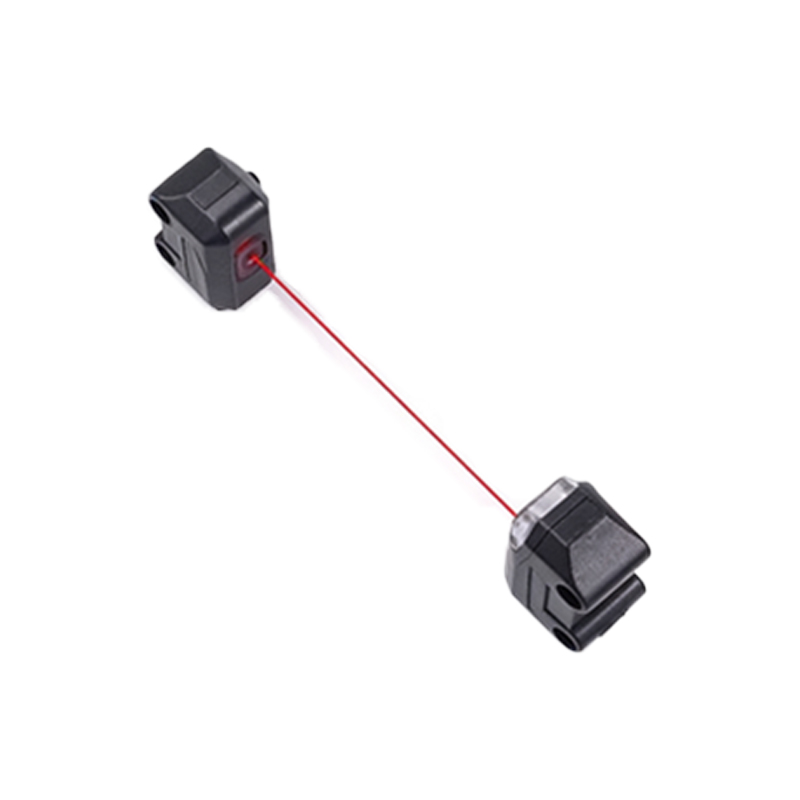
Through-beam sensors, also known as opposed-mode sensors, consist of two separate units: a transmitter and a receiver. The transmitter projects a continuous beam of light directly to the receiver. In garage applications, these are often installed on either side of a doorway. An object, like a vehicle or a person, interrupts this beam, triggering a signal to the garage door opener to stop or reverse its motion. This type offers the longest sensing range and highest reliability in garage settings because it requires a complete break in the beam. They are particularly effective for defining the exact clearance zone of a garage door, ensuring nothing is in the path during closure. Their installation requires precise alignment but provides a robust safety curtain.
Retro-Reflective Photoelectric Sensors
Retro-reflective sensors house both the light emitter and receiver in a single housing. They work by projecting light towards a specialized reflector, which bounces the beam directly back to the receiver. Detection occurs when an object blocks this reflected beam. In garages, these sensors are useful for monitoring specific zones where installing a separate receiver unit is impractical. For instance, they can be mounted on a wall to monitor the area immediately in front of a parked car to prevent the door from closing if something is detected. They offer a good sensing range, though slightly less than through-beam models, and are easier to install and wire since only one device needs to be mounted and connected to the control system.
Diffuse Reflective Photoelectric Sensors
Diffuse reflective sensors, or proximity-mode sensors, also combine the emitter and receiver. However, they detect objects based on the reflection of light off the target itself, without a separate reflector. The sensor detects the presence of an object when sufficient light is reflected back. In garage environments, these are ideal for detecting the presence of a vehicle in a specific parking spot or for triggering lighting systems as a car approaches. They have a shorter range and can be influenced by the color and reflectivity of the target. For example, a dark-colored vehicle might be harder to detect than a light-colored one. Their key advantage is that they only require a single unit and can detect objects without any additional hardware like reflectors.
Background Suppression Sensors
Background suppression is a sophisticated feature often integrated into diffuse reflective sensors. These sensors use triangulation or time-of-flight principles to measure distance, allowing them to detect an object only within a very specific, pre-set range. They effectively ignore objects or surfaces beyond this set point. In a garage, this technology is crucial for precise positioning. For example, a sensor can be programmed to detect a vehicle only when it is fully within the garage boundaries, ignoring the wall at the far end. This prevents false triggers and ensures accurate detection for automated parking systems or for ensuring a vehicle is correctly positioned before the door closes, enhancing both automation precision and safety.
Laser Photoelectric Sensors
Laser photoelectric sensors utilize a highly focused, coherent laser beam instead of a standard LED light source. This results in an extremely precise, small-diameter spot, allowing for the detection of very small objects or precise edge detection over long distances. In advanced garage systems, particularly in automated parking garages or industrial settings, laser sensors are used for high-precision tasks. These include vehicle profiling for guidance systems, exact positioning of vehicles on lifts or turntables, and ensuring minute clearances are maintained. Their high accuracy and stability make them suitable for demanding applications where standard photoelectric sensors might lack the necessary precision or be affected by ambient light interference.
Safety Light Curtains
While technically an array of through-beam sensors, safety light curtains deserve special mention. They create a vertical plane or "curtain" of infrared light beams across a hazardous area, such as the interior of a large industrial garage door or loading dock. If any single beam is broken, the system immediately signals the door to stop or reverse. These are critical for personnel safety in environments where large doors operate frequently. They provide a wide-area protective shield, far more comprehensive than a single pair of sensors, ensuring that even a small part of a person's body entering the danger zone is detected instantly. Their integration is a key part of meeting stringent industrial safety standards like OSHA or ISO regulations.
Key Selection Criteria for Garage Applications
Choosing the right photoelectric sensor for a garage involves several factors. Sensing range is paramount; it must cover the required distance reliably under all conditions. Environmental durability is critical, as garage sensors must withstand temperature fluctuations, humidity, dust, vibration, and potential exposure to chemicals like oil or car wash detergents. Look for sensors with high Ingress Protection (IP) ratings, such as IP67. The response time must be fast enough to stop a moving door before an impact occurs. Output type (e.g., NPN/PNP, relay) must be compatible with the garage door opener's control system. Finally, consider the mounting requirements and ease of alignment to ensure a stable, long-lasting installation that requires minimal maintenance.