Understanding the Core Principle
The measurement of acceleration using photoelectric sensors is an innovative application that leverages the fundamental principles of light modulation and precise displacement detection. At its core, a photoelectric sensor system for acceleration measurement typically consists of a light source, a photodetector, and a seismic mass attached to a modulating element, such as a shutter or a reflective surface, that moves relative to the sensor's optical path. When the system experiences acceleration, the inertial force causes the seismic mass to displace. This displacement directly alters the amount of light reaching the photodetector—either by obstructing it, reflecting it at a different angle, or changing the interference pattern. The photodetector converts this modulated light intensity into a corresponding electrical signal. By precisely calibrating the system, the rate of change of this displacement signal over time, which is directly proportional to the velocity change, allows for the calculation of acceleration. This method provides a non-contact or minimal-contact measurement, which is crucial for applications where mechanical loading from traditional accelerometers is undesirable.
System Configuration and Key Components
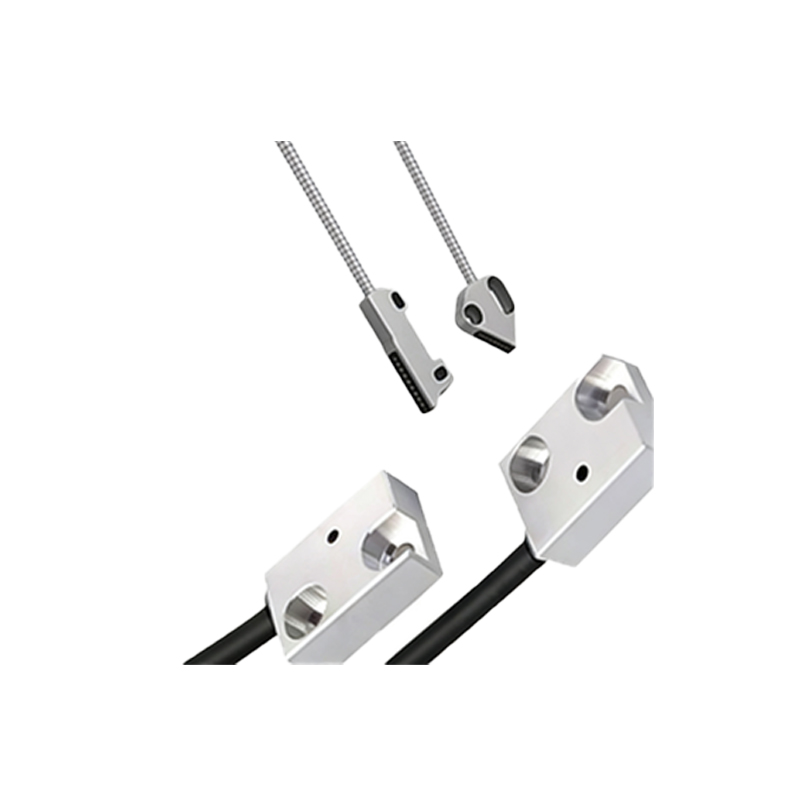
A practical photoelectric accelerometer system requires careful integration of several key components. The light source, often a laser diode or LED, must provide stable, coherent illumination. The modulating element connected to the seismic mass is critical; common designs use a finely patterned grating or a single vane that moves between the light source and detector. High-precision photodiodes or position-sensitive detectors (PSDs) are employed to capture minute changes in light position or intensity. Signal conditioning circuitry is then essential to amplify the weak photocurrent, filter out noise, and linearize the response. For digital output and advanced processing, a microcontroller or FPGA is integrated to sample the analog signal at high rates, perform differentiation algorithms to convert displacement to acceleration, and communicate data via standard industrial protocols like IO-Link, Ethernet/IP, or Modbus TCP. The mechanical design of the housing and the suspension of the seismic mass determine the sensor's frequency response, measurement range, and resilience to environmental vibrations.
Advantages Over Traditional Accelerometers
Photoelectric acceleration sensors offer distinct advantages in specific industrial scenarios. Firstly, they provide exceptional resolution and high-frequency response because light-based detection lacks the mechanical damping inherent in piezoelectric or MEMS-based sensors. This makes them ideal for monitoring high-speed machinery vibrations or detecting transient shocks. Secondly, the non-contact nature of the measurement eliminates issues like stiction, wear, and mechanical hysteresis, ensuring long-term stability and repeatability. They are inherently immune to electromagnetic interference (EMI), a significant benefit in environments with powerful motors or variable frequency drives. Furthermore, these sensors can be designed to be extremely compact and lightweight, minimizing their impact on the system being measured. Their ability to provide absolute position data alongside derived acceleration is another unique benefit for integrated monitoring systems.
Primary Industrial Applications
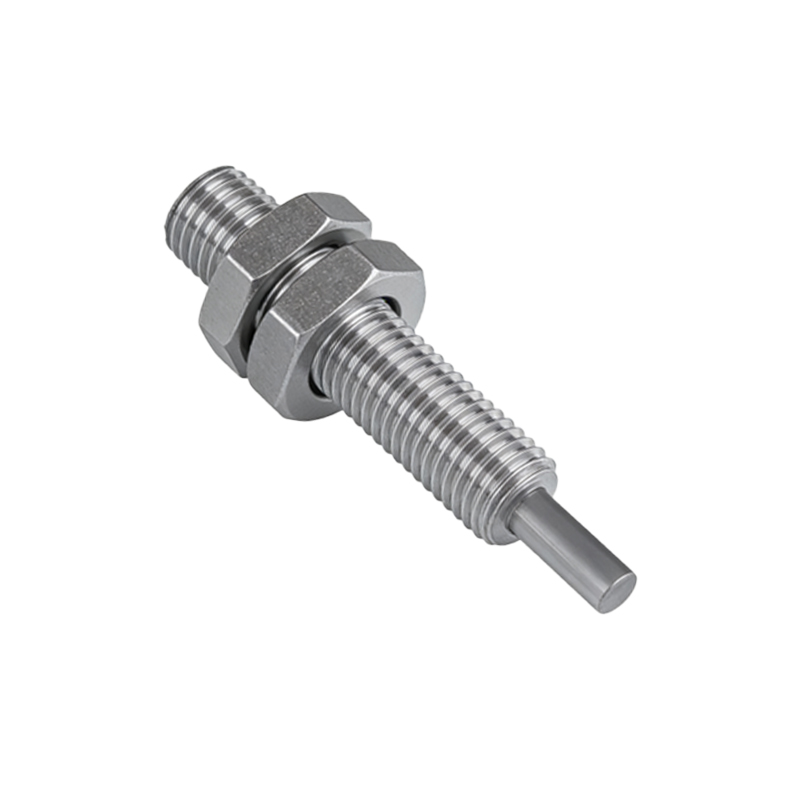
The unique capabilities of photoelectric acceleration measurement find use in several demanding industrial fields. In precision manufacturing and robotics, they are deployed for active vibration cancellation in CNC machine tools, coordinate measuring machines, and robotic arms, enhancing machining accuracy and surface finish. Within the automotive and aerospace sectors, they are used for structural health monitoring, testing component fatigue under dynamic loads, and conducting modal analysis. High-speed packaging and printing lines utilize these sensors to detect anomalous vibrations that could lead to product defects or web breaks. They also play a role in predictive maintenance programs, where they monitor bearing health, imbalance, and misalignment in rotating equipment like turbines, pumps, and fans with greater sensitivity than conventional vibration sensors, allowing for earlier fault detection.
Calibration and Implementation Challenges
Implementing a photoelectric acceleration measurement system requires addressing several engineering challenges. Calibration is a complex process, necessitating precise shaker tables to establish a known acceleration input and correlate it with the sensor's output signal across its entire frequency and amplitude range. Temperature stability is crucial, as thermal expansion can affect optical alignment and mechanical properties; therefore, designs often incorporate temperature compensation algorithms or materials with low thermal coefficients. Contamination from dust, oil mist, or coolant in industrial settings can obscure optical surfaces, demanding robust IP-rated enclosures and possibly built-in cleaning mechanisms. Finally, the initial system cost and complexity of integration can be higher than for standard MEMS accelerometers, requiring a clear justification based on the application's need for superior performance, resolution, or environmental resistance.
Future Trends and Developments
The future of photoelectric acceleration sensing is closely tied to advancements in photonics and integrated systems. The development of micro-opto-electro-mechanical systems (MOEMS) aims to miniaturize the entire optical assembly onto a single chip, dramatically reducing size and cost while improving reliability. Integration with fiber optic technology is another promising direction, enabling distributed acceleration sensing along a single cable for monitoring large structures like bridges, pipelines, or wind turbine blades. Enhanced digital signal processing, powered by edge computing and AI algorithms, will allow these sensors to not only measure acceleration but also diagnose specific fault types in real-time. Furthermore, the push towards Industry 4.0 and smart factories will drive demand for intelligent sensors that combine acceleration data with other parameters, providing a comprehensive digital twin of machinery health and performance.