Introduction to Photoelectric Sensor Packaging Machines
In the realm of industrial automation, photoelectric sensor packaging machines represent a pinnacle of precision and efficiency. These sophisticated systems integrate advanced photoelectric sensing technology to detect, position, and package products with remarkable accuracy. The core function revolves around using light beams, typically infrared, visible red, or laser, to sense the presence, absence, or distance of an object. This detection triggers precise mechanical actions for packaging, such as filling, sealing, labeling, and cartoning. The integration of these sensors into packaging lines has revolutionized industries ranging from food and beverage to pharmaceuticals and consumer goods, ensuring high-speed operation while minimizing errors and material waste. A visual exploration of these machines provides invaluable insight into their design, component layout, and operational principles.
Key Components and Their Visual Representation
Examining detailed images of photoelectric sensor packaging machines reveals several critical components. The most prominent is the sensor unit itself, often housed in a rugged, compact casing suitable for industrial environments. High-resolution photos typically show sensors in various form factors: through-beam, retro-reflective, and diffuse reflective models. Through-beam sensors consist of separate emitter and receiver units, visible in images positioned on opposite sides of a conveyor. Retro-reflective units combine emitter and receiver in one housing, with a reflector plate shown opposite. Diffuse sensors have a single housing that both emits and receives light, often seen angled towards the detection point. Other visual highlights include the machine's frame and chassis, product handling mechanisms like grippers or pushers, the packaging material feed system, and the central programmable logic controller (PLC) cabinet. Close-up shots often reveal wiring conduits, connection ports, and status indicator LEDs on the sensors, which are crucial for troubleshooting.
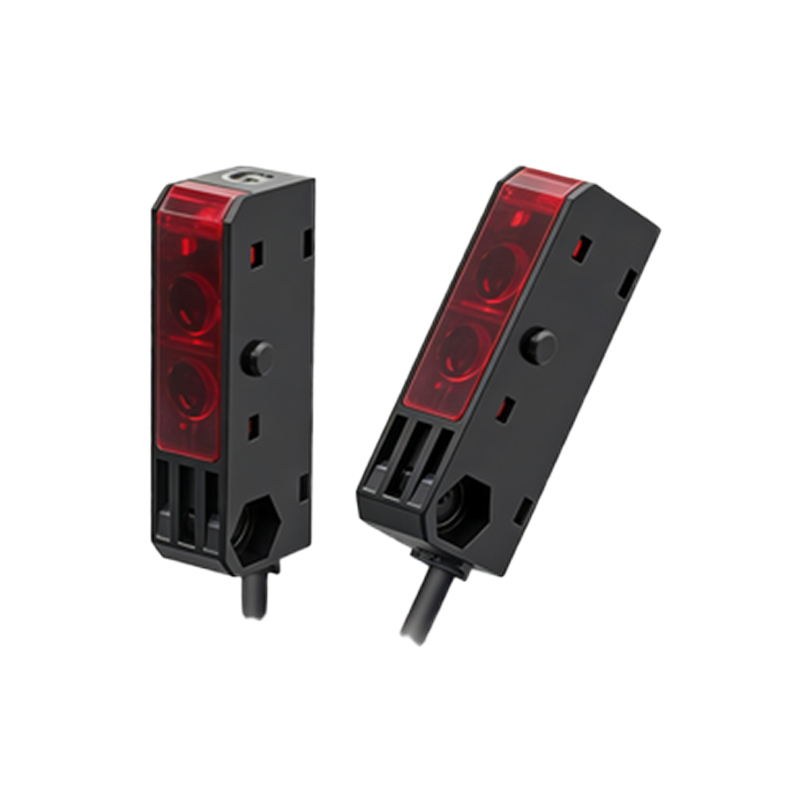
Through-Beam Sensor Packaging Systems in Action
Images capturing through-beam sensor systems in operational settings are particularly instructive. These pictures often depict a production line where products move on a conveyor belt. The emitter unit is mounted on one side, projecting a constant beam of light to the receiver on the opposite side. When a product interrupts this beam, the sensor sends a signal to the machine's controller. Subsequent images in a series might show the immediate next steps: a robotic arm activating to pick the product, a filling nozzle opening, or a sealing head descending. The clarity of these images allows engineers to assess the optimal alignment of the beam, the required sensing range, and the integration of the sensor signal with the machine's sequential logic. Diagrams superimposed on photos sometimes illustrate the light path and the "sense" window, providing a clear technical understanding of the detection zone.
Compact and Miniature Sensor Designs for Space-Constrained Applications
The gallery would be incomplete without highlighting the trend toward miniaturization. Numerous images showcase compact and miniature photoelectric sensors integrated into packaging machinery where space is at a premium. These sensors, sometimes no larger than a fingertip, are pictured embedded within intricate mechanisms for counting small pills, detecting labels on vials, or ensuring the correct placement of lids. The photos emphasize their sleek, cylindrical or rectangular housings, often made of stainless steel or high-grade plastic. Despite their small size, detailed cutaway images or exploded-view diagrams reveal sophisticated internal optics and electronics. These visuals are essential for design engineers who need to select sensors that offer high performance without compromising the machine's footprint or the agility of its moving parts.
Harsh Environment and Washdown Models
Packaging environments in food processing or chemical industries demand robust equipment. The image collection must include specialized photoelectric sensors built for harsh conditions. Pictures depict sensors with IP67, IP68, or IP69K ratings, featuring completely sealed housings, often with robust stainless steel casings and thick, pressure-resistant glass lenses. Some images show these units installed in areas subject to high-pressure washdowns, steam cleaning, or exposure to corrosive agents. The visual distinction from standard models is clear: fewer seams, more secure cable glands, and sometimes a protective hood or air purge fitting. These images help engineers verify the suitability of a sensor for specific sanitary or hazardous environmental standards, ensuring long-term reliability and compliance.
Integration with Vision Systems and Smart Factories
Modern packaging machines are increasingly intelligent. Advanced imagery demonstrates the integration of photoelectric sensors with machine vision cameras and Industry 4.0 connectivity. One set of images might show a sensor acting as a trigger for a high-speed vision camera; when the sensor detects an object, it signals the camera to capture an image for barcode reading or quality inspection. Other photos illustrate sensors with integrated IO-Link communication, showcasing the digital data port alongside traditional wiring. Diagrams and system overview screenshots explain how sensor data—such as detection counts, operating hours, or health status—is fed into a SCADA or MES system. This visual documentation underscores the role of photoelectric sensors as critical data points within the interconnected smart factory ecosystem.
Maintenance, Alignment, and Troubleshooting Guides
A practical section of the gallery focuses on maintenance. Step-by-step photographic guides show technicians performing routine tasks. This includes images demonstrating the correct procedure for aligning a through-beam sensor using alignment tools or built-in indicators. Other sequences illustrate lens cleaning, housing inspection for damage, and verification of power and signal connections using a multimeter. Comparative images highlight common issues: a misaligned sensor beam, a lens obscured by dust or product residue, or a damaged cable. These visuals serve as an immediate reference for field service personnel, reducing machine downtime and ensuring consistent sensor performance. Diagrams often accompany these photos, showing oscilloscope readings of a healthy signal versus a faulty one.
Future Trends and Innovative Applications
The final visual segment explores emerging trends. Conceptual images and prototypes reveal sensors with enhanced capabilities, such as background suppression for detecting objects against complex backgrounds, or color recognition sensors for sorting tasks. Photographs from recent trade shows might display packaging machines utilizing novel sensing techniques like time-of-flight (ToF) sensors for precise volumetric measurement or 3D profiling. Other forward-looking images illustrate the use of fiber optic photoelectric sensors in extremely high-temperature or electromagnetically noisy environments, where traditional sensors cannot be placed. This part of the gallery inspires innovation, showing engineers the next generation of sensing technology that will drive further efficiencies, flexibility, and intelligence in packaging automation.