Introduction to M185 Photoelectric Sensors
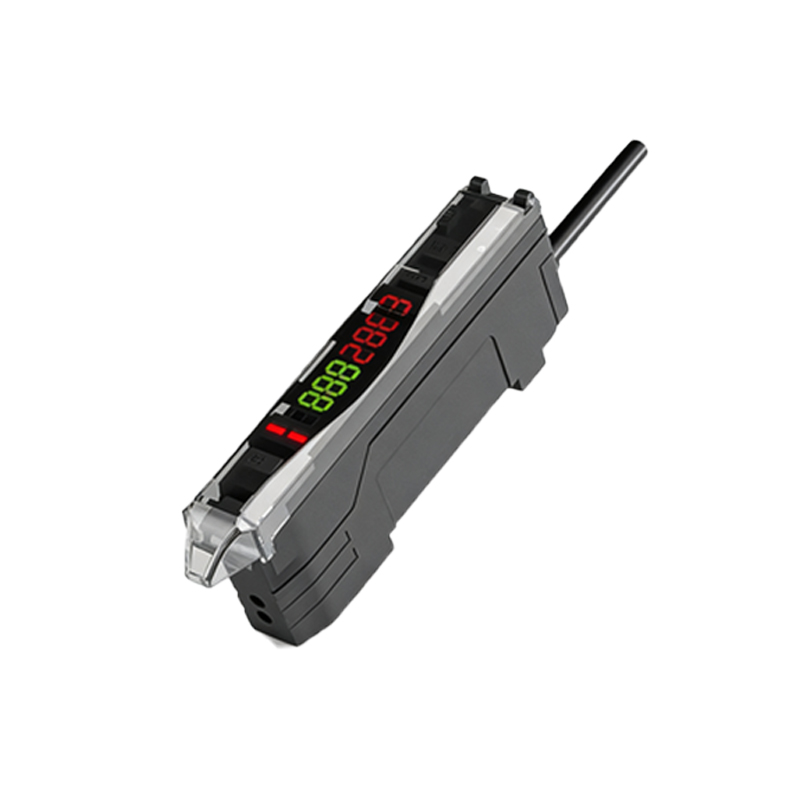
The M185 series represents a cornerstone in industrial sensing technology, designed for reliability and precision in demanding automation environments. As a diffuse reflective photoelectric sensor, the M185 operates on the principle of emitting a light beam and detecting the portion reflected directly from the target object. This design eliminates the need for a separate reflector, simplifying installation and reducing system complexity. Engineered for versatility, these sensors are commonly deployed in packaging, material handling, assembly line monitoring, and object detection applications where consistent performance is non-negotiable. Their robust housing typically ensures protection against dust, moisture, and mechanical impact, aligning with international protection ratings such as IP67, making them suitable for harsh industrial settings.
Core Operating Principles and Technology
At the heart of the M185 sensor lies a modulated infrared or visible red LED light source. The modulation technique, often employing a specific frequency, allows the sensor to distinguish its own light signal from ambient factory lighting, significantly enhancing noise immunity and detection stability. The emitted light strikes a target within its sensing range, and the diffuse reflection is captured by a phototransistor or photodiode receiver integrated into the same housing. The sensor's internal circuitry then processes this signal, triggering a solid-state or relay output when the reflected intensity surpasses a preset threshold. Key technical parameters include sensing distance, which is influenced by the target's size, color, and surface texture, with standard M185 models offering ranges suitable for close to medium-distance applications.
Key Features and Technical Specifications
The M185 series is distinguished by a set of features that cater to industrial needs. A critical feature is the adjustable sensitivity potentiometer, allowing engineers to fine-tune the sensor's response to different target materials and environmental conditions, preventing false triggers. Many models incorporate a stable operating indicator LED, providing visual confirmation of power and output status for easy diagnostics. Typical specifications include a operating voltage range of 10-30V DC, ensuring compatibility with standard industrial control voltage systems. The output configuration is often a solid-state NPN or PNP transistor, capable of switching loads directly or interfacing with PLC inputs. Response time is exceptionally fast, measured in milliseconds, enabling detection of high-speed events on fast-moving production lines.
Installation, Alignment, and Calibration Best Practices
Proper installation is paramount for optimal M185 performance. Mounting should be secure to minimize vibration-induced alignment shifts. The sensor must be positioned so that the target passes within its specified sensing window at a perpendicular angle for maximum reflectivity. For challenging surfaces like dark or matte finishes, reducing the sensing distance or adjusting the sensitivity potentiometer is necessary. Alignment is straightforward due to the diffuse reflective principle; however, care must be taken to avoid background interference from highly reflective surfaces behind the intended target. Initial calibration involves powering the sensor, presenting a standard target, and adjusting the sensitivity until the output reliably switches, then testing with the actual application target under normal operating conditions.
Common Applications in Industrial Automation
The application scope for the M185 photoelectric sensor is vast. In conveyor systems, it is extensively used for part presence verification, counting, and jam detection. Within automated packaging machinery, it detects the presence of boxes, bottles, or pouches to control filling, labeling, and sealing operations. On assembly lines, it ensures components are in place before a robotic arm performs a task. It also serves in elevator systems for leveling control and in automated storage and retrieval systems (AS/RS) for pallet detection. Its robustness makes it ideal for dirty environments like woodworking or metalworking shops, where it can detect bulk material levels or the position of metal sheets.
Troubleshooting and Maintenance Guidelines
Despite their durability, M185 sensors may require troubleshooting. Common issues include failure to detect, intermittent operation, or constant output activation. A systematic approach starts with checking the power supply voltage and wiring connections. The status LED is a primary diagnostic tool; its behavior often indicates power issues or output switching. If detection fails, verify that the target is within range and that the lens is clean from dust, oil, or debris accumulation, which can attenuate the light beam. Recalibrating the sensitivity may resolve issues caused by gradual changes in the target or environment. For persistent problems, swapping the sensor with a known working unit can isolate whether the issue is with the sensor or the broader control system. Regular maintenance involves periodic lens cleaning and verification of mechanical mounting stability.
Advantages Over Alternative Sensing Technologies
Compared to other proximity sensors like inductive or capacitive types, the M185 photoelectric sensor offers distinct advantages. Its primary benefit is the ability to detect virtually any material—plastic, wood, glass, cardboard, or metal—regardless of color in most cases, though detection distance may vary. This contrasts with inductive sensors, which only detect metals. It provides a longer sensing range than many capacitive sensors in a similarly compact housing. Furthermore, the non-contact nature of detection eliminates mechanical wear, ensuring a long operational lifespan. While through-beam sensors offer the longest range and highest reliability for beam-breaking applications, the M185's diffuse reflective design provides a simpler, single-unit solution that is easier to install and align in space-constrained locations.
Future Trends and Integration with Industry 4.0
The evolution of sensors like the M185 is moving towards smarter, more connected devices. Future iterations may incorporate IO-Link communication, a point-to-point serial protocol that transforms the sensor into an intelligent device. With IO-Link, an M185 sensor could transmit not just a simple on/off signal but also detailed parameter data, such as signal strength, internal temperature, or operating hours, to a central controller for predictive maintenance analytics. This aligns with Industry 4.0 and IoT paradigms, enabling condition monitoring and integration into digital twin systems. Enhanced diagnostics, remote configuration, and the ability to daisy-chain multiple sensors on a single cable will further reduce downtime and wiring complexity, solidifying the role of photoelectric sensors in the smart factories of the future.