Introduction to Eddy Current Sensing Technology
Eddy current proximity sensors represent a cornerstone of non-contact measurement in industrial automation. These sensors operate on the principle of electromagnetic induction, offering high precision and reliability for position and displacement sensing of conductive targets. Unlike other sensor types, they are unaffected by non-conductive materials such as dust, oil, or steam, making them exceptionally robust in harsh environments. Their ability to detect only metallic objects provides a distinct advantage in applications requiring selective sensing, eliminating false triggers from non-metallic contaminants. The core of the technology lies in generating a high-frequency electromagnetic field from a coil within the sensor head, which induces circular electrical currents—eddy currents—in a nearby conductive target.
Core Operating Principle and Components
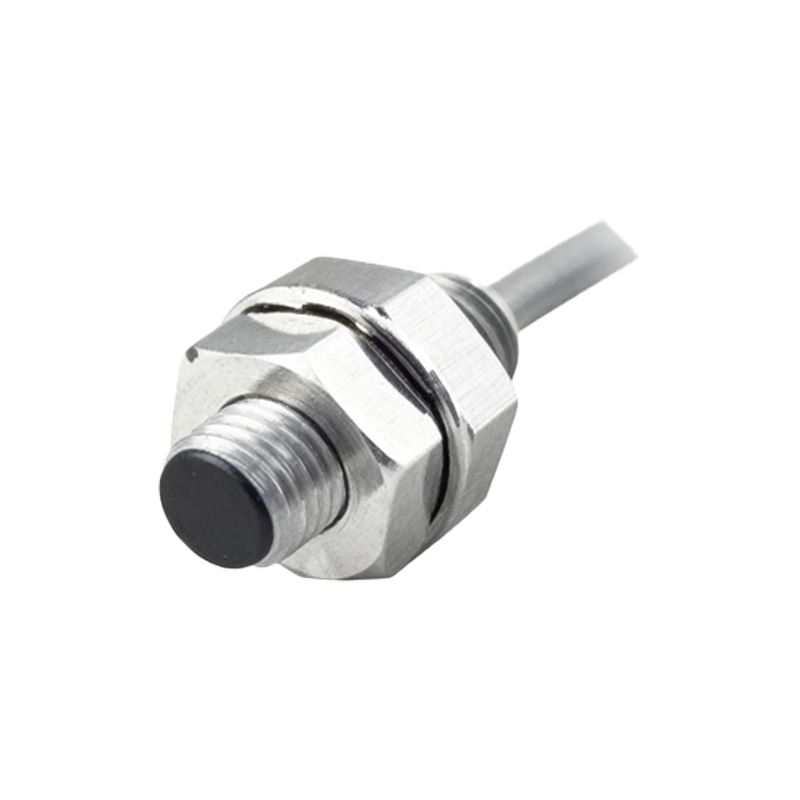
The fundamental operation begins with an oscillator circuit generating a high-frequency alternating current. This current flows through a coil housed in the sensor's probe, creating a dynamic magnetic field. When a conductive material enters this field, eddy currents are induced on the target's surface. These eddy currents generate their own opposing magnetic field, which interacts with the sensor's original field. This interaction alters the impedance of the sensor's coil. An integrated evaluation circuit precisely measures this change in impedance. The magnitude of the change is directly proportional to the distance between the sensor and the target. The sensor's output, typically an analog voltage or current signal (e.g., 0-10V DC, 4-20mA), or a digital switch signal, is then conditioned and transmitted to a control system like a PLC.
Key Performance Characteristics and Advantages
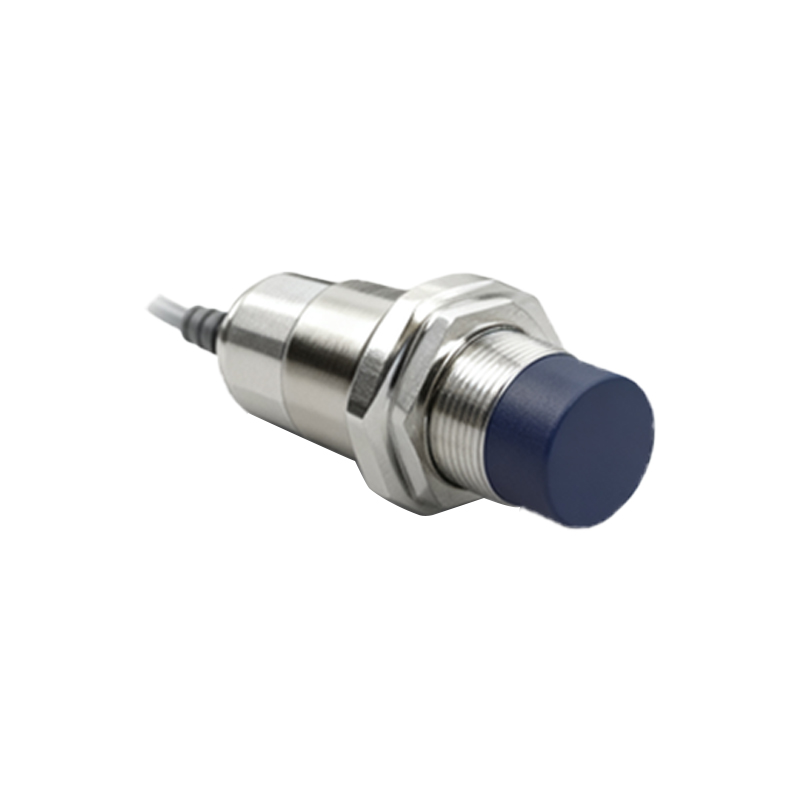
Eddy current sensors boast several defining characteristics. They offer exceptionally high resolution, often in the sub-micron range, and high frequency response, capable of tracking rapid vibrations. Their output is highly linear over a specified measuring range. A significant advantage is their insensitivity to the medium between the sensor and target; air, oil, or dirt do not affect the measurement. They are also highly resistant to extreme pressures and temperatures when properly housed. The non-contact nature ensures zero wear on both the sensor and the target, leading to virtually infinite mechanical life and consistent long-term accuracy without recalibration. This makes them ideal for critical monitoring tasks.
Primary Industrial Applications
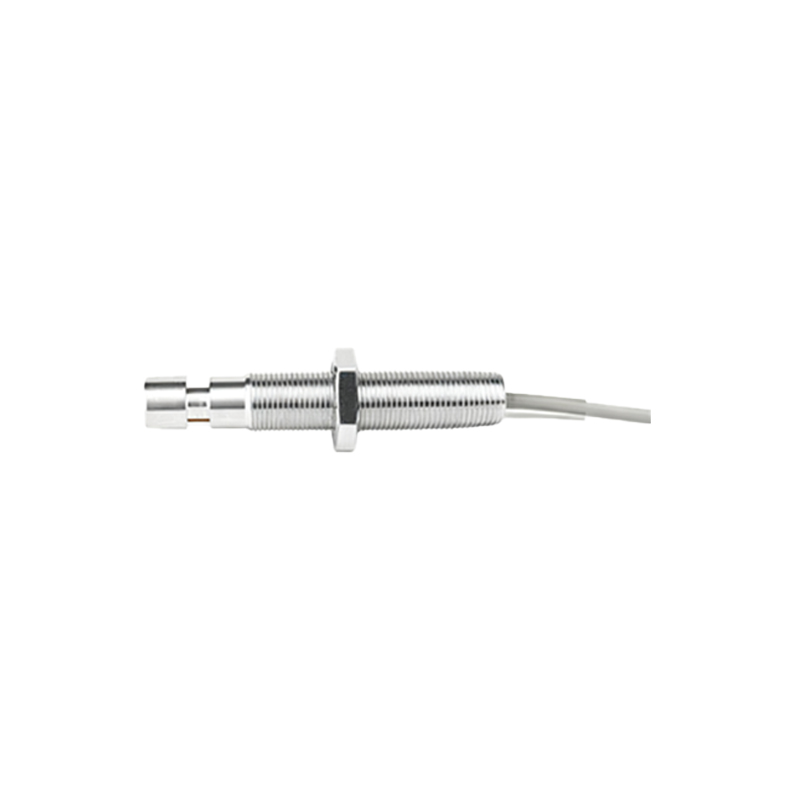
The application spectrum for eddy current proximity sensors is vast. In manufacturing, they are pivotal for precision runout and vibration monitoring of rotating machinery like spindles, turbines, and motors. They perform critical gap and displacement measurements in assembly lines, press automation, and injection molding machines. Within the automotive sector, they are used for crankshaft positioning, valve timing, and brake disc thickness monitoring. Their ability to function in sealed environments makes them perfect for monitoring conditions inside vacuum chambers or pressure vessels. They are also extensively used in metal detection and sorting systems, and for wear monitoring of bearings and other components.
Critical Selection Criteria for Engineers
Selecting the appropriate eddy current sensor requires careful analysis of several parameters. First, define the target material (e.g., steel, aluminum, copper) and its size, as different materials and smaller targets affect the sensing range and require correction factors. The required measuring range and resolution are paramount. Environmental factors such as ambient temperature, presence of chemicals, or strong magnetic fields must be considered to choose a sensor with suitable housing and temperature compensation. The output signal type (analog or digital) must match the input requirements of the subsequent control system. Finally, mechanical constraints like required mounting style (threaded, flush, or non-flush) and probe diameter are decisive for integration.
Installation Best Practices and Calibration
Proper installation is crucial for optimal performance. The sensor must be mounted rigidly to avoid vibration-induced errors. The target area should be flat, larger than the sensor's sensing face, and made of a homogeneous material. It is critical to maintain the specified lateral and axial clearance from other metal objects to prevent electromagnetic interference. For analog sensors, a precise calibration procedure is followed: the sensor is positioned at the minimum and maximum points of the desired measuring range, and the corresponding output signals are set in the controller. Regular verification against a known reference, such as gauge blocks, is recommended to ensure ongoing measurement integrity.
Comparison with Other Proximity Sensor Types
It is essential to distinguish eddy current sensors from other common non-contact sensors. Inductive proximity sensors are also for metals but typically offer only a binary on/off output and have a shorter range. Capacitive sensors can detect both conductive and non-conductive materials but are sensitive to environmental changes like humidity. Ultrasonic sensors have longer ranges and can detect various materials, but they offer lower resolution and can be affected by temperature gradients and air turbulence. Laser