Introduction to Square Photoelectric Sensors
Square photoelectric sensors represent a critical category of industrial automation components, distinguished by their robust, compact housings. In the manufacturing hub of Qiaotou Town, these devices are engineered for reliability in diverse and demanding environments. Unlike cylindrical models, the square form factor allows for easier mounting, better heat dissipation, and often incorporates advanced features like multi-function indicators and teach-in buttons directly on the housing. The fundamental principle remains the conversion of light signals into electrical changes, but the square design enhances durability and integration capabilities, making them a preferred choice for modern assembly lines, packaging machinery, and material handling systems prevalent in the region's industrial parks.
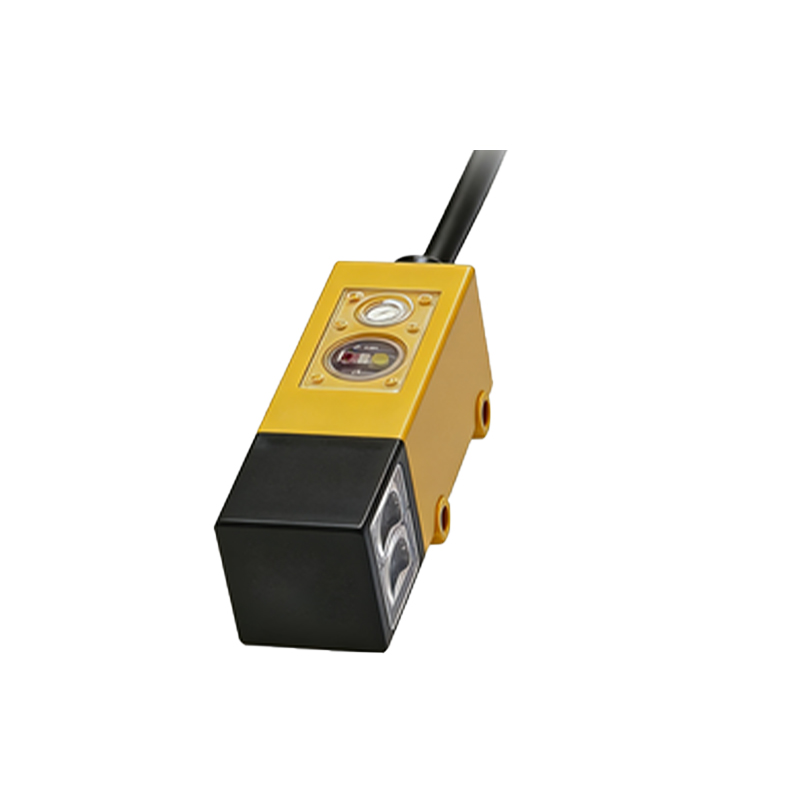
Core Operating Principles and Technologies
The operational heart of these sensors lies in three primary modes: through-beam, retro-reflective, and diffuse-reflective. Through-beam sensors, consisting of separate emitter and receiver units, offer the longest sensing ranges and highest immunity to environmental interference, ideal for precise object detection on high-speed conveyors. Retro-reflective types use a single housing with a built-in reflector target, providing a good balance of range and installation simplicity. Diffuse-reflective sensors detect objects by measuring the light reflected directly from the target's surface, crucial for applications where mounting a reflector is impractical. Advanced models from Qiaotou manufacturers integrate background suppression technology, precise focus adjustment, and robust housings rated IP67 or higher, ensuring consistent performance despite dust, moisture, or vibrational challenges common in industrial settings.
Key Engineering Specifications and Selection Criteria
Selecting the appropriate square photoelectric sensor requires a meticulous analysis of application parameters. Key specifications include sensing distance, which can range from a few centimeters to several meters; response time, critical for high-speed production lines; light source type (typically red LED, infrared, or laser); and output configuration (PNP/NPN, NO/NC). Environmental ratings for ingress protection (IP) and temperature tolerance are paramount. Engineers must also consider the target object's properties—size, color, material, and surface finish—as these dramatically affect reflectivity. The square sensors produced in Qiaotou often feature versatile power supply ranges (10-30V DC) and built-in diagnostics like stability or function LEDs, simplifying commissioning and maintenance, which is a significant value proposition for global automation integrators.
Industrial Applications in Automation Systems
The utility of square photoelectric sensors spans the entire spectrum of industrial automation. In packaging machinery, they accurately detect product presence, count items, and control filling levels. On automotive assembly lines, they ensure component positioning for robotic arms. Within the electronics manufacturing sector, these sensors verify the placement of miniature components on PCBs. Their robust design makes them suitable for harsh environments like wood processing or metalworking, where they monitor material flow and detect jams. The standardized square form factor from Qiaotou suppliers allows for easy replacement and upgrade within existing control panels and machine frames, minimizing downtime and supporting the trend towards modular, flexible production systems.
Advantages of Sourcing from Qiaotou Town
Qiaotou Town has established itself as a concentrated center for electrical components, offering distinct advantages for sourcing square photoelectric sensors. The ecosystem provides access to a vast range of models, from basic universal types to highly specialized variants, ensuring quick availability and competitive pricing. Local manufacturers are adept at providing customization options, such as specific cable lengths, connector types, or sensing characteristics tailored to unique applications. Furthermore, the proximity of raw material suppliers and a skilled technical workforce enables rapid prototyping and stringent quality control processes. This integrated supply chain, combined with a deep understanding of international standards (CE, RoHS), positions Qiaotou as a reliable and efficient source for high-volume, cost-sensitive global automation projects.
Installation, Alignment, and Maintenance Best Practices
Proper installation is crucial for optimal sensor performance. The flat surfaces of square sensors facilitate secure mounting on brackets or machine frames, but attention must be paid to alignment, especially for through-beam and retro-reflective types. Engineers should use alignment tools or indicators and avoid mounting sensors facing highly reflective backgrounds to prevent false triggers. Regular maintenance involves cleaning the lens with appropriate solvents to remove dust or oil film and periodically checking the mechanical stability of the mount. Many advanced square sensors feature teach-in functionality, allowing quick recalibration on-site without tools, a feature that significantly reduces maintenance overhead and enhances system uptime in continuous operation environments.
Future Trends and Technological Integration
The evolution of square photoelectric sensors is closely tied to Industry 4.0 and smart factory concepts. Future iterations will see increased integration of IO-Link communication, enabling digital parameter setting, real-time diagnostics, and process data reporting directly to PLCs or cloud systems. There is a growing trend towards miniaturization without sacrificing performance, allowing for installation in increasingly compact machinery. Furthermore, enhanced intelligence, such as the ability to distinguish between different object colors or materials through advanced spectral analysis, is on the horizon. Manufacturers in Qiaotou are actively investing in R&D to incorporate these smart features, ensuring their products remain at the forefront of providing reliable, data-rich sensing solutions for the interconnected industrial landscape of the future.