Linear scanning technology using laser sensors has undergone significant evolution over the past decade, driven by demands for higher precision, speed, and adaptability across industrial and scientific applications. This progress is fundamentally reshaping how dimensional measurements, surface inspections, and profile analyses are performed in real-time environments.
The core of this advancement lies in the development of more sophisticated laser triangulation and time-of-flight (ToF) principles. Modern laser sensors now employ high-frequency modulated lasers and advanced CMOS or CCD detectors, enabling scan rates exceeding 100 kHz with sub-micrometer resolution. This allows for the continuous, non-contact capture of complex surface geometries on moving production lines, such as in automotive or electronics manufacturing, without compromising throughput.
A key trend is the miniaturization and integration of scanning components. Compact, robust sensor heads, often with integrated processors, facilitate direct embedding into machinery. This shift towards decentralized, smart sensor nodes reduces latency and enables edge computing for immediate data analysis, filtering, and decision-making. For instance, in-line quality control systems can now instantly detect defects like scratches, dents, or coating irregularities by comparing scanned profiles against digital twins.
Software algorithms have seen parallel breakthroughs. Traditional methods that relied on stable, vibration-free environments are being supplanted by adaptive algorithms. These algorithms can compensate for environmental noise, variable surface reflectivity, and even slight misalignments in real-time. Machine learning techniques are increasingly applied to classify scanned data patterns, enhancing the system's ability to distinguish between acceptable variations and true anomalies with greater reliability.
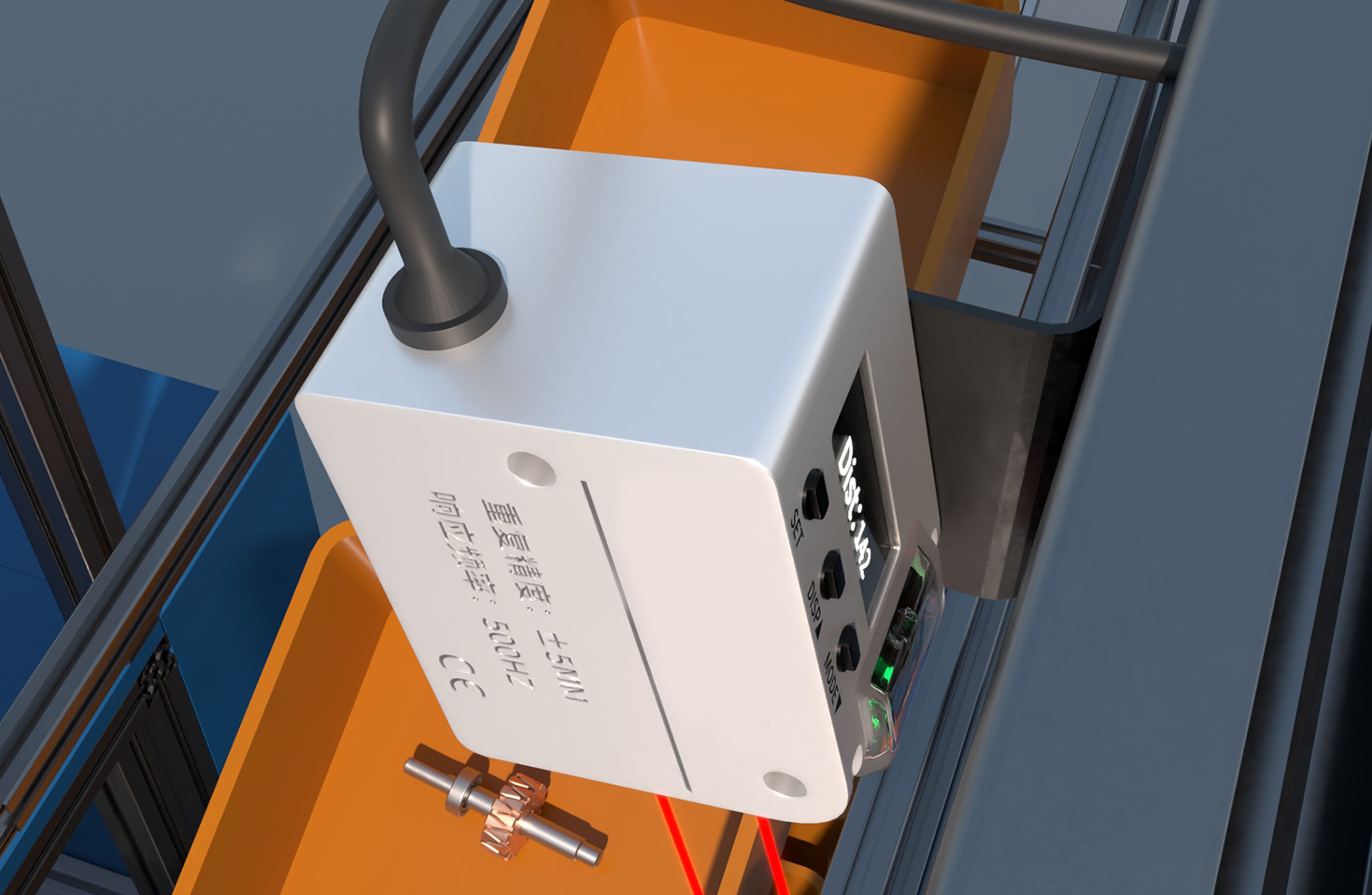
Furthermore, the expansion into multi-axis and synchronized scanning networks represents a major leap. Instead of a single linear scan line, systems now coordinate multiple laser sensors to capture data from different angles simultaneously. This creates a comprehensive 3D point cloud for complex objects, vastly improving measurement completeness and reducing blind spots. Applications in reverse engineering and robotic guidance, where robots use laser scanning to identify and locate parts, benefit immensely from this capability.
Connectivity and interoperability have also improved. Modern laser scanners support standard industrial communication protocols like OPC UA, EtherCAT, or IO-Link, allowing seamless integration into Industry 4.0 and IoT frameworks. This enables centralized monitoring of distributed scanning stations, predictive maintenance based on sensor performance data, and the aggregation of scan data into larger digital production models.
Looking ahead, research is focusing on enhancing performance under extreme conditions. Developments in blue laser technology, for example, offer better performance on shiny or transparent surfaces that traditionally scatter red lasers. Similarly, efforts to increase the depth of field without sacrificing resolution are ongoing, which would allow a single sensor to handle objects with highly variable heights.

In conclusion, the progress in laser sensor linear scanning is characterized by a convergence of hardware miniaturization, algorithmic intelligence, and systemic integration. These advances are not merely incremental; they are enabling new classes of applications in precision manufacturing, automated logistics, and scientific research, making high-speed, high-fidelity dimensional metrology more accessible and powerful than ever before.