Introduction to Proximity Sensing Technology
Proximity sensors are fundamental components in modern industrial automation, providing non-contact detection of metallic or other target objects. Among the various configurations available, the 3-wire proximity sensor stands out as one of the most common and versatile types used in factory environments. These sensors operate on the principle of electromagnetic induction or capacitive change, generating an output signal when a target enters their sensing field without any physical contact. This non-contact nature eliminates mechanical wear and tear, ensuring high reliability and a long operational lifespan. The 3-wire design specifically refers to the electrical connection scheme, which typically includes a positive supply wire, a negative supply wire, and a separate signal output wire. This configuration offers significant advantages in terms of wiring simplicity and compatibility with standard programmable logic controllers (PLCs) and other control systems. Their robustness allows them to function effectively in harsh conditions involving dust, oil, and vibration, making them indispensable for tasks like object detection, counting, positioning, and limit switching in conveyors, machine tools, and robotic cells.
Internal Working Principle and Construction
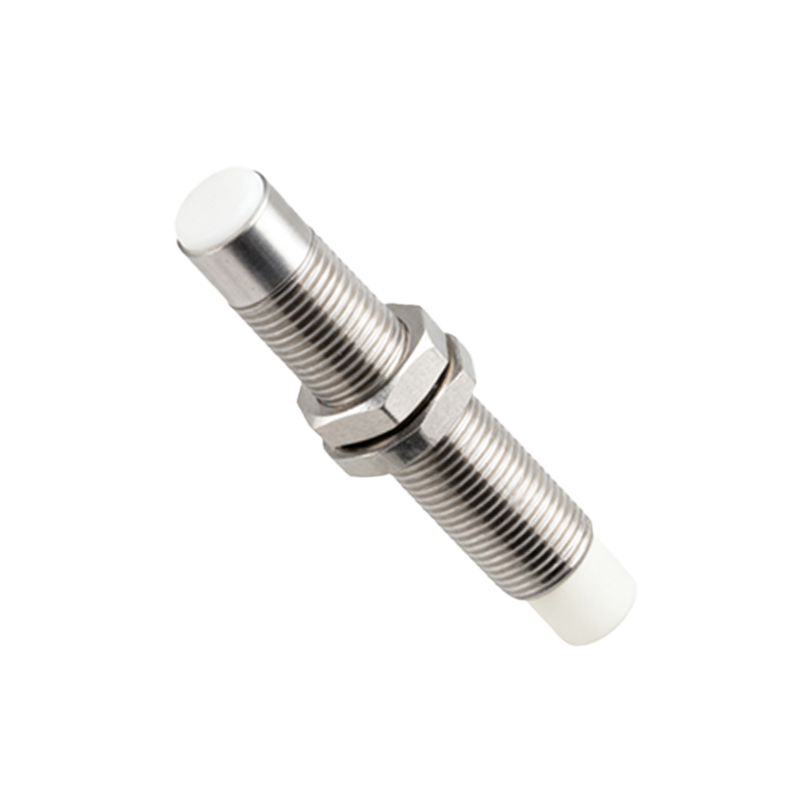
The core of a typical inductive 3-wire proximity sensor is an oscillator circuit that generates a high-frequency electromagnetic field at its active face. When a metallic target approaches this field, eddy currents are induced on the target's surface. This causes a change in the oscillation amplitude or frequency within the sensor's coil. An evaluation circuit within the sensor housing detects this change and triggers a solid-state switching element, usually a transistor. In a 3-wire DC sensor, this transistor acts as the output switch. The three wires are distinctly colored for easy identification: brown for positive DC supply (V+), blue for negative DC supply (0V or common), and black for the output signal. The output transistor can be configured as either a sinking (NPN) or sourcing (PNP) type, which defines the current flow direction of the output signal relative to the load. The sensor's housing is typically made of metal (like nickel-plated brass or stainless steel) or high-grade plastic, providing environmental protection rated by IP (Ingress Protection) standards. Internal components are potted to withstand shock and vibration, ensuring stable performance.
Wiring Configurations: NPN vs. PNP Outputs
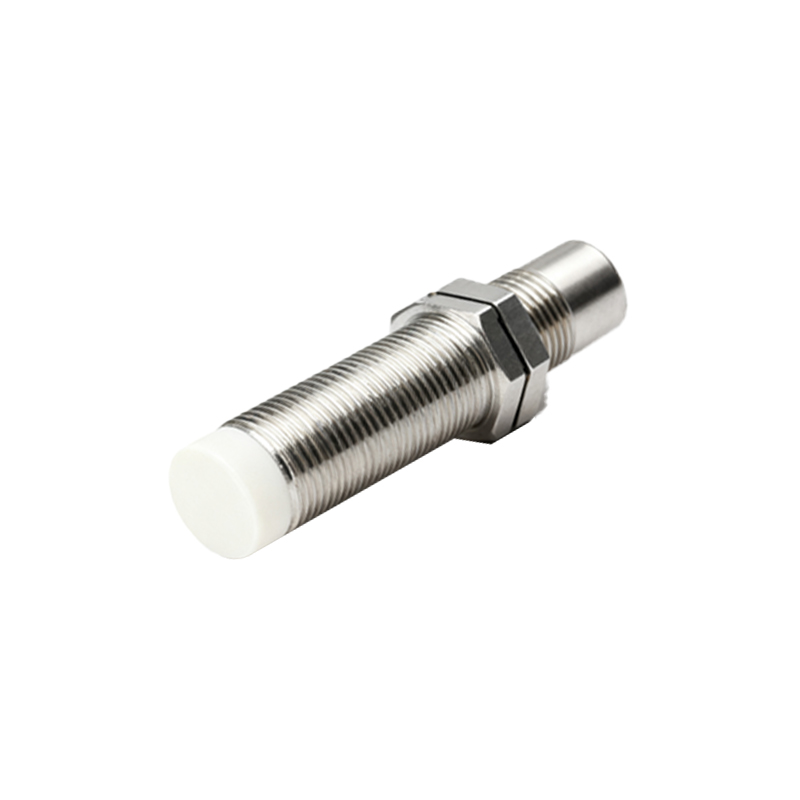
A critical aspect of applying 3-wire proximity sensors is understanding the difference between NPN and PNP output types. This distinction is paramount for correct integration into control systems. An NPN output sensor uses a negative-switching transistor. In this configuration, the black output wire acts as the switched negative connection. When the sensor is activated (target detected), it connects the load (e.g., a PLC input) to the negative supply (blue wire). The load must be connected between the positive supply (brown) and the sensor's output (black). Conversely, a PNP output sensor uses a positive-switching transistor. Here, when activated, the sensor connects the load to the positive supply. The load is connected between the sensor output (black) and the negative supply (blue). A simple mnemonic is "PNP: Positive-switched, Positive to the load." Choosing the correct type depends on the input circuit of the controller. Many PLCs from regions like Europe commonly use PNP sourcing inputs, while NPN sinking inputs are also widely used globally. Incorrect wiring will result in the sensor failing to trigger the control system.
Key Advantages and Performance Characteristics
The 3-wire design offers several compelling advantages over 2-wire versions. Firstly, they have very low leakage current in the "off" state, which prevents false triggering of sensitive control inputs. Secondly, they allow for faster switching speeds, capable of operating at frequencies often exceeding 1 kHz, which is essential for high-speed counting applications. They also support a wider range of load currents and can often drive loads directly without an intermediate relay for small currents. Key performance specifications include sensing distance, which is rated as a nominal value (e.g., 5mm, 10mm) for a standard target; repeatability, which is the precision of detection at the same point; hysteresis, a built-in difference between the switch-on and switch-off points to prevent chatter; and response time. Furthermore, many modern 3-wire sensors feature built-in protection against short-circuits, overloads, and reverse polarity, enhancing system durability. LED indicators are standard, providing visual status for power and output activation, which greatly simplifies installation and troubleshooting.
Selection Criteria and Application Guidelines
Selecting the right 3-wire proximity sensor requires careful consideration of several application parameters. The first step is identifying the target material. Standard inductive sensors detect ferrous