Introduction to Proximity Switch Sensor M5
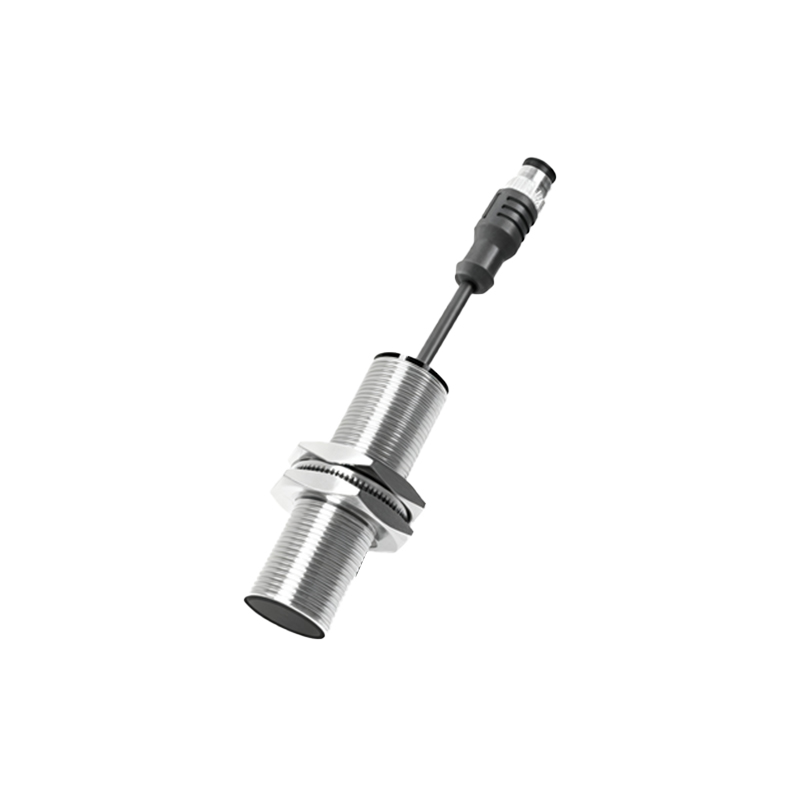
The M5 proximity switch sensor represents a critical component in modern industrial automation and control systems. Characterized by its compact M5 threaded barrel housing, this sensor offers a reliable, non-contact method for detecting the presence or absence of metallic objects. Its small form factor allows for installation in space-constrained applications where traditional limit switches are impractical. The core operating principle typically involves an inductive sensing element that generates an electromagnetic field. When a metallic target enters this field, eddy currents are induced, causing a change in the oscillation amplitude within the sensor's circuit. This change is detected and converted into a clean, digital output signal, either PNP or NPN, suitable for direct interface with programmable logic controllers (PLCs) and other control devices.
Key Design and Manufacturing Specifications
Precision engineering defines the production of the M5 proximity sensor. The housing is manufactured from high-grade stainless steel, such as AISI 303 or 304, providing excellent corrosion resistance and mechanical durability for harsh industrial environments. The sensing face is often made of a specialized polymer that allows the electromagnetic field to pass through while protecting the internal coil. Internally, the design incorporates a ferrite core coil, an oscillation circuit, a trigger circuit, and a solid-state output stage. The sensing distance, a crucial parameter, is standardized (e.g., 0.8mm, 1mm, 1.5mm) and rigorously calibrated during production. Key electrical specifications include operating voltage ranges (commonly 10-30V DC), current consumption, output current capacity, and switching frequency. Protection ratings, typically reaching IP67 or higher, are achieved through precise machining and sealing techniques using laser welding or specialized epoxy resins.
The Production Process: From Raw Material to Finished Product
The manufacturing journey begins with the procurement of certified raw materials. Metal rods are precision-turned and threaded on CNC lathes to create the M5 housing. Simultaneously, the electronic components—including the ASIC (Application-Specific Integrated Circuit), chip coils, and SMD (Surface-Mount Device) resistors and capacitors—are sourced and prepared for assembly. The heart of the sensor, the sensing coil, is wound with extreme precision using automated winding machines to ensure consistent inductance values. The assembly process is a blend of automated and manual precision work. The coil and circuit are potted into the front assembly using a vacuum potting process to eliminate air bubbles and ensure complete environmental sealing. The electronic module is then carefully inserted into the metal housing, and the rear end is sealed with a laser-welded cap or a threaded plug with an integrated cable gland or connector.
Quality Control and Testing Protocols
Robust quality assurance is integral to every stage of M5 sensor production. Incoming materials undergo inspection for dimensional accuracy and material composition. During assembly, automated optical inspection (AOI) systems verify component placement on the PCB. Post-assembly, every single sensor is subjected to a comprehensive battery of tests. This includes dielectric strength testing (hipot testing) to verify insulation, continuity checks, and functional testing. The functional test involves placing the sensor in a calibrated fixture with standardized test targets (usually iron and aluminum) to verify the actual switching distance, hysteresis, and output signal integrity under specified voltage conditions. Environmental stress screening, such as thermal cycling and vibration testing, is performed on sample batches from each production lot to guarantee long-term reliability and compliance with international standards like IEC 60947-5-2.
Application Engineering and Installation Considerations
Successful deployment of M5 proximity sensors requires careful application engineering. The first consideration is the target material; inductive sensors are primarily for metals, with steel offering the longest sensing range. Factors like embeddability (flush or non-flush mounting), surrounding metal (which can reduce the effective sensing distance), and temperature extremes must be evaluated. Electrical compatibility with the control system (sourcing vs. sinking wiring) is paramount. Installers must follow precise guidelines: ensuring proper tightening torque to avoid damaging the housing, maintaining the recommended gap between multiple sensors to prevent mutual interference, and using shielded cables in electrically noisy environments. Correct wiring, including the connection of the brown wire (+V), blue wire (0V), and black wire (output), along with proper grounding, is essential for noise-immune operation.
Advantages and Industry Use Cases
The M5 proximity sensor offers distinct advantages: long service life due to non-contact operation, high switching frequencies enabling fast machine cycles, resistance to environmental contaminants like oil and dust, and consistent repeat accuracy. These features make it indispensable across numerous industries. In automotive manufacturing, they are used for part presence verification on assembly lines and tool positioning in robotic welding