Introduction to Photoelectric Sensing Technology
Photoelectric sensors are fundamental components in modern industrial automation and control systems. These devices operate by emitting a beam of light, typically from an LED or laser diode, and detecting changes in the received light signal. The core principle relies on the photoelectric effect, where light energy is converted into electrical energy. This technology enables non-contact detection of objects, making it invaluable for applications requiring precision, speed, and reliability where physical contact is impractical or damaging. The versatility of photoelectric sensors allows them to detect a vast range of materials, including metals, plastics, glass, and liquids, based on factors like reflectivity, opacity, or color contrast. Their implementation spans countless industries, from manufacturing and packaging to automotive assembly and material handling, forming the eyes of automated systems.
Core Components and Their Functions
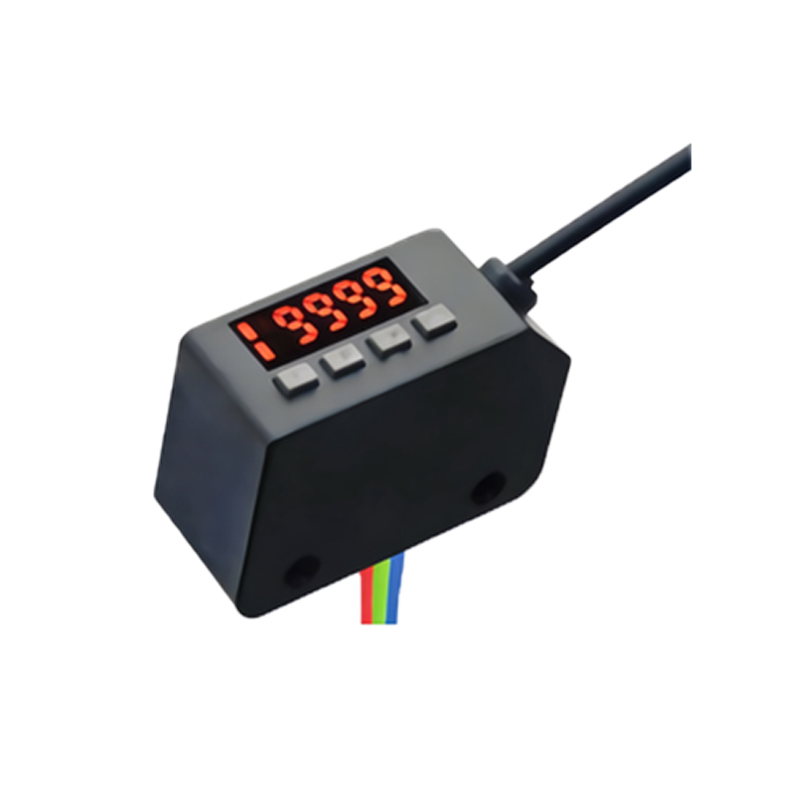
A standard photoelectric sensor comprises several key internal components. The heart of the emitter section is the light source, most commonly a light-emitting diode (LED) for general-purpose use or a laser diode for applications requiring a highly focused beam and long sensing ranges. The emitted light is modulated at a specific frequency to allow the receiver to distinguish it from ambient light, significantly enhancing noise immunity. The receiver section contains a photodetector, such as a phototransistor, photodiode, or in some advanced cases, a position-sensitive device (PSD). This component converts the incoming light signal back into an electrical current. Supporting these are lenses that focus the emitted light into a beam and collect light for the receiver, along with sophisticated signal processing circuitry that amplifies the weak photodetector signal, demodulates it, and triggers a clean, digital output switch.
Primary Operating Modes: Through-Beam, Retroreflective, and Diffuse
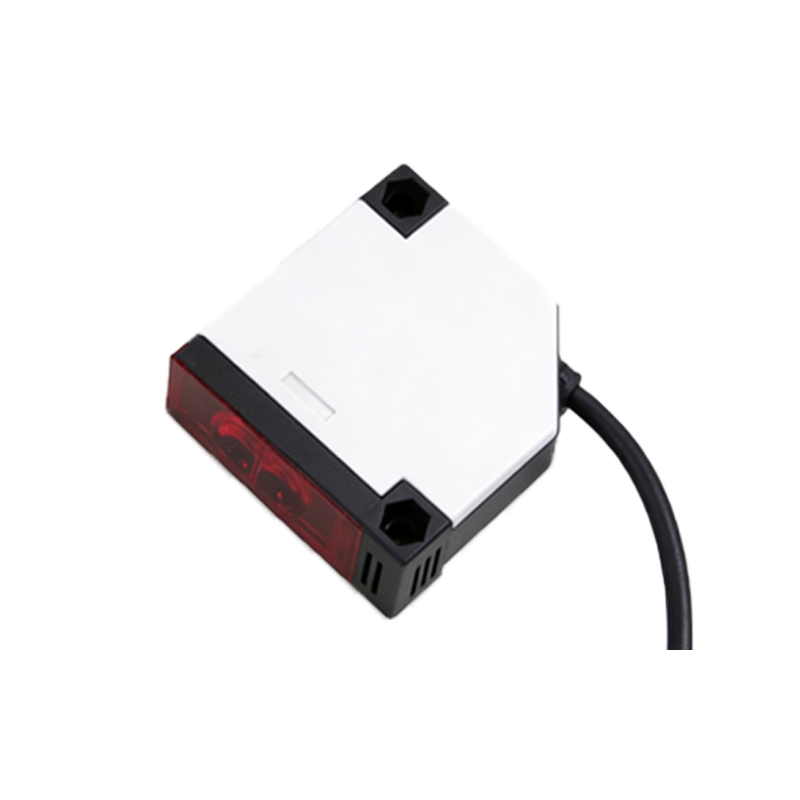
Photoelectric sensors are categorized primarily by their operating mode, which defines the light path configuration. Through-beam sensors, also known as opposed mode sensors, consist of separate, physically aligned emitter and receiver units. An object is detected when it interrupts the beam traveling from the emitter to the receiver. This mode offers the longest sensing distances and highest reliability, as it is largely unaffected by the object's color, reflectivity, or surface angle. Retroreflective sensors house both emitter and receiver in a single housing. They use a specialized reflector, often a corner-cube reflector, to bounce the emitted beam back to the receiver. Detection occurs when an object breaks this reflected beam. Diffuse or proximity sensors also have a combined emitter and receiver, but they detect light reflected directly off the target object itself. This mode is simpler to install but is more sensitive to the object's color and surface properties.
Specialized Sensor Types and Advanced Features
Beyond the basic modes, specialized photoelectric sensors address niche challenges. Background suppression sensors use triangulation principles to detect objects only within a precise, defined distance, ignoring surfaces beyond the set range. This is crucial for detecting objects on a conveyor belt while ignoring the belt itself. Color sensors differentiate between colors by analyzing the reflected light's wavelength composition. Contrast sensors detect the difference in contrast between a mark and its background, essential in label detection. Fiber optic sensors utilize flexible light guides to deliver light to and from hard-to-reach, hazardous, or high-temperature environments, with the amplifier electronics located remotely. Modern sensors also incorporate advanced features like programmable logic, teach-in functionality for easy setup, IO-Link for digital communication and parameterization, and robust housing with high IP ratings for demanding environments.
Critical Selection Criteria for Application Success
Selecting the appropriate photoelectric sensor requires careful analysis of the application parameters. The sensing range is paramount; it must accommodate the maximum distance between the sensor and the target. The target properties—size, material, color, and surface finish (shiny or matte)—directly influence the choice of operating mode and sensor type. The required response speed, or switching frequency, must match the application's cycle time. Environmental conditions are critical: factors like ambient light, dust, fog, temperature extremes, and potential for mechanical impact dictate the need for specific light modulation frequencies, housing materials, and ingress protection (IP) ratings. Finally, electrical requirements such as operating voltage, output type (PNP/NPN, NO/NC), and connection method must be compatible with the existing control system.
Installation, Alignment, and Troubleshooting Tips
Proper installation is key to reliable sensor operation. Ensure a stable mounting to prevent vibration-induced misalignment. For through-beam and retroreflective sensors, precise optical alignment is crucial; many models feature built-in alignment indicators (like LED bargraphs) to assist. Avoid mounting sensors where they face direct sunlight or other powerful light sources, which can cause false triggering. For diffuse sensors, consider the background material and distance to prevent unwanted detection. Common issues include failure to detect, constant "on" state, or intermittent operation. Troubleshooting should start with verifying power and connections, checking for physical obstruction or misalignment, cleaning lenses, and ensuring the target object is within the sensor's specified capabilities for size and reflectivity. Consulting the sensor's status indicator is always the first diagnostic step.
The Future of Photoelectric Sensing Technology
The evolution of photoelectric sensors continues to align with Industry 4.0 trends. Miniaturization is enabling sensors to fit into increasingly compact machinery. Enhanced intelligence through integrated microprocessors allows for more complex functions like condition monitoring and predictive maintenance data reporting via IO-Link. The integration of time-of-flight (ToF) principles is blurring the lines between simple presence detection and precise distance measurement. Furthermore, improvements in LED technology are yielding sensors with brighter, more focused beams and a wider range of available wavelengths (including UV and IR), expanding their applicability to new materials and challenging environmental conditions. The future points towards smarter, more connected, and more versatile photoelectric components that provide not just a binary signal, but rich contextual data about the manufacturing process.