Understanding the Core Challenge of Transparency
The fundamental challenge in using proximity sensors to detect transparent materials like glass stems from their primary operating principles. Most common industrial proximity sensors—inductive, capacitive, and photoelectric—rely on interacting with the physical or electromagnetic properties of a target object. Transparent glass, being non-metallic and often non-conductive, is inherently invisible to standard inductive sensors. Similarly, its low dielectric constant presents a weak signal for capacitive sensors unless very close. The most common issue with photoelectric sensors, especially through-beam types, is that clear glass allows light to pass through with minimal refraction or reflection, making it difficult for the receiver to distinguish between the presence of glass and an empty space.
Photoelectric Sensor Strategies for Glass Detection
Among photoelectric sensors, specific models and configurations can be adapted for transparent object detection. Diffuse reflective sensors with background suppression are a primary solution. These sensors are designed to detect objects only within a precise, defined range. A clear glass pane, despite its transparency, will reflect a minute amount of light back to the sensor. The background suppression circuitry can be tuned to recognize this faint reflection from the glass surface while ignoring the stronger, more distant reflection from any background surface. Contrast sensors, a subtype, are explicitly engineered to detect differences in contrast or light reflectivity, making them suitable for distinguishing the subtle reflectivity of glass against a known background.
The Role of Capacitive Proximity Sensors
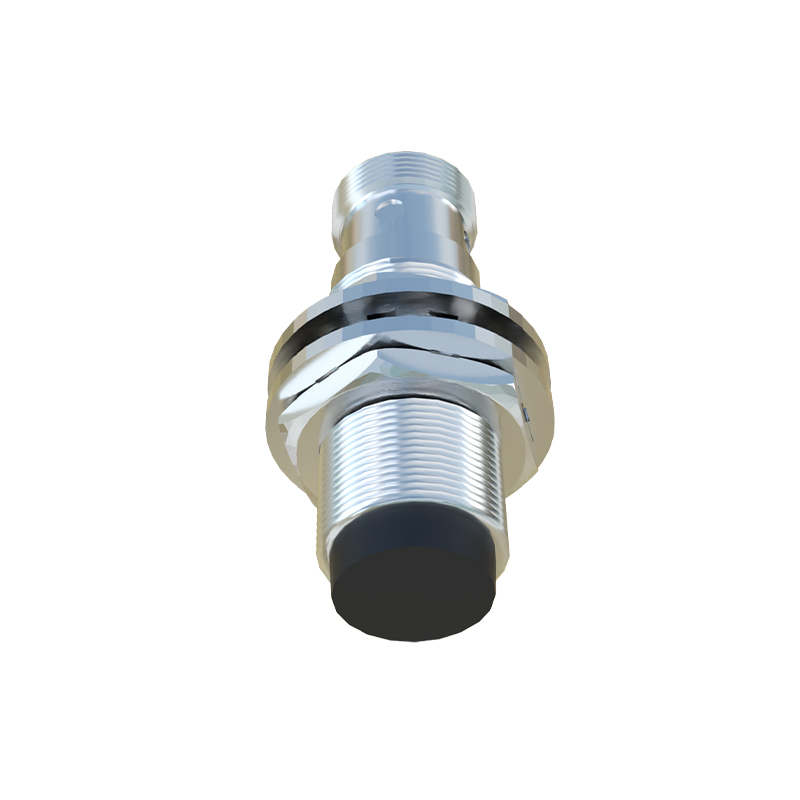
Capacitive proximity sensors offer another viable pathway, though their effectiveness is highly dependent on the specific properties of the glass and the sensing environment. These sensors detect changes in capacitance caused by the presence of any material that alters the dielectric constant of the sensing field. While dry glass has a relatively low dielectric constant, it is measurably different from air. Factors such as glass thickness, the presence of coatings, or even moisture condensation on the surface can significantly increase the detectable signal. For consistent detection, capacitive sensors often require precise calibration and a stable environmental condition to sense the subtle capacitive shift introduced by the glass.
Advanced and Specialized Sensing Technologies
For high-precision or demanding applications, more advanced technologies are employed. Ultrasonic proximity sensors operate by emitting sound waves and measuring their reflection. Since sound waves reflect off the solid surface of glass regardless of its optical transparency, ultrasonic sensors are generally reliable for detecting clear glass panes. However, they can be influenced by the angle of incidence and the texture of the glass. Laser-based distance sensors or triangulation sensors provide extremely accurate measurements. They can detect the precise position of the glass surface by measuring the reflection of a focused laser dot, effectively bypassing the transparency issue altogether.
Critical Application Considerations and Best Practices
Successful implementation requires careful consideration of several factors. The surface condition of the glass is paramount; dust, fingerprints, or coatings can aid detection for some sensors but cause inconsistency for others. The stability of the background is crucial for photoelectric methods; a moving or variably colored background will cause false triggers. Sensor selection must align with the required sensing distance, response time, and environmental factors like ambient light or humidity. Rigorous testing in the actual installation environment with production samples is non-negotiable to validate sensor choice and configuration before final deployment.
Conclusion: A Solvable Engineering Problem
In summary, detecting transparent glass with proximity sensors is not a question of impossibility, but one of appropriate technology selection and precise application engineering. Standard inductive sensors are unsuitable, but photoelectric sensors with background suppression, carefully tuned capacitive sensors, ultrasonic sensors, and laser-based systems provide robust solutions. The key lies in analyzing the specific attributes of the glass target, the environmental conditions, and the application requirements to select and configure the optimal sensor, transforming a perceived limitation into a manageable and reliable automated task.