Introduction to Proximity Sensing
A proximity sensor is a non-contact electronic device designed to detect the presence or absence of an object within its sensing range without any physical contact. These sensors are fundamental components in modern industrial automation, robotics, automotive systems, and consumer electronics. Their ability to operate reliably in harsh environments, provide fast response times, and offer long operational life makes them indispensable. Unlike limit switches that require physical actuation, proximity sensors work by emitting a field or beam and monitoring changes in that field caused by a target object. This principle of operation eliminates mechanical wear and tear, significantly enhancing reliability and maintenance cycles in automated systems.
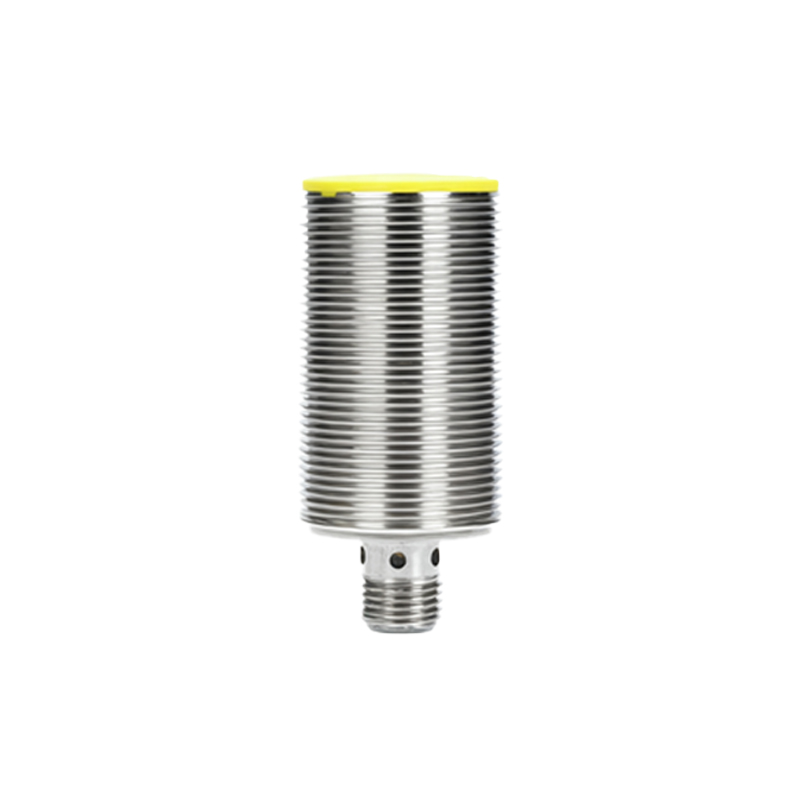
Core Operating Principles and Technologies
The functionality of proximity sensors is based on several distinct physical principles, leading to different sensor types. The most common technologies are inductive, capacitive, ultrasonic, and photoelectric. Inductive sensors generate an oscillating electromagnetic field and detect the eddy current losses induced in a conductive metal target. Capacitive sensors create an electrostatic field and sense changes in capacitance caused by any material, conductive or non-conductive, that enters the field. Ultrasonic sensors emit high-frequency sound waves and measure the time delay of the reflected echo to determine distance. Photoelectric sensors use a light emitter and receiver, detecting the interruption or reflection of a light beam. Each technology is selected based on the target material, required sensing distance, environmental conditions, and application-specific needs.

Inductive Proximity Sensors in Detail
Inductive proximity sensors are exclusively used for detecting metallic objects. The core component is a coil wound around a ferrite core, connected to an oscillator. When power is applied, the oscillator generates a high-frequency alternating magnetic field at the sensor's active face. When a metal target enters this field, eddy currents are induced on the target's surface. These currents draw energy from the oscillator, causing a reduction in the oscillation amplitude. This change is detected by a threshold circuit, which subsequently switches the sensor's output state. The sensing range, or "switching distance," is standardized and depends on the sensor's design and the target material's properties, with factors like material type (steel, aluminum, copper) and target size influencing performance.
Capacitive Proximity Sensor Functionality
Capacitive sensors can detect both metallic and non-metallic materials, including liquids, powders, plastics, and wood. They operate by measuring changes in capacitance. The sensor face acts as one plate of a capacitor, with the target object acting as the other plate, and the air gap as the dielectric. The internal oscillator circuit is tuned to a specific capacitance level. When an object enters the sensing field, it alters the dielectric constant and thus the capacitance of the system. This change increases the oscillator's amplitude. Once the amplitude reaches a predetermined threshold, the output circuit triggers. A sensitivity adjustment is often provided to compensate for different materials or to ignore unwanted backgrounds, such as container walls when detecting liquid levels.
Key Performance Characteristics and Selection Criteria
Selecting the appropriate proximity sensor requires careful analysis of several parameters. The nominal sensing distance (Sn) is the theoretical operating distance under standardized conditions. The effective operating distance must account for temperature variations, supply voltage tolerances, and manufacturing deviations. Hysteresis is a critical feature that prevents output chatter when a target is at the sensing limit; it is the difference between the switch-on and switch-off points. Response time defines how quickly the sensor can react to a target's appearance or disappearance. Environmental factors like temperature extremes, presence of chemicals, washdown requirements (IP rating), and electrical noise immunity are paramount. Additionally, output configuration (NPN/PNP, NO/NC) must match the control system's input requirements.
Application Examples Across Industries
The versatility of proximity sensors is demonstrated by their widespread use. In automotive manufacturing, inductive sensors count camshaft rotations, detect gear positions, and verify part presence on assembly lines. In packaging machinery, capacitive sensors monitor material levels in hoppers and detect transparent plastic films. Ultrasonic sensors are employed in level sensing for bulk solids in silos and collision avoidance in automated guided vehicles (AGVs). Photoelectric sensors form the backbone of object detection on conveyor systems. In consumer devices, capacitive sensors enable touchless faucets and smartphone screen blanking during calls. Each application leverages a specific sensor technology's strengths to solve a particular detection challenge reliably and efficiently.
Installation and Practical Considerations
Proper installation is crucial for optimal sensor performance. For inductive and capacitive sensors, maintaining the correct mounting distance from metal surfaces is essential to prevent false triggering. The sensor should be positioned so that only the intended target enters its sensing field. For flush-mounted inductive sensors, the sensing range is reduced,