What is a Proximity Sensor?
A proximity sensor is a non-contact electronic device designed to detect the presence or absence of an object within a specified sensing range without any physical contact. It operates by emitting an electromagnetic field, beam of electromagnetic radiation, or acoustic signal, and then looks for changes in the field or return signal. The primary advantage of these sensors is their ability to detect objects reliably in harsh industrial environments where dirt, oil, or moisture might render mechanical switches ineffective. They are fundamental components in automation, robotics, safety systems, and countless consumer electronics, providing critical input for control systems to initiate actions, count items, or ensure operational safety.
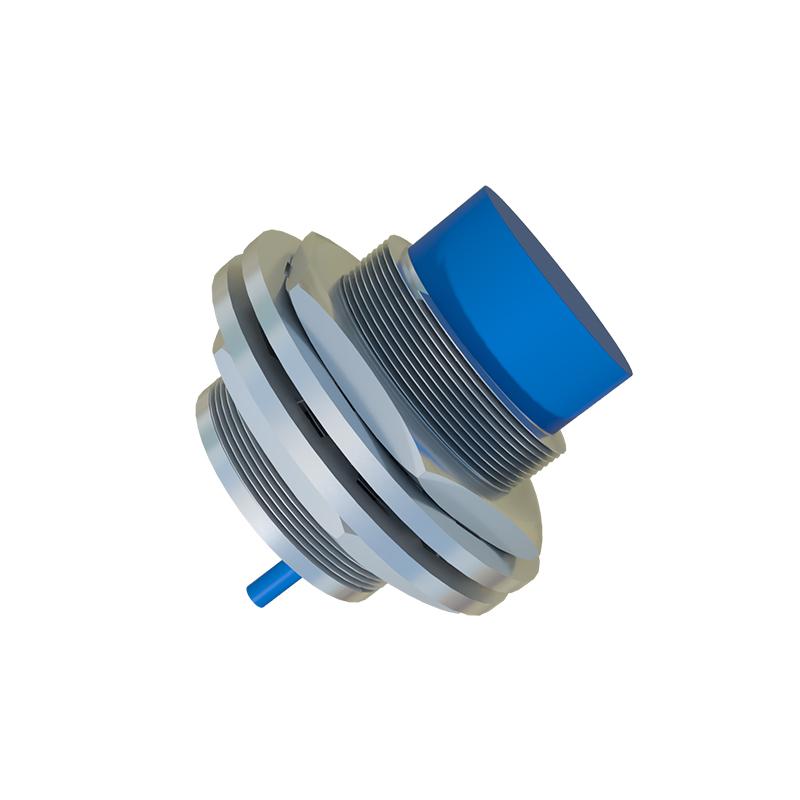
Core Operating Principles and Types
Proximity sensors are categorized based on their underlying detection technology. The most common types include inductive, capacitive, ultrasonic, and photoelectric sensors. Inductive proximity sensors are the workhorses of metal detection. They generate an oscillating electromagnetic field from a coil. When a metallic object enters this field, it induces eddy currents, which dampen the oscillation amplitude. The sensor's circuit detects this change and triggers an output signal. They are ideal for detecting ferrous and non-ferrous metals but are ineffective for non-metallic materials. Capacitive sensors, in contrast, can detect both metallic and non-metallic materials like liquids, plastics, wood, or granules. They function by generating an electrostatic field. Any object with a dielectric constant different from air will alter the capacitance of the sensing circuit, triggering detection. These are perfect for level detection in tanks or presence detection of materials through container walls.
Photoelectric and Ultrasonic Variants
Photoelectric proximity sensors use light, typically infrared or laser, to detect objects. They consist of an emitter and a receiver. In the through-beam type, the emitter and receiver are separate units; an object is detected when it interrupts the light beam. The retro-reflective type uses a single unit and a reflector, detecting an object when it blocks the reflected beam. The diffuse or proximity type has both emitter and receiver in one housing and detects an object based on the light scattered back from the target itself. Ultrasonic sensors operate on a principle similar to sonar. They emit high-frequency sound waves and evaluate the echo received back. The time lapse between sending the signal and receiving the echo is used to calculate the distance to the object. They are excellent for detecting objects of any material, shape, or color, and are widely used for distance measurement and level sensing, even in dusty or foggy conditions where photoelectric sensors might struggle.
Key Specifications and Performance Parameters
Selecting the right proximity sensor requires careful consideration of several technical parameters. The sensing range, or nominal range (Sn), is the maximum distance at which the sensor can reliably detect a standard target. It is crucial to note that the effective sensing distance can vary with target material, size, and shape. The repeatability defines how consistently the sensor detects an object at the same point. Hysteresis is the difference between the switch-on point (as the target approaches) and the switch-off point (as it moves away), which prevents output chatter when a target is at the sensing limit. Response time indicates how quickly the sensor can react to a target's presence or absence, a critical factor in high-speed applications. Environmental factors like temperature rating, ingress protection (IP rating), and resistance to chemicals or welding spatter must also align with the installation conditions.
Industrial Applications and Use Cases
The applications for proximity sensors span virtually every industry. In automotive manufacturing, inductive sensors count gears, verify part presence on assembly lines, and monitor robotic arm positions. In packaging machinery, photoelectric sensors detect labels, count products on conveyors, and ensure correct fill levels. Capacitive sensors monitor liquid levels in food processing or chemical plants. Ultrasonic sensors guide automated guided vehicles (AGVs) and control stacking height in warehouses. On machine tools, they serve as end-of-travel limit switches, providing precise positional feedback without wear. Furthermore, they are integral to safety systems, forming part of safety light curtains or area guards to protect personnel from moving machinery.
Selection Guide and Best Practices
A systematic approach ensures optimal sensor selection. First, identify the target material: metal objects typically call for inductive sensors, while non-metallics require capacitive, photoelectric, or ultrasonic types. Second, determine the required sensing distance, adding a safety margin to the nominal range. Third, consider the operating environment—factors like ambient light (for photoelectric), dust, humidity, and potential electrical noise can influence the choice. Fourth, define the electrical output needed, such as NPN/PNP transistor outputs or analog 4-20mA signals, to ensure compatibility