Understanding Proximity Sensor Fundamentals
Proximity sensors are non-contact electronic devices designed to detect the presence or absence of an object within a specific sensing range. They operate on various principles, including inductive, capacitive, ultrasonic, and photoelectric technologies. Inductive sensors, for instance, generate an electromagnetic field and detect eddy current losses caused by metallic targets. Capacitive sensors detect changes in capacitance caused by both conductive and non-conductive materials. The core function is binary detection: an object is either within the detection threshold or it is not. The output is typically a digital signal that switches state when the target enters the predefined sensing zone. This fundamental operating principle is crucial for understanding their capabilities and limitations in precision measurement tasks like centering.
The Core Question: Center Finding vs. Edge Detection
Directly, a standard, single-point proximity sensor cannot "find" a geometric center. Its primary function is to detect the presence of an object at a specific point relative to the sensor face. It provides a go/no-go signal based on distance. However, the concept of "finding center" is inherently a comparative or differential measurement. It requires determining a midpoint relative to two or more edges or reference points. Therefore, while a single sensor cannot perform centering, a system comprising multiple sensors, combined with appropriate logic and mechanical setup, can be configured to facilitate a centering operation. The process essentially translates into precise edge detection from multiple sides.

System Configurations for Centering Applications
Industrial centering systems using proximity sensors often employ symmetrical setups. A common configuration involves two sensors facing each other across a target object, such as a metal shaft or a web of material. As the object moves, the system monitors the output from both sensors. The "center" position is theoretically achieved when both sensors simultaneously detect the edge of the object, indicating equal distance from each sensor face. Another configuration uses three or four sensors arranged around a circular object to detect eccentricity. The sensor signals are fed into a programmable logic controller (PLC) or a dedicated motion controller. The controller compares the input states or analog distance values and activates actuators (e.g., servo motors, pneumatic cylinders) to adjust the object's position until a balanced state is reached.
The Role of Analog vs. Digital Sensors
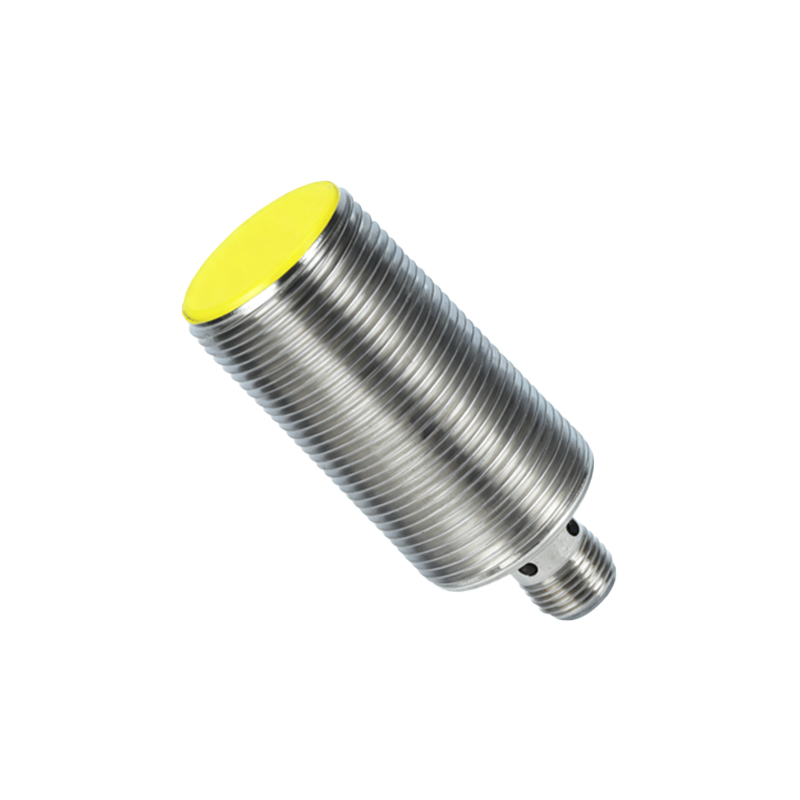
The type of proximity sensor significantly impacts centering precision. Standard digital (on/off) sensors have a fixed switching point. They can only indicate whether the target is within range. For rough centering tasks, this may suffice. For high-precision centering, analog proximity sensors are essential. These sensors provide a continuous output signal (e.g., 4-20 mA, 0-10 V) that is proportional to the distance between the sensor and the target. By using two analog sensors, the control system can read exact distances, calculate the precise deviation from center, and make minute corrections. This allows for closed-loop control systems capable of achieving micron-level centering accuracy in applications like coil winding, printing machinery, or CNC part alignment.
Key Challenges and Practical Considerations
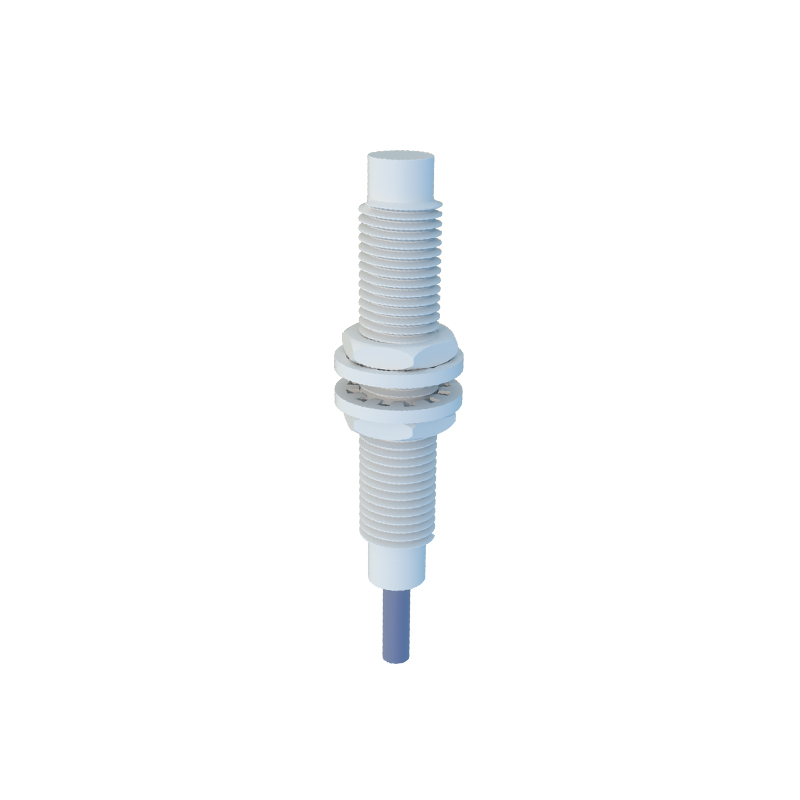
Implementing a reliable centering system with proximity sensors presents several engineering challenges. Sensor repeatability and temperature drift are critical; even minor inconsistencies can cause center error. The target material, size, and surface finish affect the sensing range and signal consistency, especially for inductive sensors. Mechanical vibration can introduce noise into the signal. Furthermore, the speed of the object and the response time of both the sensors and the actuators define the system's dynamic performance. Proper mounting, shielding from electrical noise, and regular calibration are mandatory for maintaining accuracy. It is often a system integration task, combining sensor technology, control algorithms, and mechanical design.
Alternative and Complementary Technologies
While proximity sensor-based systems are effective for many industrial centering tasks, other technologies may be preferred for ultra-high precision or specific environments. Laser displacement sensors offer extremely high resolution and accuracy for non-contact distance measurement, forming excellent pairs for differential centering. Vision systems with cameras can directly identify geometric centers and are flexible for complex shapes. However, they are more computationally intensive and sensitive to ambient light. Proximity sensors remain the robust, fast, and cost-effective solution for harsh environments involving oil, coolant, dust, or high-speed metallic objects, where simplicity and durability are paramount.
Conclusion: A System Solution
In conclusion, a proximity sensor by itself is not a center-finding device. It is a precise detection switch or distance-measuring component. However, when integrated into a thoughtfully engineered system—utilizing multiple sensors, analog feedback, and intelligent control logic—proximity sensors become a powerful and reliable means for achieving automatic centering alignment. The answer to "can proximity sensors find