Understanding the Core Principle
Capacitive proximity sensors operate on the fundamental principle of capacitance change. At their heart is an electrode system that forms one plate of a capacitor, with the target object acting as the other plate. The sensor generates an electrostatic field. When a target enters this field, it alters the dielectric constant and the distance between the 'plates,' leading to a measurable change in capacitance. This change is detected by the sensor's internal oscillator circuit. Once the capacitance shift exceeds a predefined threshold level, the sensor's output state switches, signaling the presence or absence of the object. This mechanism allows for the detection of a wide variety of materials, including metals, plastics, glass, wood, and liquids, provided they have a dielectric constant different from air.
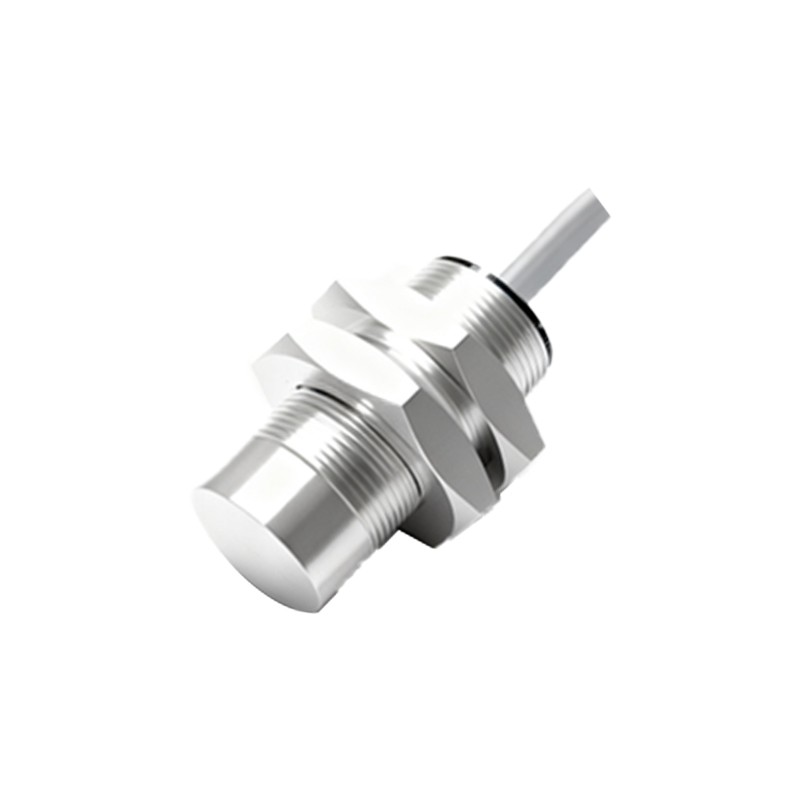
Key Components and Internal Architecture
A standard capacitive sensor comprises several critical components. The sensing face or active surface contains the electrode. Behind it lies the oscillator circuit, which is responsible for generating the electrostatic field and monitoring its state. The trigger circuit interprets the oscillator's signal and determines the exact point for switching the output. A solid-state output switch, typically an NPN or PNP transistor, or sometimes a relay, provides the interface to the control system. Modern sensors also include compensation and shielding elements to minimize the influence of unwanted environmental factors, such as humidity or contaminants on the sensor face, ensuring stable and reliable operation.
Primary Advantages Over Other Sensor Types
The most significant advantage of capacitive sensors is their material versatility. Unlike inductive sensors, which only detect metals, capacitive variants can sense almost any solid or liquid material. They are exceptionally effective for detecting non-metallic objects through non-metallic barriers, such as detecting liquid levels inside a plastic tank. They offer good sensitivity, which is often adjustable via a potentiometer, allowing fine-tuning for specific applications. Furthermore, they are generally robust, resistant to many industrial contaminants when properly housed, and provide non-contact sensing, which eliminates mechanical wear and tear on both the sensor and the target.
Common Industrial Applications and Use Cases
Capacitive proximity sensors find extensive use across diverse industries. In packaging, they detect the presence of cardboard boxes, plastic bottles, or labels. In the food and beverage sector, they are ideal for level detection of powders, grains, or liquids inside silos and containers. Manufacturing lines use them to confirm the presence of plastic components, glass panes, or wood blocks. They are also crucial in assembly processes to verify that a non-metallic part has been correctly inserted. Another critical application is in touch interfaces and control panels, where the sensor detects a finger's proximity, enabling touchless or sealed button controls.
Critical Selection Criteria for Engineers
Selecting the right capacitive sensor requires careful consideration of several parameters. First, determine the sensing distance required, noting that the rated operating distance is specified for a metal target; for other materials, a reduction factor based on the material's dielectric constant must be applied. The housing material and shape (cylindrical, rectangular, slot-type) must suit the mechanical and environmental conditions. The output type (NO/NC, NPN/PNP, analog) must be compatible with the controller (PLC). Key specifications to review include switching frequency, temperature range, IP rating for ingress protection, and the availability of sensitivity adjustment. For challenging environments, models with built-in immunity to electrical noise or chemical-resistant coatings are essential.
Installation and Calibration Best Practices
Proper installation is paramount for reliable performance. Maintain the recommended clearance around the sensor to prevent false triggering from the surrounding metal (flush-mounted sensors require less clearance). Ensure the sensor face is clean and free from buildup, as adhesives or dust can act as a permanent target. Use the sensitivity adjustment potentiometer to calibrate the sensor in its final installed state. Start with a low sensitivity setting, introduce the target, and slowly increase sensitivity until a stable switch is achieved, leaving a small margin to account for environmental drift. Always refer to the manufacturer's datasheet for specific wiring, shielding, and grounding instructions to avoid electrical interference.
Troubleshooting Typical Operational Issues
Common issues with capacitive sensors often stem from installation or environmental factors. Unstable switching or false triggers can be caused by excessive moisture, dust accumulation on the sensing face, or the presence of a variable background object (like a moving conveyor). In such cases, cleaning the face and re-adjusting the sensitivity while considering the background is necessary. If the sensor fails to detect, verify the reduction factor for the material and ensure the target is within the adjusted sensing range. Electrical problems, such as no output signal, typically require checking the power supply polarity, voltage, wiring connections, and ensuring the