Introduction to Non-Contact Sensing in Robotics
In the rapidly evolving landscape of industrial automation, robots have become indispensable for tasks ranging from precision assembly to heavy material handling. A critical component enabling their sophisticated interaction with the environment is the proximity sensor. Unlike contact-based limit switches, non-contact proximity sensors detect the presence, absence, or position of an object without any physical touch. This capability is fundamental for ensuring operational safety, enhancing precision, and increasing the overall efficiency and speed of robotic systems. By providing real-time feedback, these sensors allow robots to make intelligent decisions, adapt to variable conditions, and work seamlessly alongside human operators in collaborative applications.
Core Operating Principles and Technologies
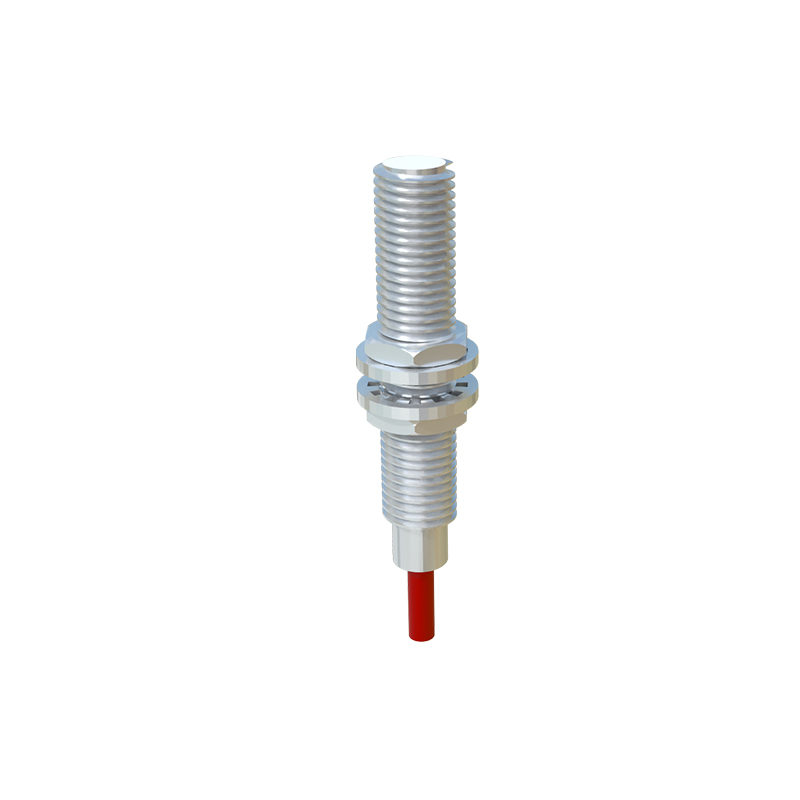
Non-contact proximity sensors for robotics primarily utilize three distinct physical principles: electromagnetic, capacitive, and optical. Inductive sensors are the most common electromagnetic type, generating an oscillating electromagnetic field. When a metallic object enters this field, it induces eddy currents, causing a detectable change in the oscillation amplitude. These sensors are exceptionally reliable for detecting metals and are widely used in robotic end-effectors for part verification. Capacitive sensors, on the other hand, can detect both metallic and non-metallic materials like plastics, wood, or liquids by measuring changes in capacitance caused by the object's dielectric properties. Optical sensors, including through-beam, retro-reflective, and diffuse reflective models, use a light source (often LED or laser) and a photoelectric receiver to detect object presence based on light beam interruption or reflection.
Key Advantages for Robotic Integration
The integration of non-contact proximity sensors offers transformative advantages. First and foremost is enhanced operational safety. Sensors can create virtual safety zones around a robot's moving parts, immediately halting motion if a human or unexpected obstacle is detected. Secondly, they enable unprecedented precision in positioning and object handling, crucial for tasks like pick-and-place, insertion, and quality inspection. Their non-contact nature eliminates mechanical wear and tear, leading to significantly higher reliability and longer service life compared to mechanical switches. Furthermore, their fast response times—often in the microsecond range—allow robots to operate at high speeds without sacrificing accuracy, directly boosting throughput and productivity on the factory floor.
Critical Selection Criteria for Engineers
Selecting the optimal proximity sensor for a robotic application requires careful analysis of several parameters. The sensing range, or the maximum distance at which the sensor can reliably detect a standard target, is paramount and must suit the robot's working envelope. The target material composition dictates the choice of technology; inductive for metals, capacitive for diverse materials, and optical for long-range or small-object detection. Environmental robustness is non-negotiable in industrial settings; sensors must have appropriate Ingress Protection (IP) ratings to withstand dust, coolants, and washdowns, and be resistant to electrical noise common in motor-driven environments. Finally, the output type (e.g., NPN/PNP, analog, IO-Link) and physical form factor (cylindrical, rectangular, ring-shaped) must be compatible with the robot's control system and mounting constraints.
Application-Specific Implementations
In practical robotic cells, these sensors fulfill diverse roles. On a robotic arm, a miniature inductive sensor integrated into the gripper can confirm successful part pickup before a move command is executed, preventing costly drops or misplacements. In automated guided vehicles (AGVs), arrays of optical and ultrasonic sensors create a 360-degree perception field for collision avoidance and navigation. For collaborative robots (cobots), capacitive and laser-based safety scanners form a sensitive skin, enabling safe, close-proximity human-robot interaction. In welding applications, specialized sensors precisely track the seam, providing real-time path correction to the welding torch mounted on the robot. Each application leverages the unique strengths of a specific sensor technology to solve a distinct challenge.
Emerging Trends and Future Outlook
The future of non-contact sensing in robotics is being shaped by several key trends. The integration of smart sensors with industrial communication protocols like IO-Link is gaining momentum. This allows for bidirectional data exchange, enabling not just object detection but also condition monitoring, parameter adjustment on-the-fly, and predictive maintenance alerts. Furthermore, sensor fusion—combining data from proximity, vision, and force/torque sensors—is creating more perceptive and adaptable robots capable of handling complex, unstructured tasks. The miniaturization of sensor packages continues, allowing for integration into increasingly compact robotic designs. Finally, advancements in time-of-flight (ToF) and LiDAR technology are providing high-resolution, long-range 3D perception, essential for next-generation mobile and autonomous robotic systems in logistics and manufacturing.