Introduction to Ring Capacitive Proximity Sensors
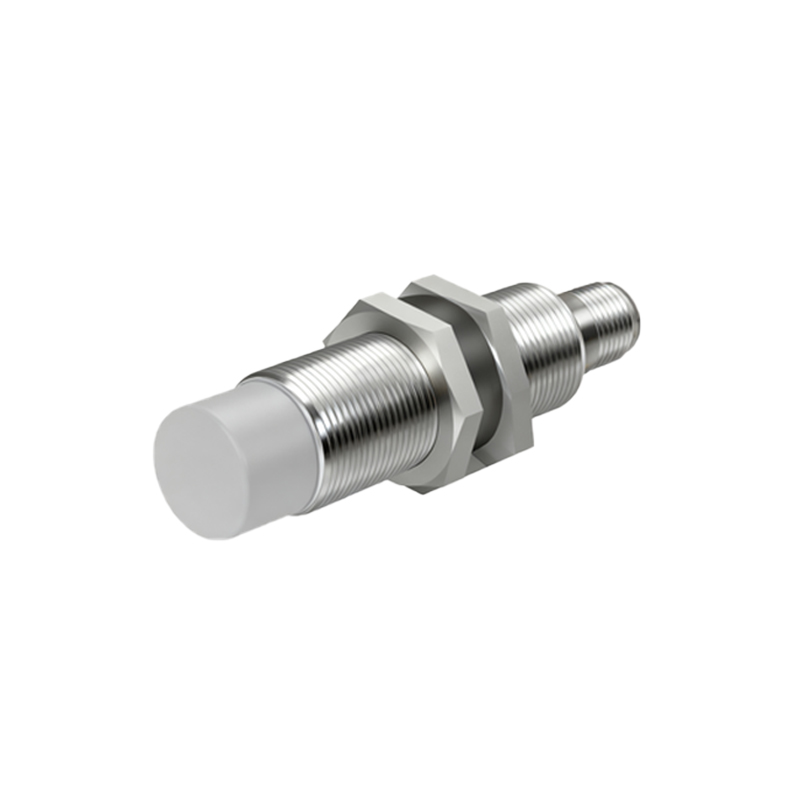
Ring capacitive proximity sensors are specialized non-contact detection devices widely used in industrial automation. Unlike inductive sensors that detect only metals, capacitive sensors can detect a vast range of materials, including liquids, plastics, glass, wood, and granular substances. The defining "ring" or "through-beam" shape allows objects to pass through the sensor's aperture, enabling precise detection of material presence, level, or size without physical contact. This design is crucial for applications requiring inspection or counting of objects on a conveyor or within a tube.
Core Operating Principle
The fundamental principle relies on changes in capacitance. The sensor's active face, formed by the ring's inner surface, functions as one plate of a capacitor. The target object acts as the second plate, with the air gap serving as the dielectric. An internal oscillator circuit generates an electrostatic field. When a target enters this field, it alters the dielectric constant, leading to a measurable change in capacitance. This change triggers the sensor's output switch—typically a solid-state PNP, NPN, or relay contact—signaling the object's presence. Advanced models feature adjustable sensitivity to compensate for different material types, container walls, or environmental factors like humidity.
Key Advantages and Benefits
The primary advantage is material versatility. A single ring capacitive sensor can detect virtually any solid or liquid, simplifying inventory and system design. Their non-contact nature ensures zero wear on both the sensor and the target, guaranteeing long operational life and maintenance-free performance. The through-beam ring design allows for high-speed counting and detection of very small objects, such as pills or electronic components. Furthermore, they are generally immune to environmental challenges like dust, light interference, or color variations that often plague optical sensors, making them robust for harsh industrial settings.
Common Industrial Applications
These sensors are indispensable across numerous sectors. In packaging and bottling lines, they verify the presence of caps, labels, or liquid levels in non-metallic containers. The food and beverage industry uses them to detect product levels in hoppers or to count items on processing lines. In pharmaceutical manufacturing, they ensure precise counting of tablets and capsules. Another critical application is in bulk material handling, where they monitor the presence or absence of granules, powders, or pellets in plastic or glass tubes, preventing jams or empty runs. They are also employed in assembly automation to confirm the correct insertion of plastic components.
Critical Selection Criteria
Choosing the correct sensor requires careful consideration of several parameters. First, the inner diameter of the ring must be larger than the maximum dimension of the object to be detected to allow clear passage. The sensing distance, often minimal due to the ring design, must be evaluated. Material composition of the target significantly influences sensitivity settings. Environmental conditions are paramount; sensors with high IP ratings (e.g., IP67) are necessary for washdown or outdoor use. The output type must be compatible with the controller (PLC), and the supply voltage (e.g., 10-30V DC) must match the plant's electrical system. Finally, considering housing material, such as stainless steel for corrosive environments, is essential for durability.
Installation and Calibration Best Practices
Proper installation is key to reliable operation. The sensor should be mounted securely, ensuring the target path is centered through the ring's aperture to maintain a consistent sensing field. Adequate clearance from surrounding metal structures or other sensors is necessary to prevent false triggering from parasitic capacitance. Calibration, or sensitivity adjustment, is typically performed using a potentiometer. The procedure involves introducing a sample target under normal operating conditions and adjusting the sensitivity until the output reliably triggers, then slightly reducing sensitivity to ensure stability against background interference. Many modern sensors feature teach-in functions for simplified setup.
Troubleshooting Common Issues
Persistent false triggering is often caused by environmental factors like condensation, dust buildup on the sensing face, or proximity to moving metal parts. Cleaning the sensor face and increasing the mounting distance from interfering objects can resolve this. Failure to detect a target may result from incorrect sensitivity setting, a target material outside the sensor's range, or a power/ wiring fault. Verifying the supply voltage, output load, and re-teaching the sensitivity with the actual target are standard diagnostic steps. Consulting the manufacturer's datasheet for specific response curves and environmental limits is always recommended for complex issues.
Future Trends and Innovations
The future of ring capacitive sensing is geared towards smarter, more integrated solutions. Developments include sensors with IO-Link communication, enabling digital parameter setting, remote diagnostics, and process data monitoring directly to control systems. Miniaturization continues, allowing detection of even smaller components in tight spaces