Introduction to Infrared Proximity Sensing
Infrared proximity sensors are fundamental components in modern automation, robotics, and safety systems. A Class 10 designation typically refers to a specific performance grade, often related to sensing distance, accuracy, or environmental robustness as defined by industry standards. These sensors operate on the principle of detecting infrared radiation to determine the presence or absence of an object within a defined field of view. Unlike simple on/off detection, advanced Class 10 sensors provide highly reliable and precise distance measurements, making them indispensable for applications requiring stringent performance, such as in high-speed assembly lines, automated guided vehicles (AGVs), and precision machinery.
Core Working Principle: Modulated Infrared Light
The fundamental operation of a Class 10 infrared proximity sensor is based on the emission and reception of modulated infrared light. The sensor contains an infrared LED that emits a beam of light at a specific wavelength, typically in the near-infrared spectrum (around 880nm or 940nm). This light is not emitted continuously but is pulsed at a high frequency. A dedicated phototransistor or photodiode receiver is positioned to detect the reflected light from a target object. The key to high performance (Class 10) lies in this modulation. By pulsing the IR light and synchronously detecting the reflected signal, the sensor can effectively filter out ambient infrared noise from sources like sunlight or incandescent lighting, ensuring stable and accurate detection even in challenging industrial environments.
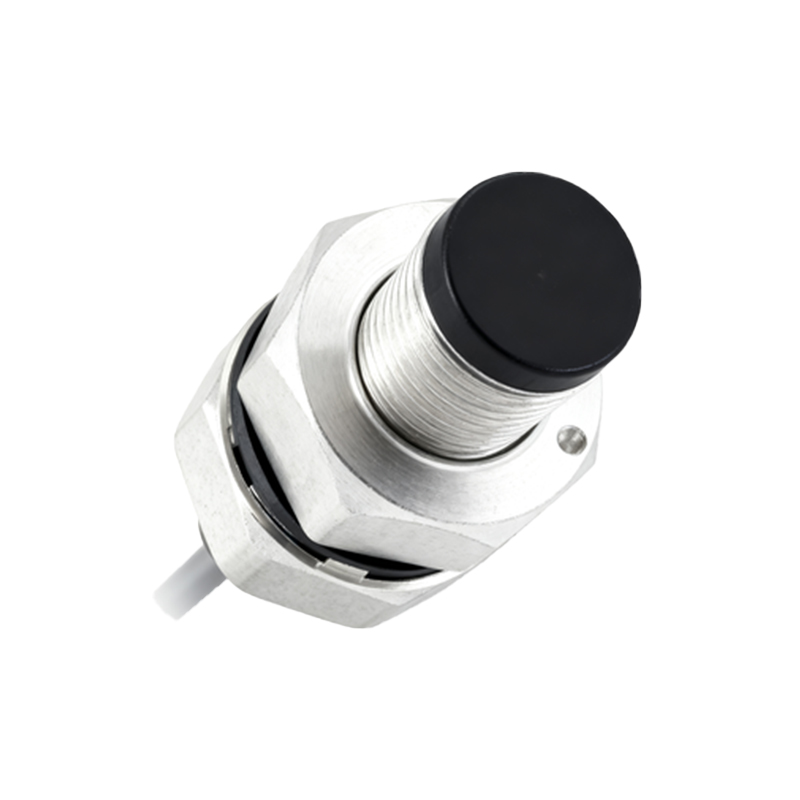
Triangulation Method for Distance Measurement
Many Class 10 infrared proximity sensors utilize the optical triangulation method to measure distance precisely. In this configuration, the IR emitter and the receiver are placed at a known, fixed distance from each other within the sensor housing. When the emitted infrared beam strikes a target, it is reflected back. The position where this reflected light focuses on the receiver's sensing element (like a Position Sensitive Device or PSD) changes depending on the distance to the target. By precisely measuring this spot position on the receiver, the sensor's internal circuitry can calculate the exact distance to the object using trigonometric principles. This method allows for non-contact, high-resolution distance measurement, which is a hallmark of high-grade sensors.
Signal Processing and Output
The raw signal from the photodetector is weak and requires sophisticated processing. In a Class 10 sensor, this involves amplification, demodulation (to extract the modulated signal from noise), and conversion. The processed signal is then analyzed by a microcontroller or dedicated IC. Based on the intensity or the triangulation-calculated position, the sensor generates an output. This output can be analog (e.g., 0-10V or 4-20mA proportional to distance) or digital (e.g., switch output, serial communication like IO-Link, or PWM). The high-grade electronics and algorithms ensure linearity, minimal drift over temperature, and fast response times, meeting the "Class 10" reliability criteria for critical control tasks.
Key Design Features for Enhanced Performance
Achieving Class 10 performance necessitates several advanced design features. These include high-quality, temperature-stable optical components (lenses for the emitter and receiver) to maintain a consistent beam pattern. The housing is often designed to be robust, with an IP67 or higher rating for dust and water resistance. Advanced models incorporate background suppression technology, which uses precise optics to define a very specific sensing window, ignoring objects beyond a set distance. Furthermore, built-in diagnostics and constant monitoring of the LED's performance are common, alerting the control system to potential failures or lens contamination, thus ensuring functional safety and uptime.
Applications in Industrial Automation
The robustness and precision of Class 10 infrared proximity sensors make them ideal for demanding industrial applications. They are extensively used for precise object positioning on conveyor belts, detecting the presence of components in robotic grippers, and ensuring correct workpiece alignment in CNC machines. In AGVs, they provide accurate obstacle detection for navigation and collision avoidance. Their ability to ignore background objects and work reliably under varying ambient light conditions is crucial in packaging, material handling, and automotive manufacturing, where sensor failure can lead to significant production downtime.
Advantages and Limitations
The primary advantages of Class 10 IR proximity sensors are their high accuracy, excellent noise immunity due to modulation, fast response, and non-contact operation. They are generally unaffected by the color or surface texture of the target object, though highly reflective or absorbent surfaces can affect performance. A key limitation is that they can be influenced by environmental factors like dust, fog, or steam, which can scatter the infrared beam. However, the Class 10 rating often implies design measures to mitigate these effects. They are also typically designed for shorter to medium ranges