The Genesis of a Concept: Early Detection Needs
The story of proximity sensors begins not with a single eureka moment, but with a fundamental industrial need: non-contact detection. In the early to mid-20th century, as manufacturing automation began to take shape, the limitations of mechanical limit switches—prone to wear, physical damage, and speed constraints—became increasingly apparent. Industries required a way to detect the presence, absence, or position of an object without making physical contact. This need was the primary catalyst. Initial forays into non-contact sensing involved simple principles. One of the earliest forms was the use of rudimentary capacitive effects, where a change in an electrical field could indicate the presence of a conductive material. However, these were unreliable and highly sensitive to environmental factors like humidity. The true foundational breakthrough came with the application of established physics principles—specifically electromagnetism and optics—to solve this industrial challenge in a robust manner.
The Electromagnetic Pioneer: Inductive Sensors Emerge
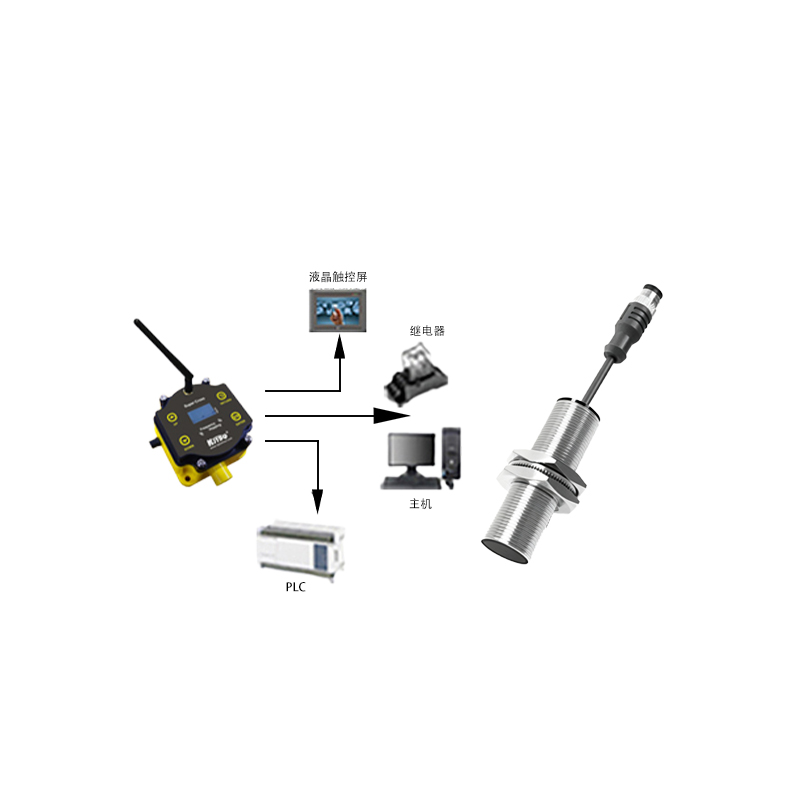
The first widely successful and recognizable proximity sensors were inductive sensors. Their development is deeply rooted in Faraday's Law of Electromagnetic Induction and the work of 19th-century scientists. In the 1950s and 1960s, engineers began creating practical devices that used a coil and oscillator to generate a high-frequency electromagnetic field. When a metallic object (the "target") entered this field, eddy currents were induced on the metal's surface. These eddy currents caused a measurable change in the oscillator's amplitude or frequency, which was then detected by a threshold circuit, triggering a solid-state switch. This technology was revolutionary. It was immune to dirt, dust, oil, and could be completely sealed, making it ideal for the harsh environments of machine tools, automotive assembly, and heavy industry. The term "proximity switch" became synonymous with these inductive devices, marking the first major chapter in the sensor's evolution.
Expanding the Spectrum: Capacitive and Photoelectric Sensors
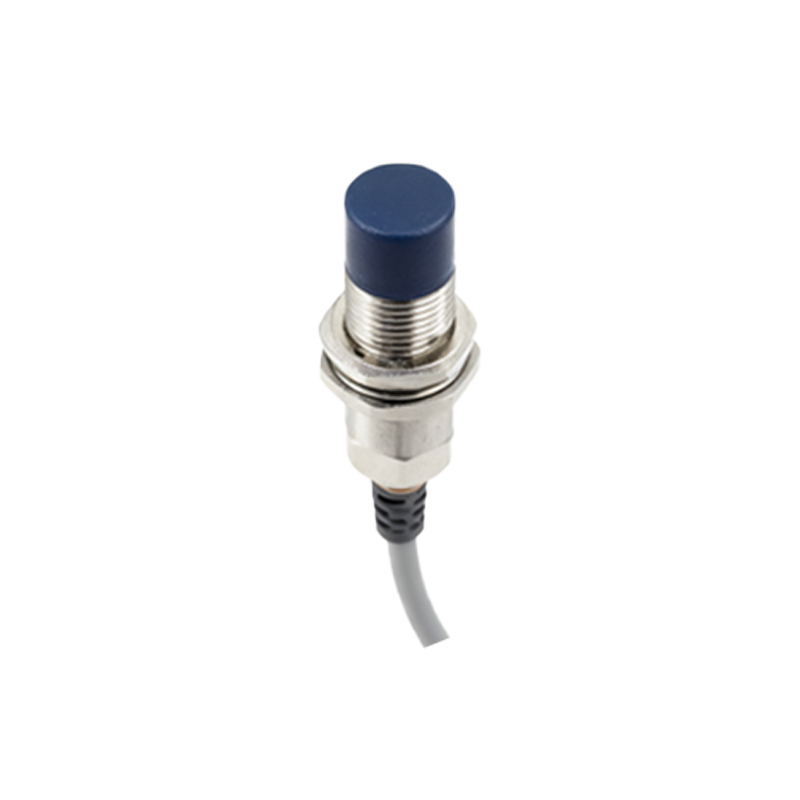
While inductive sensors solved problems for metal detection, industry demanded solutions for non-metallic materials like wood, plastic, glass, and liquids. This led to the parallel development and refinement of capacitive proximity sensors. Operating on the principle of capacitance change, these sensors could detect any material that altered the dielectric constant of the field between their sensing face and a ground plane. Around the same period, photoelectric sensors, leveraging light beams (initially incandescent, later infrared and laser), emerged as a powerful solution for long-range detection and seeing through transparent materials. The photoelectric sensor's origin ties back to early photoelectric cells and the development of reliable light-emitting components like LEDs. These three core technologies—inductive, capacitive, and photoelectric—formed the essential toolkit for non-contact sensing by the 1970s, each finding its dominant niche in the automation landscape.
The Solid-State Revolution and Standardization
A critical turning point in the history of proximity sensors was the advent and integration of solid-state electronics. Early sensors often used discrete transistors and components. The shift to integrated circuits (ICs) and application-specific integrated circuits (ASICs) in the 1970s and 1980s dramatically reduced size, improved reliability, increased switching speed, and lowered power consumption. This era also saw the standardization of form factors (like the ubiquitous cylindrical barrel sensors), output types (PNP/NPN), and connection methods. Standardization, driven by major automation players and industry consortia, was crucial for widespread adoption. It allowed sensors from different manufacturers to be interchangeable, fostering competition and innovation while giving machine builders and end-users flexibility and reduced downtime.
Intelligence and Integration: The Modern Proximity Sensor
The late 20th and early 21st centuries have been defined by the infusion of intelligence and connectivity into proximity sensing. The simple binary switch evolved into a smart device with embedded microprocessors. Modern sensors feature programmable logic, adjustable sensing ranges, temperature compensation, and built-in diagnostics (like IO-Link technology). They can communicate detailed status information, not just an on/off signal, enabling predictive maintenance and deeper integration into Industrial Internet of Things (IIoT) architectures. Furthermore, the miniaturization of components has led to sensors smaller than a dime, while advancements in materials and design have produced sensors capable of withstanding extreme temperatures, high pressures, and washdown environments. The core physics remains the same, but the implementation has become vastly more sophisticated, reliable, and integral to cyber-physical production systems.
Future Trajectories: Beyond Simple Presence Detection
The evolution of the proximity sensor is far from complete. Current research and development are pushing boundaries in several key directions. Sensor fusion, combining proximity data with other sensor inputs (