Introduction to Hall Effect Sensors
Hall effect sensors are semiconductor devices that generate an output voltage proportional to a magnetic field. They are widely used in industrial and automotive applications for proximity sensing, position detection, and current measurement. When a magnet approaches the sensor, the internal Hall element responds to the magnetic flux density, triggering a change in the sensor's output state. In many configurations, this results in a high-level output signal, typically matching the supply voltage, indicating the presence of the magnet within a specified range.
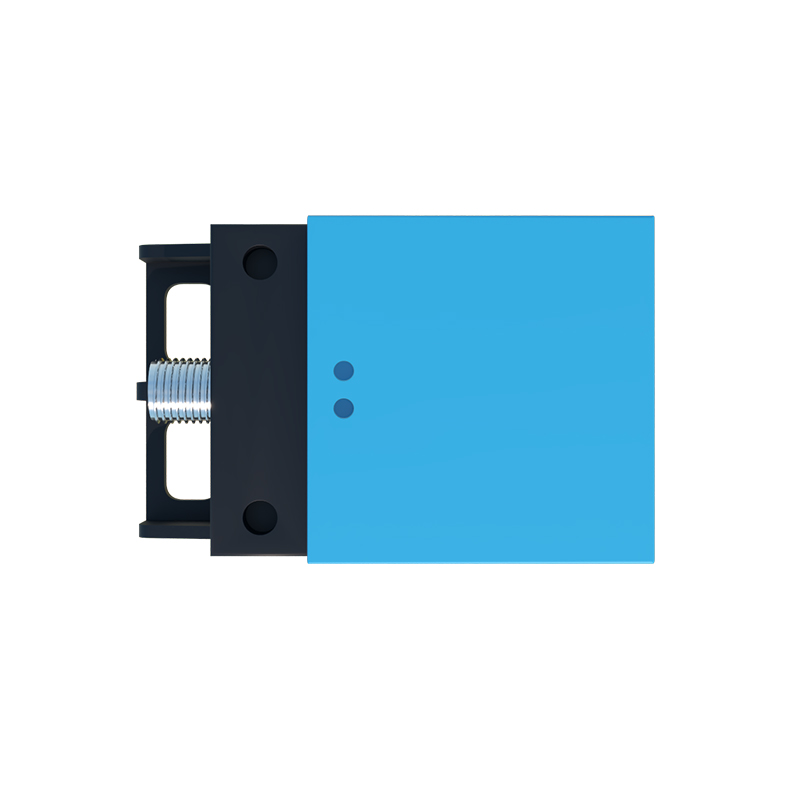
Operating Principle of Proximity Detection
The core operation relies on the Hall effect: when a current-carrying conductor is placed in a magnetic field perpendicular to the current flow, a voltage difference, known as the Hall voltage, is generated across the conductor. In integrated Hall sensors, this voltage is amplified and processed by internal circuitry. For digital output sensors, a Schmitt trigger is often used to provide a clean, switched output. As a magnet nears the sensor, the increasing magnetic flux density causes the internal comparator to switch, driving the output to a high logic level (e.g., Vcc). The sensitivity and switching point are determined by the sensor's design and the magnet's strength.
Magnet Characteristics and Sensor Response
The performance of proximity detection depends significantly on the magnet's properties, including its material (e.g., neodymium, ferrite), size, shape, and polarization. Stronger magnets can actuate the sensor from a greater distance, but careful alignment is crucial to avoid false triggering. The sensor's datasheet specifies parameters such as operate point (Bop) and release point (Brp), which define the magnetic thresholds for switching high and low. Engineers must select magnets that provide sufficient flux density at the desired sensing distance to ensure reliable high-level output activation.
High-Level Output Configuration and Interface
A high-level output from a Hall sensor is typically an open-collector or push-pull output that swings to the supply voltage when activated. This output can directly interface with microcontrollers, PLCs, or other digital circuits. In open-collector designs, an external pull-up resistor is required to establish the high voltage level. The output remains high as long as the magnet is within the operate range, providing a stable signal for system logic. Noise immunity is enhanced through proper PCB layout, filtering, and sometimes by using sensors with built-in hysteresis.
Applications in Industrial Systems
Hall sensor magnet proximity detection with high-level output is prevalent in various applications. Examples include end-position sensing in linear actuators, speed measurement in rotary encoders, and safety interlock systems in machinery. The robust, contactless nature of Hall sensors makes them ideal for harsh environments with dust, moisture, or vibration. In automotive systems, they are used for gear position sensing, brake pedal position, and seatbelt detection. The high-level output simplifies integration, reducing the need for additional signal conditioning.
Design Considerations for Reliability
To ensure reliable operation, designers must account for factors such as temperature variations, which can affect both the magnet and sensor performance. Thermal drift may shift the magnetic thresholds, potentially altering the sensing distance. Shielding from external magnetic fields is also important to prevent interference. Additionally, power supply stability is critical, as voltage fluctuations can impact the output level. Proper testing with actual magnets under operating conditions is recommended to validate the design and avoid unexpected failures in the field.
Future Trends and Advancements
Advancements in Hall sensor technology continue to improve proximity detection capabilities. Newer sensors offer higher sensitivity, lower power consumption, and integrated digital interfaces like I2C or SPI. Some variants provide programmable thresholds, allowing dynamic adjustment of the operate points. The integration of Hall sensors with other sensing modalities, such as temperature or pressure sensors, into multi-function modules is also emerging. These developments enable more compact, intelligent systems capable of precise magnet proximity detection with configurable high-level outputs.